Port Louis
 Mauritius
Key facts and a structured country profile. 🧾 Change log 📐 True Size
Locator 🗺️ Map
1,311,375 (2025 est.)
2,040 sq km
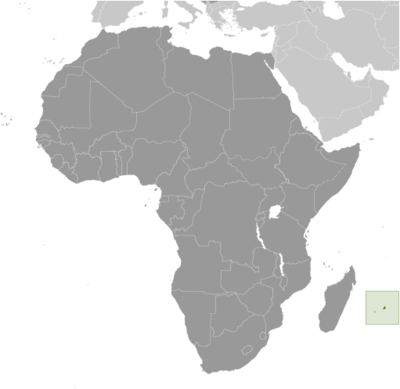
Southern Africa, island in the Indian Ocean, about 800 km (500 mi) east of Madagascar
🧭 Background
Although known to Arab and European sailors since at least the early 1500s, the island of Mauritius was uninhabited until 1638 when the Dutch established a settlement named in honor of Prince Maurits van NASSAU. Their presence led to the rapid disappearance of the flightless dodo bird that has since become one of the most well-known examples of extinction in modern times. The Dutch abandoned their financially distressed settlement in 1710, although a number of formerly enslaved people remained. In 1722, the French established what would become a highly profitable settlement focused on sugar cane plantations that were reliant on the labor of enslaved people brought to Mauritius from other parts of Africa. In the 1790s, the island had a brief period of autonomous rule when plantation owners rejected French control because of laws ending slavery that were temporarily in effect during the French Revolution. Britain captured the island in 1810 as part of the Napoleonic Wars but kept most of the French administrative structure, which remains to this day in the form of the country’s legal codes and widespread use of the French Creole language. The abolition of slavery in 1835 -- later than most other British colonies -- led to increased reliance on contracted laborers from the Indian subcontinent to work on plantations. Today their descendants form the majority of the population. Mauritius remained a strategically important British naval base and later an air station, and it played a role during World War II in anti-submarine and convoy operations, as well as in the collection of signals intelligence. Mauritius gained independence from the UK in 1968 as a Parliamentary Republic and has remained a stable democracy with regular free elections and a positive human rights record. The country also attracted considerable foreign investment and now has one of Africa's highest per capita incomes. Mauritius’ often-fractious coalition politics has been dominated by two prominent families, each of which has had father-son pairs who have been prime minister over multiple, often nonconsecutive, terms. Seewoosagur RAMGOOLAM (1968-76) was Mauritius’ first prime minister, and he was succeeded by Anerood JUGNAUTH (1982-95, 2000-03, 2014-17); his son Navin RAMGOOLAM (1995-2000, 2005-14); and Paul Raymond BERENGER (2003-05), the only non-Hindu prime minister of post-independence Mauritius. In 2017, Pravind JUGNAUTH became prime minister after his father stepped down short of completing his term, and he was elected in his own right in 2019. Mauritius claims the French island of Tromelin and the British Chagos Archipelago (British Indian Ocean Territory). Since 2017, Mauritius has secured favorable UN General Assembly resolutions and an International Court of Justice advisory opinion relating to its sovereignty dispute with the UK.
🗺️ Geography
Southern Africa, island in the Indian Ocean, about 800 km (500 mi) east of Madagascar
20 17 S, 57 33 E
Africa
2,040 sq km
2,030 sq km
10 sq km
Almost 11 times the size of Washington, D.C.
0 km
177 km
12 nm
200 nm
200 nm or to the edge of the continental margin
Tropical, modified by southeast trade winds; warm, dry winter (May to November); hot, wet, humid summer (November to May)
Small coastal plain rising to discontinuous mountains encircling central plateau
Mont Piton 828 m
Indian Ocean 0 m
Arable land, fish
43% (2023 est.)
Arable land: 37.6% (2023 est.)
Permanent crops: 2% (2023 est.)
Permanent pasture: 3.5% (2023 est.)
19.2% (2023 est.)
37.8% (2023 est.)
143 sq km (2022)
Population density is one of the highest in the world; urban clusters are found throughout the main island, with a greater density in and around Port Luis; the population on Rodrigues Island is fairly evenly spread, with a slightly denser cluster on the north coast, as shown in this population distribution map
Cyclones (November to April); almost completely surrounded by reefs that may pose maritime hazards
The main island, from which the country derives its name, is of volcanic origin and is almost entirely surrounded by coral reefs; former home of the extinct dodo, a large flightless bird related to pigeons
👥 People and Society⬆️ Top
1,311,375 (2025 est.)
639,707
671,668
Mauritian(s)
Mauritian
Indo-Mauritian (compose approximately two thirds of the total population), Creole, Sino-Mauritian, Franco-Mauritian
Creole 86.5%, Bhojpuri 5.3%, French 4.1%, two languages 1.4%, other 2.6% (includes English, one of the two official languages of the National Assembly, which is spoken by less than 1% of the population), unspecified 0.1% (2011 est.)
Hindu 48.5%, Roman Catholic 26.3%, Muslim 17.3%, other Christian 6.4%, other 0.6%, none 0.7%, unspecified 0.1% (2011 est.)
15.1% (male 100,973/female 96,711)
71% (male 462,833/female 467,509)
13.9% (2024 est.) (male 75,464/female 107,014)
41.7 (2025 est.)
21.1 (2025 est.)
20.5 (2025 est.)
4.9 (2025 est.)
40 years (2025 est.)
38.1 years
41 years
0.06% (2025 est.)
9.73 births/1,000 population (2025 est.)
9.14 deaths/1,000 population (2025 est.)
0 migrant(s)/1,000 population (2025 est.)
Population density is one of the highest in the world; urban clusters are found throughout the main island, with a greater density in and around Port Luis; the population on Rodrigues Island is fairly evenly spread, with a slightly denser cluster on the north coast, as shown in this population distribution map
40.9% of total population (2023)
0.28% annual rate of change (2020-25 est.)
149,000 PORT LOUIS (capital) (2018)
1.07 male(s)/female
1.04 male(s)/female
0.99 male(s)/female
0.71 male(s)/female
0.95 male(s)/female (2024 est.)
66 deaths/100,000 live births (2023 est.)
11.4 deaths/1,000 live births (2025 est.)
13.1 deaths/1,000 live births
10 deaths/1,000 live births
75.4 years (2024 est.)
72.6 years
78.4 years
1.36 children born/woman (2025 est.)
0.66 (2025 est.)
Urban: 100% of population (2022 est.)
Rural: 100% of population (2022 est.)
Total: 100% of population (2022 est.)
Urban: 0% of population (2022 est.)
Rural: 0% of population (2022 est.)
Total: 0% of population (2022 est.)
6.4% of GDP (2021)
9.4% of national budget (2022 est.)
1.44 physicians/1,000 population (2022)
3.7 beds/1,000 population (2021 est.)
Urban: 99.7% of population (2022 est.)
Urban: 0.3% of population (2022 est.)
10.8% (2016)
3.39 liters of pure alcohol (2019 est.)
1.94 liters of pure alcohol (2019 est.)
0.23 liters of pure alcohol (2019 est.)
0.88 liters of pure alcohol (2019 est.)
0.03 liters of pure alcohol (2019 est.)
19.6% (2025 est.)
37.4% (2025 est.)
2.6% (2025 est.)
51.6% (2022 est.)
4.1% of GDP (2024 est.)
14.2% national budget (2024 est.)
94.3% (2023 est.)
96.3% (2023 est.)
92.8% (2023 est.)
14 years (2020 est.)
14 years (2020 est.)
15 years (2020 est.)
🌿 Environment⬆️ Top
Water pollution, degradation of coral reefs; soil erosion; wildlife preservation; solid-waste disposal
Antarctic-Marine Living Resources, Biodiversity, Climate Change, Climate Change-Kyoto Protocol, Climate Change-Paris Agreement, Desertification, Endangered Species, Environmental Modification, Hazardous Wastes, Law of the Sea, Marine Life Conservation, Nuclear Test Ban, Ozone Layer Protection, Ship Pollution, Wetlands
None of the selected agreements
Tropical, modified by southeast trade winds; warm, dry winter (May to November); hot, wet, humid summer (November to May)
43% (2023 est.)
Arable land: 37.6% (2023 est.)
Permanent crops: 2% (2023 est.)
Permanent pasture: 3.5% (2023 est.)
19.2% (2023 est.)
37.8% (2023 est.)
40.9% of total population (2023)
0.28% annual rate of change (2020-25 est.)
5.551 million metric tonnes of CO2 (2023 est.)
1.495 million metric tonnes of CO2 (2023 est.)
4.056 million metric tonnes of CO2 (2023 est.)
10.5 micrograms per cubic meter (2019 est.)
438,000 tons (2024 est.)
15.9% (2022 est.)
320 million cubic meters (2022)
10 million cubic meters (2022)
303 million cubic meters (2022)
2.751 billion cubic meters (2022 est.)
🏛️ Government⬆️ Top
Republic of Mauritius
Mauritius
Republic of Mauritius
Mauritius
Named after Prince Maurice VAN NASSAU, stadtholder (governor) of the Dutch Republic, in 1598
Parliamentary republic
Port Louis
20 09 S, 57 29 E
UTC+4 (9 hours ahead of Washington, DC, during Standard Time)
Named after LOUIS XV, who was king of France in 1736 when the port became the administrative center of Mauritius
9 districts and 3 dependencies*; Agalega Islands*, Black River, Cargados Carajos Shoals*, Flacq, Grand Port, Moka, Pamplemousses, Plaines Wilhems, Port Louis, Riviere du Rempart, Rodrigues*, Savanne
Civil system based on French civil law with some elements of English common law
Several previous; latest adopted 12 March 1968
Proposed by the National Assembly; passage of amendments affecting constitutional articles, including the sovereignty of the state, fundamental rights and freedoms, citizenship, or the branches of government, requires approval in a referendum by at least three-fourths majority of voters followed by a unanimous vote by the Assembly; passage of other amendments requires only two-thirds majority vote by the Assembly
Accepts compulsory ICJ jurisdiction with reservations; accepts ICCt jurisdiction
Yes
Yes
Yes
5 out of the previous 7 years including the last 12 months
18 years of age; universal
President Dharam GOKHOOL (since 7 December 2024)
Prime Minister Navin RAMGOOLAM (since 13 November 2024)
Cabinet of Ministers (Council of Ministers) appointed by the president on the recommendation of the prime minister
President indirectly elected by the National Assembly for 5-year renewable terms; the president appoints the prime minister and deputy prime minister who have the majority support in the National Assembly
6 December 2024
2019: Prithvirajsing ROOPUN (MSM) elected president by the National Assembly - unanimous vote
2029
National Assembly - Assemblée nationale
Unicameral
National Assembly
67 (62 directly elected; 4 appointed)
Plurality/majority
Full renewal
5 years
11/10/2024
Alliance Du Changement (Alliance for Change, AdC) (60); Other (2)
17.9%
October 2029
Supreme Court of Mauritius (consists of the chief justice, a senior puisne judge, and 24 puisne judges)
Chief justice appointed by the president after consultation with the prime minister; senior puisne judge appointed by the president with the advice of the chief justice; other puisne judges appointed by the president with the advice of the Judicial and Legal Commission, a 4-member body of judicial officials including the chief justice; all judges serve until retirement at age 67
Lower regional courts known as District Courts, Court of Civil Appeal; Court of Criminal Appeal; Public Bodies Appeal Tribunal
Alliance Morisien (Mauritian Alliance) Jean-Claude Barbier Movement (Mouvement Jean-Claude Barbier) or MJCB Mauritian Militant Movement (Mouvement Militant Mauricien) or MMM Mauritian Social Democratic Party (Parti Mauricien Social Democrate) or PMSD Mauritius Labor Party (Parti Travailliste) or PTR or MLP Militant Platform (Plateforme Militante) or PM Militant Socialist Movement (Mouvement Socialist Mauricien) or MSM Muvman Liberater or ML National Alliance Patriotic Movement (Mouvement Patriotique) or MAG Rodrigues Peoples Organization (Organisation du Peuple Rodriguais) or OPR
Ambassador (vacant); Chargé d'Affaires Gajjaluxmi MOOTOOSAMY (since 5 June 2025)
1709 N Street NW, Washington, DC 20036
[1] (202) 244-1491
[1] (202) 966-0983
Mauritius.embassy@verizon.net https://mauritius-washington.govmu.org/Pages/index.aspx
Ambassador Henry V. JARDINE (since 22 February 2023); note - also accredited to Seychelles
4th Floor, Rogers House, John Kennedy Avenue, Port Louis
2450 Port Louis Place, Washington, DC 20521-2450
[230] 202-4400
[230] 208-9534
PTLConsular@state.gov https://mu.usembassy.gov/
ACP, AfDB, AOSIS, AU, CD, COMESA, CPLP (associate), FAO, G-77, IAEA, IBRD, ICAO, ICC (NGOs), ICCt, ICRM, IDA, IFAD, IFC, IFRCS, IHO, ILO, IMF, IMO, IMSO, InOC, Interpol, IOC, IOM, IPU, ISO, ITSO, ITU, ITUC (NGOs), MIGA, NAM, OIF, OPCW, PCA, SAARC (observer), SADC, UN, UNCTAD, UNESCO, UNIDO, UNOOSA, UNWTO, UPU, WCO, WFTU (NGOs), WHO, WIPO, WMO, WTO
12 March 1968 (from the UK)
Independence and Republic Day, 12 March (1968, 1992)
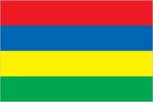
Description: four equal horizontal bands of red (top), blue, yellow, and green meaning: red stands for self-determination and independence; blue for the Indian Ocean; yellow for the new light of independence, golden sunshine, or the bright future; and green for agriculture or the island's lush vegetation
Dodo bird, earring tree flower (Trochetia boutoniana)
Red, blue, yellow, green
"Motherland"
Jean Georges PROSPER/Philippe GENTIL
Adopted 1968
2 (both cultural)
Aapravasi Ghat; Le Morne Cultural Landscape
💹 Economy⬆️ Top
Upper middle-income Indian Ocean island economy; diversified portfolio; investing in maritime security; strong tourism sector decimated by COVID-19; expanding in information and financial services; environmentally fragile
$34.406 billion (2024 est.)
$32.864 billion (2023 est.)
$31.296 billion (2022 est.)
4.7% (2024 est.)
5% (2023 est.)
8.7% (2022 est.)
$27,300 (2024 est.)
$26,100 (2023 est.)
$24,800 (2022 est.)
$14.953 billion (2024 est.)
3.6% (2024 est.)
7.1% (2023 est.)
10.8% (2022 est.)
4.3% (2024 est.)
17.8% (2024 est.)
64.4% (2024 est.)
68.6% (2024 est.)
14.7% (2024 est.)
21% (2024 est.)
0.2% (2024 est.)
46.2% (2024 est.)
-57.8% (2024 est.)
Sugarcane, chicken, pumpkins/squash, tomatoes, eggs, potatoes, cabbages, bananas, onions, cucumbers/gherkins (2023)
Food processing (largely sugar milling), textiles, clothing, mining, chemicals, metal products, transport equipment, nonelectrical machinery, tourism
4.7% (2024 est.)
594,900 (2024 est.)
5.5% (2024 est.)
5.6% (2023 est.)
6.4% (2022 est.)
16.6% (2024 est.)
15.3% (2024 est.)
18.4% (2024 est.)
10.3% (2017 est.)
36.8 (2017 est.)
2.9% (2017 est.)
29.9% (2017 est.)
2.2% of GDP (2023 est.)
2.1% of GDP (2022 est.)
2.4% of GDP (2021 est.)
$3.801 billion (2024 est.)
$5.042 billion (2024 est.)
58% of GDP (2019 est.)
20.5% (of GDP) (2023 est.)
-$647.743 million (2023 est.)
-$1.437 billion (2022 est.)
-$1.497 billion (2021 est.)
$6.381 billion (2023 est.)
$6.138 billion (2022 est.)
$4.213 billion (2021 est.)
USA 11%, France 11%, Zimbabwe 10%, South Africa 7%, Zambia 7% (2023)
Fish, garments, raw sugar, fertilizers, diamonds (2023)
$8.027 billion (2023 est.)
$8.052 billion (2022 est.)
$6.057 billion (2021 est.)
China 15%, UAE 11%, India 10%, South Africa 9%, France 6% (2023)
Refined petroleum, cars, fish, coal, packaged medicine (2023)
$8.506 billion (2024 est.)
$7.248 billion (2023 est.)
$7.793 billion (2022 est.)
$3.632 billion (2023 est.)
Mauritian rupees (MUR) per US dollar -
46.415 (2024 est.)
45.267 (2023 est.)
44.183 (2022 est.)
41.692 (2021 est.)
39.347 (2020 est.)
⚡ Energy⬆️ Top
100% (2022 est.)
99%
100%
955,000 kW (2023 est.)
3.084 billion kWh (2023 est.)
179.996 million kWh (2023 est.)
82.4% of total installed capacity (2023 est.)
4.6% of total installed capacity (2023 est.)
0.3% of total installed capacity (2023 est.)
2.9% of total installed capacity (2023 est.)
9.9% of total installed capacity (2023 est.)
651,000 metric tons (2023 est.)
610,000 metric tons (2023 est.)
28,000 bbl/day (2023 est.)
60.188 million Btu/person (2023 est.)
📡 Communications⬆️ Top
464,000 (2023 est.)
36 (2023 est.)
2.2 million (2024 est.)
173 (2024 est.)
The Mauritius Broadcasting Corporation (MBC) is the national public TV and radio broadcaster, with programming in French, English, Hindi, Creole, and Chinese; MBC provides 17 television channels in Mauritius; 9 FM radio stations and 2 AM radio stations (2022)
.mu
80% (2023 est.)
343,000 (2023 est.)
27 (2023 est.)
🚚 Transportation⬆️ Top
3B
5 (2025)
1 (2025)
32 (2023)
General cargo 1, oil tanker 4, other 27
2 (2024)
0
0
1
1
1
Port Louis, Port Mathurin
🛡️ Military and Security⬆️ Top
No regular military forces; the Mauritius Police Force (MPF) under the Ministry of Defense is responsible for the country's security; it includes a paramilitary unit known as the Special Mobile Force, which includes some motorized infantry and light armored units; the MPF also has a Police Helicopter Squadron, a Special Support Unit (riot police), and the National Coast Guard (2025)
Key security priorities for the Maritius Police Force (MPF) include combating narcotics trafficking, ensuring public order, fighting cybercrime, improving maritime security, and responding to natural disasters; the MPF's primary security partner is India, which provides training and other support to the National Coast Guard, while Indian naval vessels often patrol the country's waters; the MPF has also received assistance and training from France, the UK, and the US the Special Mobile Force was created in 1960 following the withdrawal of the British garrison (2025)
🌐 Transnational Issues⬆️ Top
82 (2024 est.)
39 (2024 est.)
Source: Factbook JSON archive.