Bucharest
 Romania
Key facts and a structured country profile. 🧾 Change log 📐 True Size
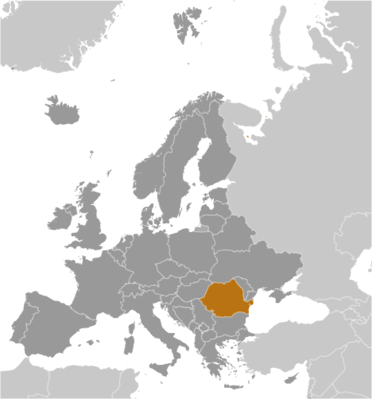
Locator 🗺️ Map
18,148,155 (2024 est.)
238,391 sq km
Southeastern Europe, bordering the Black Sea, between Bulgaria and Ukraine
🧭 Background
The principalities of Wallachia and Moldavia -- for centuries under the control of the Turkish Ottoman Empire -- secured their autonomy through the Treaty of Paris in 1856. They were de facto linked in 1859 and formally united in 1862 under the new name of Romania. The country joined the Allied Powers in World War I and subsequently acquired new territories -- most notably Transylvania -- that more than doubled its size. In 1940, Romania allied with the Axis powers and participated in the 1941 German invasion of the USSR. Three years later, overrun by the Soviets, Romania signed an armistice. The post-war Soviet occupation led to the formation of a communist "people's republic" in 1947 and the abdication of the king. The decades-long rule of dictator Nicolae CEAUSESCU, who took power in 1965, and his Securitate police state became increasingly oppressive and draconian through the 1980s. CEAUSESCU was overthrown and executed in late 1989. Former communists dominated the government until 1996 when they were swept from power. Romania joined NATO in 2004, the EU in 2007, and the Schengen Area for air and sea travel in 2024.
🗺️ Geography
Southeastern Europe, bordering the Black Sea, between Bulgaria and Ukraine
46 00 N, 25 00 E
Europe
238,391 sq km
229,891 sq km
8,500 sq km
Twice the size of Pennsylvania; slightly smaller than Oregon
2,844 km
Bulgaria 605 km; Hungary 424 km; Moldova 683 km; Serbia 531 km; Ukraine 601 km
225 km
12 nm
24 nm
200 nm
200-m depth or to the depth of exploitation
Temperate; cold, cloudy winters with frequent snow and fog; sunny summers with frequent showers and thunderstorms
Central Transylvanian Basin is separated from the Moldavian Plateau on the east by the Eastern Carpathian Mountains and separated from the Walachian Plain on the south by the Transylvanian Alps
Moldoveanu 2,544 m
Black Sea 0 m
414 m
Petroleum (reserves declining), timber, natural gas, coal, iron ore, salt, arable land, hydropower
55.3% (2023 est.)
Arable land: 36.5% (2023 est.)
Permanent crops: 1.8% (2023 est.)
Permanent pasture: 17% (2023 est.)
30.2% (2023 est.)
14.5% (2023 est.)
5,280 sq km (2022)
Dunărea (Danube) river mouth (shared with Germany [s], Austria, Slovakia, Hungary, Croatia, Serbia, Bulgaria, Moldova, and Ukraine) - 2,888 km note: [s] after country name indicates river source; [m] after country name indicates river mouth
(Black Sea) Danube (795,656 sq km)
Urbanization is not particularly high, and the population distribution is fairly even throughout most of the country, with urban areas attracting larger and denser populations
Earthquakes, most severe in south and southwest; geologic structure and climate promote landslides
Controls the most easily traversable land route between the Balkans, Moldova, and Ukraine; the Carpathian Mountains dominate the center of the country, and the Danube River forms much of the southern boundary with Serbia and Bulgaria
👥 People and Society⬆️ Top
18,148,155 (2024 est.)
8,747,795
9,400,360
Romanian(s)
Romanian
Romanian 89.3%, Hungarian 6%, Romani 3.4%, Ukrainian 0.3%, German 0.1%, other 0.9% (2021 est.)
Romanian (official) 91.6%, Hungarian 6.3%, Romani 1.2%, other 0.7% (2021 est.)
Cartea informativa a lumii, sursa indispensabila pentru informatii de baza. (Romanian) The World Factbook, the indispensable source for basic information.
Romanian Orthodox 85.3%, Roman Catholic 4.5%, Reformed 3%, Pentecostal 2.5%, other 4.7% (2021 est.)
15.4% (male 1,441,359/female 1,362,304)
62% (male 5,618,366/female 5,632,718)
22.6% (2024 est.) (male 1,688,070/female 2,405,338)
61.3 (2024 est.)
24.9 (2024 est.)
36.4 (2024 est.)
2.7 (2024 est.)
45.8 years (2025 est.)
44 years
46.9 years
-0.86% (2025 est.)
8.45 births/1,000 population (2025 est.)
14.28 deaths/1,000 population (2025 est.)
-2.81 migrant(s)/1,000 population (2025 est.)
Urbanization is not particularly high, and the population distribution is fairly even throughout most of the country, with urban areas attracting larger and denser populations
54.7% of total population (2023)
-0.15% annual rate of change (2020-25 est.)
1.776 million BUCHAREST (capital) (2023)
1.06 male(s)/female
1.06 male(s)/female
1 male(s)/female
0.7 male(s)/female
0.93 male(s)/female (2024 est.)
27.1 years (2020 est.)
12 deaths/100,000 live births (2023 est.)
5.3 deaths/1,000 live births (2025 est.)
5.8 deaths/1,000 live births
5.2 deaths/1,000 live births
76.9 years (2024 est.)
73.4 years
80.5 years
1.63 children born/woman (2025 est.)
0.79 (2025 est.)
Urban: 100% of population (2022 est.)
Rural: 100% of population (2022 est.)
Total: 100% of population (2022 est.)
Urban: 0% of population (2022 est.)
Rural: 0% of population (2022 est.)
Total: 0% of population (2022 est.)
6.5% of GDP (2021)
11.2% of national budget (2022 est.)
3.63 physicians/1,000 population (2022)
7.1 beds/1,000 population (2020 est.)
Urban: 97.5% of population (2022 est.)
Rural: 77.9% of population (2022 est.)
Total: 88.5% of population (2022 est.)
Urban: 2.5% of population (2022 est.)
Rural: 22.1% of population (2022 est.)
Total: 11.5% of population (2022 est.)
22.5% (2016)
10.96 liters of pure alcohol (2019 est.)
5.33 liters of pure alcohol (2019 est.)
3.38 liters of pure alcohol (2019 est.)
2.25 liters of pure alcohol (2019 est.)
0 liters of pure alcohol (2019 est.)
26.7% (2025 est.)
36.2% (2025 est.)
17.9% (2025 est.)
56% (2021 est.)
0.5% (2021)
6.9% (2021)
3.3% of GDP (2022 est.)
8.8% national budget (2022 est.)
99.2% (2021 est.)
99% (2021 est.)
99.3% (2021 est.)
14 years (2023 est.)
13 years (2023 est.)
14 years (2023 est.)
🌿 Environment⬆️ Top
Soil erosion, degradation, and desertification; water pollution; air pollution in south from industrial effluents; contamination of Danube delta wetlands
Air Pollution, Air Pollution-Heavy Metals, Air Pollution-Multi-effect Protocol, Air Pollution-Persistent Organic Pollutants, Antarctic-Environmental Protection, Antarctic Treaty, Biodiversity, Climate Change, Climate Change-Kyoto Protocol, Climate Change-Paris Agreement, Comprehensive Nuclear Test Ban, Desertification, Endangered Species, Environmental Modification, Hazardous Wastes, Law of the Sea, Nuclear Test Ban, Ozone Layer Protection, Ship Pollution, Tropical Timber 2006, Wetlands, Whaling
None of the selected agreements
Temperate; cold, cloudy winters with frequent snow and fog; sunny summers with frequent showers and thunderstorms
55.3% (2023 est.)
Arable land: 36.5% (2023 est.)
Permanent crops: 1.8% (2023 est.)
Permanent pasture: 17% (2023 est.)
30.2% (2023 est.)
14.5% (2023 est.)
54.7% of total population (2023)
-0.15% annual rate of change (2020-25 est.)
61.416 million metric tonnes of CO2 (2023 est.)
13.07 million metric tonnes of CO2 (2023 est.)
30.902 million metric tonnes of CO2 (2023 est.)
17.444 million metric tonnes of CO2 (2023 est.)
14.6 micrograms per cubic meter (2019 est.)
325.6 kt (2022-2024 est.)
355.4 kt (2019-2021 est.)
247.7 kt (2019-2021 est.)
11.8 kt (2019-2021 est.)
5.42 million tons (2024 est.)
13% (2022 est.)
1.256 billion cubic meters (2022)
3.94 billion cubic meters (2022)
2.955 billion cubic meters (2022)
212.01 billion cubic meters (2022 est.)
2
Buzău; Haţeg (2023)
🏛️ Government⬆️ Top
None
Romania
None
Romania
Kingdom of Romania, Romanian People's Republic, Socialist Republic of Romania
The name derives from the Latin Romani, meaning "people from Rome;" the area was an outpost of the Roman Empire in the 2nd century A.D., and the current name was adopted when Moldavia and Wallachia merged in 1861
Semi-presidential republic
Bucharest
44 26 N, 26 06 E
UTC+2 (7 hours ahead of Washington, DC, during Standard Time)
+1hr, begins last Sunday in March; ends last Sunday in October
The name is said to come from a shepherd named Bucur who is reputed to have founded the town in 1457, but a settlement probably already existed on the site; the name may come from the personal name of an early landowner
41 counties (judete, singular - judet) and 1 municipality* (municipiu); Alba, Arad, Arges, Bacau, Bihor, Bistrita-Nasaud, Botosani, Braila, Brasov, Bucuresti (Bucharest)*, Buzau, Calarasi, Caras-Severin, Cluj, Constanta, Covasna, Dambovita, Dolj, Galati, Gorj, Giurgiu, Harghita, Hunedoara, Ialomita, Iasi, Ilfov, Maramures, Mehedinti, Mures, Neamt, Olt, Prahova, Salaj, Satu Mare, Sibiu, Suceava, Teleorman, Timis, Tulcea, Vaslui, Valcea, Vrancea
Civil law system
Several previous; latest adopted 21 November 1991, approved by referendum and effective 8 December 1991
Initiated by the president of Romania through a proposal by the government, by at least one fourth of deputies or senators in Parliament, or by petition of eligible voters representing at least half of Romania’s counties; passage requires at least two-thirds majority vote by both chambers or – if mediation is required - by three-fourths majority vote in a joint session, followed by approval in a referendum; articles, including those on national sovereignty, form of government, political pluralism, and fundamental rights and freedoms cannot be amended
Accepts compulsory ICJ jurisdiction with reservations; accepts ICCt jurisdiction
No
At least one parent must be a citizen of Romania
Yes
5 years
18 years of age; universal
President Nicușor DAN (since 26 May 2025)
Prime Minister Ilie BOLOJAN (since 23 June 2005)
Council of Ministers appointed by the prime minister
President directly elected by absolute-majority popular vote in 2 rounds, if needed, for a 5-year term (eligible for a second term); prime minister appointed by the president with consent of Parliament
18 May 2025
2025: Nicușor DAN elected president in runoff; percent of vote - Nicușor DAN (unaffiliated) 53.6%, George SIMION (AUR) 46.4% 2019: Klaus IOHANNIS reelected president in second round; percent of vote - Klaus IOHANNIS (PNL) 66.1%, Viorica DANCILA (PSD) 33.9%
2030
Parliament of Romania (Parlamentul României)
Bicameral
Chamber of Deputies (Camera Deputatilor)
331 (all directly elected)
Proportional representation
Full renewal
4 years
12/1/2024
Social Democratic Party (PSD) (86); Alliance for the Union of Romanians (AUR) (63); National Liberal Party (PNL) (49); Save Romania Union (USR) (40); S.O.S. Romania (28); Party of Young People (POT) (24); Democratic Union of Hungarians in Romania (UDMR) (22)
22.4%
November 2028
Senate (Senatul)
136 (all directly elected)
Proportional representation
Full renewal
4 years
12/1/2024
Social Democratic Party (PSD) (36); Alliance for the Union of Romanians (AUR) (28); National Liberal Party (PNL) (22); Save Romania Union (USR) (19); S.O.S. Romania (12); Democratic Union of Hungarians in Romania (UDMR) (10); Party of Young People (POT) (7)
20.9%
November 2028
High Court of Cassation and Justice (consists of 111 judges organized into civil, penal, commercial, contentious administrative and fiscal business, and joint sections); Supreme Constitutional Court (consists of 9 members)
High Court of Cassation and Justice judges appointed by the president upon nomination by the Superior Council of Magistracy, a 19-member body of judges, prosecutors, and law specialists; judges appointed for 6-year renewable terms; Constitutional Court members - 6 elected by Parliament and 3 appointed by the president; members serve 9-year, nonrenewable terms
Courts of Appeal; regional tribunals; first instance courts; military and arbitration courts
Alliance for the Fatherland or APP Alliance for the Unity of Romanians or AUR Christian-Democratic National Peasants' Party or PNT-CD Civic Hungarian Party Democratic Union of Hungarians in Romania or UDMR Ecologist Party of Romania or PER Force of the Right or FD Greater Romania Party or PRM Green Party National Liberal Party or PNL Popular Movement Party or PMP PRO Romania or PRO Romanian Nationhood Party or PNR Save Romania Union Party or USR Social Democratic Party or PSD Social Liberal Humanist Party or PUSL (formerly Humanist Power Party (Social-Liberal) or PPU-SL) S.O.S. Romania The Right Alternative or AD United Romania Party or PRU We are Renewing the European Project in Romania or REPER
Ambassador Dan-Andrei MURARU (since 15 September 2021)
1607 23rd Street NW, Washington, DC 20008
[1] (202) 332-4829
[1] (202) 232-4748
Washington@mae.ro https://washington.mae.ro/en
Chicago, Los Angeles, Miami, New York
Ambassador (vacant); Chargé d'Affaires Michael L. DICKERSON (since 20 May 2025)
4-6, Dr. Liviu Librescu Blvd., District 1, Bucharest, 015118
5260 Bucharest Place, Washington, DC 20521-5260
[40] (21) 200-3300
[40] (21) 200-3442
ACSBucharest@state.gov https://ro.usembassy.gov/
Australia Group, BIS, BSEC, CBSS (observer), CD, CE, CEI, EAPC, EBRD, ECB, EIB, ESA, EU, FAO, G-9, IAEA, IBRD, ICAO, ICC (national committees), ICCt, ICRM, IDA, IFAD, IFC, IFRCS, IHO, ILO, IMF, IMO, IMSO, Interpol, IOC, IOM, IPU, ISO, ITSO, ITU, ITUC (NGOs), LAIA (observer), MIGA, MONUSCO, NATO, NSG, OAS (observer), OIF, OPCW, OSCE, PCA, SELEC, UN, UNCTAD, UNESCO, UNHCR, UNIDO, Union Latina, UNMIL, UNMISS, UNOCI, UNOOSA,UNWTO, UPU, Wassenaar Arrangement, WCO, WFTU (NGOs), WHO, WIPO, WMO, WTO, ZC
9 May 1877 (independence proclaimed from the Ottoman Empire; 13 July 1878 (independence recognized by the Treaty of Berlin); 26 March 1881 (kingdom proclaimed); 30 December 1947 (republic proclaimed)
Unification Day (unification of Romania and Transylvania), 1 December (1918)
Description: three equal vertical bands of blue (left side), yellow, and red meaning: the colors come from the principalities of Walachia (red and yellow) and Moldavia (red and blue), which united in 1862 to form Romania history: modeled on the French flag; the national coat of arms that used to be centered on the yellow band has been removed
Golden eagle
Blue, yellow, red
"Desteapta-te romane!" (Wake up, Romanian!)
Andrei MURESIANU/Anton PANN
Adopted 1990; the anthem was written during the 1848 Revolution
11 (9 cultural, 2 natural)
Danube Delta (n); Churches of Moldavia (c); Monastery of Horezu (c); Villages with Fortified Churches in Transylvania (c); Dacian Fortresses of the Orastie Mountains (c); Historic Center of Sighişoara (c); Wooden Churches of Maramureş (c); Ancient and Primeval Beech Forests of the Carpathians and Other Regions of Europe (n); Roșia Montană Mining Landscape (c); Brâncuși Monumental Ensemble of Târgu Jiu (c); Frontiers of the Roman Empire – Dacia (c)
💹 Economy⬆️ Top
High-income, EU-member economy; euro membership delayed over macroeconomic indicators; persistent inflation, but consumption and EU-funded investments driving recovery; skilled labor shortage; high public debt and budget deficit; challenges include fiscal sustainability and political instability
$774.376 billion (2024 est.)
$768.126 billion (2023 est.)
$750.091 billion (2022 est.)
0.8% (2024 est.)
2.4% (2023 est.)
4% (2022 est.)
$40,600 (2024 est.)
$40,300 (2023 est.)
$39,400 (2022 est.)
$382.768 billion (2024 est.)
5.7% (2024 est.)
10.4% (2023 est.)
13.8% (2022 est.)
3.3% (2024 est.)
25% (2024 est.)
62.5% (2024 est.)
63.5% (2024 est.)
18.3% (2024 est.)
25.7% (2024 est.)
-1.4% (2024 est.)
35.6% (2024 est.)
-41.7% (2024 est.)
Wheat, maize, milk, sunflower seeds, barley, rapeseed, potatoes, grapes, plums, apples (2023)
Electric machinery and equipment, auto assembly, textiles and footwear, light machinery, metallurgy, chemicals, food processing, petroleum refining, mining, timber, construction materials
-0.9% (2024 est.)
8.263 million (2024 est.)
5.4% (2024 est.)
5.6% (2023 est.)
5.7% (2022 est.)
21.3% (2024 est.)
21.1% (2024 est.)
21.8% (2024 est.)
21.1% (2022 est.)
32.3 (2022 est.)
25.1% of household expenditures (2023 est.)
6.1% of household expenditures (2023 est.)
1.9% (2022 est.)
22.6% (2022 est.)
2.5% of GDP (2024 est.)
2.8% of GDP (2023 est.)
3% of GDP (2022 est.)
$93.691 billion (2022 est.)
$112.799 billion (2022 est.)
50.9% of GDP (2022 est.)
16.2% (of GDP) (2022 est.)
-$31.988 billion (2024 est.)
-$24.461 billion (2023 est.)
-$27.326 billion (2022 est.)
$136.253 billion (2024 est.)
$136.488 billion (2023 est.)
$129.286 billion (2022 est.)
Germany 19%, Italy 10%, France 6%, UK 5%, Hungary 4% (2023)
Cars, vehicle parts/accessories, insulated wire, garments, wheat (2023)
$159.575 billion (2024 est.)
$153.427 billion (2023 est.)
$149.209 billion (2022 est.)
Germany 19%, Italy 8%, Hungary 6%, Poland 6%, China 6% (2023)
Vehicle parts/accessories, packaged medicine, cars, crude petroleum, plastic products (2023)
$73.391 billion (2024 est.)
$73 billion (2023 est.)
$55.81 billion (2022 est.)
Lei (RON) per US dollar -
4.598 (2024 est.)
4.574 (2023 est.)
4.688 (2022 est.)
4.16 (2021 est.)
4.244 (2020 est.)
⚡ Energy⬆️ Top
100% (2022 est.)
19.748 million kW (2023 est.)
48.73 billion kWh (2023 est.)
13.106 billion kWh (2023 est.)
10.088 billion kWh (2023 est.)
5.817 billion kWh (2023 est.)
32.2% of total installed capacity (2023 est.)
18% of total installed capacity (2023 est.)
3.9% of total installed capacity (2023 est.)
13% of total installed capacity (2023 est.)
32.5% of total installed capacity (2023 est.)
0.4% of total installed capacity (2023 est.)
2 (2025)
1.3GW (2025 est.)
18.9% (2023 est.)
14.752 million metric tons (2023 est.)
15.533 million metric tons (2023 est.)
290,000 metric tons (2023 est.)
736,000 metric tons (2023 est.)
291 million metric tons (2023 est.)
67,000 bbl/day (2023 est.)
220,000 bbl/day (2023 est.)
600 million barrels (2021 est.)
9.632 billion cubic meters (2023 est.)
9.395 billion cubic meters (2023 est.)
2.231 billion cubic meters (2023 est.)
2.793 billion cubic meters (2023 est.)
105.48 billion cubic meters (2021 est.)
59.377 million Btu/person (2023 est.)
📡 Communications⬆️ Top
1.96 million (2023 est.)
10 (2023 est.)
23.2 million (2022 est.)
118 (2022 est.)
A mixture of public and private TV stations; 7 public (2 national, 5 regional) and 187 private TV stations using terrestrial broadcasting, plus 11 public and 86 private TV stations using satellite broadcasting; state-owned public radio broadcaster operates 4 national networks, as well as regional and local stations; 502 private radio stations using terrestrial broadcasting, and 26 using satellite broadcasting
.ro
89% (2023 est.)
6.63 million (2023 est.)
35 (2023 est.)
🚚 Transportation⬆️ Top
YR
103 (2025)
24 (2025)
10,628 km (2020) 4,030 km electrified
127 (2023)
General cargo 9, oil tanker 7, other 111
11 (2024)
0
2
1
8
4
Basarabi, Braila, Cernavoda, Constanta, Danube-Black Sea Canal, Galati, Mangalia, Medgidia, Midia, Sulina, Tulcea
🛡️ Military and Security⬆️ Top
Romanian Armed Forces (Forțele Armate Române or Armata Română): Romanian Land Forces, Romanian Naval Forces, Romanian Air Force Ministry of Internal Affairs: Romanian Police, Romanian Gendarmerie, Romanian Border Police (2025)
2.3% of GDP (2025 est.)
2.2% of GDP (2024 est.)
1.6% of GDP (2023 est.)
1.8% of GDP (2022 est.)
1.9% of GDP (2021 est.)
Approximately 70,000 active Armed Forces (2025)
The military's inventory includes a considerable amount of Soviet-era and older domestically produced weapons systems, although in recent years Romania has launched an effort to acquire more modern and NATO-standard equipment from European countries and the US, including aircraft and armored vehicles (2025)
Typically 18-35 years of age for voluntary service for men and women; compulsory service ended in 2007 (2025)
470 Bosnia Herzegovina (EUFOR); 200 Kosovo (KFOR/NATO); up to 120 Poland (NATO); Romania also has small numbers of military personnel deployed on other international missions under the EU, NATO, and UN (2025)
The Romanian Armed Forces are responsible for territorial defense, fulfilling the country's commitments to European security, and contributing to multinational peacekeeping operations; the military has a variety of concerns, including Russian aggression against Ukraine, Russia's activities in the Black Sea and in Moldova, cyber attacks, hybrid threats, and terrorism; a key focus for the military is equipment modernization Romania joined NATO in 2004, and its membership forms a key pillar of the country’s defense policy; it hosts a NATO multinational divisional headquarters (Multinational Division Southeast) and a French-led ground force battlegroup as part of NATO's Enhanced Forward Presence initiative in the southeastern part of the Alliance, which came about in response to Russia’s 2022 invasion of Ukraine; NATO allies have also sent detachments of fighters to augment the Romanian Air Force since 2014 because of aggressive Russian activity in the Black Sea region; the Romanian military trains with NATO and its member states and has participated in NATO- and EU-led multinational missions in Bosnia and Herzegovina, Kosovo, and Poland; it also participates in UN peacekeeping missions (2025)
🛰️ Space⬆️ Top
Romanian Space Agency (Agentia Spatiala Romania, ROSA; established 1991) (2025)
Develops and produces a range of capabilities and technologies, including satellites, satellite launch vehicles, remote sensing, human space flight, navigation, and telecommunications; program is integrated into the ESA; participates in EU and international space programs; works with a variety of foreign space agencies and commercial space entities, including those of Azerbaijan, China, Japan, Russia, and the US; also works bilaterally with ESA member states, particularly Bulgaria, France, Germany, Hungary, Italy; has an active space-industry sector with over 50 entities (2025)
1967-1968 - began participating in Soviet Intercosmos program and established the Romanian Commission for Space Activities to coordinate national space activities 1981 - first Romanian in space on Soviet spacecraft 2010 - domestically developed commercial rocket launched to an altitude of 40,000 m (24.9 mi) 2012 - first domestically produced scientific/experimental microsatellite (Goliat) launched (failed to operate) 2022 - joined US-led Artemis Accords for space exploration 2023 - digital amateur-radio-repeater microsatellite (ROM-2) launched on US commercial rocket
🚨 Terrorism⬆️ Top
Islamic State of Iraq and ash-Sham (ISIS)
🌐 Transnational Issues⬆️ Top
184,991 (2024 est.)
297 (2024 est.)
Source: Factbook JSON archive.