Saipan
 Northern Mariana Islands
Key facts and a structured country profile. 🧾 Change log 📐 True Size
Locator 🗺️ Map
51,118 (2024 est.)
464 sq km
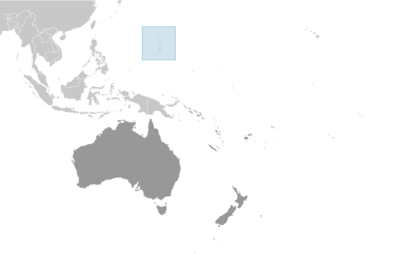
Oceania, islands in the North Pacific Ocean, about three-quarters of the way from Hawaii to the Philippines
🧭 Background
Austronesian people settled the Northern Mariana Islands around 1500 B.C. These people became the indigenous Chamorro and were influenced by later migrations, including Micronesians in the first century A.D. and island Southeast Asians around 900. Spanish explorer Ferdinand MAGELLAN sailed through the Mariana Islands in 1521, and Spain claimed them in 1565. Spain formally colonized the Mariana Islands in 1668 and administered the archipelago from Guam. Spain’s brutal repression of the Chamorro, along with new diseases and intermittent warfare, reduced the indigenous population by about 90% in the 1700s. With a similar dynamic occurring on Guam, Spain forced the Chamorro from the Northern Mariana Islands to resettle there. By the time they returned, many other Micronesians, including Chuukese and Yapese, had already settled on their islands. In 1898, Spain ceded Guam to the US after the Spanish-American War but sold the Northern Mariana Islands to Germany under the German-Spanish Treaty of 1899. Germany administered the territory from German New Guinea but took a hands-off approach to day-to-day life. Following World War I, Japan administered the islands under a League of Nations mandate. Japan focused on sugar production and brought in thousands of Japanese laborers, who quickly outnumbered the Chamorro on the islands. During World War II, Japan invaded Guam from the Northern Mariana Islands and used Marianan Chamorro as translators with Guamanian Chamorro, creating friction between the two Chamorro communities that continues to this day. The US captured the Northern Mariana Islands in 1944 after the Battle of Saipan and later administered them as part of the Trust Territory of the Pacific Islands (TTPI). On four occasions in the 1950s and 1960s, voters opted for integration with Guam, which Guam rejected in 1969. In 1978, the Northern Mariana Islands was granted self-governance separate from the rest of the TTPI, and in 1986, islanders were granted US citizenship, with the territory coming under US sovereignty as the Commonwealth of the Northern Mariana Islands (CNMI). In 2009, the CNMI became the final US territory to elect a nonvoting delegate to the US Congress.
🗺️ Geography
Oceania, islands in the North Pacific Ocean, about three-quarters of the way from Hawaii to the Philippines
15 12 N, 145 45 E
Oceania
464 sq km
464 sq km
0 sq km
2.5 times the size of Washington, D.C.
0 km
1,482 km
12 nm
200 nm
Tropical marine; moderated by northeast trade winds, little seasonal temperature variation; dry season December to June, rainy season July to October
The southern islands in this north-south trending archipelago are limestone, with fringing coral reefs; the northern islands are volcanic, with active volcanoes on several islands
Agrihan Volcano 965 m
Pacific Ocean 0 m
Arable land, fish
1.2% (2023 est.)
Arable land: 0.2% (2023 est.)
Permanent crops: 0.2% (2023 est.)
Permanent pasture: 0.8% (2023 est.)
53% (2023 est.)
45.9% (2023 est.)
1 sq km (2012)
Approximately 90% of the population lives on the island of Saipan
Active volcanoes on Pagan and Agrihan; typhoons (especially August to November)
Strategic location in the North Pacific Ocean
👥 People and Society⬆️ Top
51,118 (2024 est.)
27,044
24,074
NA (US citizens)
NA
Asian 50% (includes Filipino 35.3%, Chinese 6.8%, Korean 4.2%, and other Asian 3.7%), Native Hawaiian or other Pacific Islander 34.9% (includes Chamorro 23.9%, Carolinian 4.6%, and other Native Hawaiian or Pacific Islander 6.4%), other 2.5%, two or more ethnicities or races 12.7% (2010 est.)
Philippine languages 32.8%, Chamorro (official) 24.1%, English (official) 17%, other Pacific island languages 10.1% (includes Carolinian (official), Chinese 6.8%, other Asian languages 7.3%, other 1.9% (2010 est.)
Christian (Roman Catholic majority, although traditional beliefs and taboos may still be found)
22.1% (male 6,066/female 5,231)
67.7% (male 18,206/female 16,377)
10.2% (2024 est.) (male 2,772/female 2,466)
47.8 (2024 est.)
32.7 (2024 est.)
15.1 (2024 est.)
6.6 (2024 est.)
32.6 years (2025 est.)
31.8 years
33.2 years
-0.33% (2025 est.)
15.8 births/1,000 population (2025 est.)
5.91 deaths/1,000 population (2025 est.)
-13.21 migrant(s)/1,000 population (2025 est.)
Approximately 90% of the population lives on the island of Saipan
92.1% of total population (2023)
0.36% annual rate of change (2020-25 est.)
51,000 SAIPAN (capital) (2018)
1.17 male(s)/female
1.16 male(s)/female
1.11 male(s)/female
1.12 male(s)/female
1.12 male(s)/female (2024 est.)
11.6 deaths/1,000 live births (2025 est.)
14.4 deaths/1,000 live births
9 deaths/1,000 live births
77.1 years (2024 est.)
75 years
79.5 years
2.53 children born/woman (2025 est.)
1.17 (2025 est.)
Total: 100% of population (2022 est.)
Total: 0% of population (2022 est.)
Total: 99.4% of population (2022 est.)
Total: 0.6% of population (2022 est.)
38.2% (2020 est.)
🌿 Environment⬆️ Top
Contamination of groundwater on Saipan; clean-up of landfill; protection of endangered species
Tropical marine; moderated by northeast trade winds, little seasonal temperature variation; dry season December to June, rainy season July to October
1.2% (2023 est.)
Arable land: 0.2% (2023 est.)
Permanent crops: 0.2% (2023 est.)
Permanent pasture: 0.8% (2023 est.)
53% (2023 est.)
45.9% (2023 est.)
92.1% of total population (2023)
0.36% annual rate of change (2020-25 est.)
32,800 tons (2024 est.)
36% (2016 est.)
🏛️ Government⬆️ Top
Commonwealth of the Northern Mariana Islands
Northern Mariana Islands
Trust Territory of the Pacific Islands, Mariana Islands District
CNMI
Spain named the islands in 1667 in honor of the Spanish Queen, MARIANA of Austria
A commonwealth in political union with and under the sovereignty of the US; republican form of government with separate executive, legislative, and judicial branches
Commonwealth in political union with and under the sovereignty of the US; federal funds administered by the US Department of the Interior, Office of Insular Affairs
Saipan
15 12 N, 145 45 E
UTC+10 (15 hours ahead of Washington, DC, during Standard Time)
The origin of the name is unclear; it probably comes from a local word meaning "deserted" or "uninhabited," but stories vary on how it came to be used
No first-order administrative divisions as defined by the US government, but 4 municipalities are considered second-order: Northern Islands, Rota, Saipan, Tinian
The laws of the US apply, except for customs and some aspects of taxation
Partially effective 9 January 1978 (Constitution of the Commonwealth of the Northern Mariana Islands); fully effective 4 November 1986 (Covenant Agreement)
Proposed by constitutional convention, by public petition, or by the Legislature; ratification of proposed amendments requires approval by voters at the next general election or special election; amendments proposed by constitutional convention or by petition become effective if approved by a majority of voters and at least two-thirds majority of voters in each of two senatorial districts; amendments proposed by the Legislature are effective if approved by majority vote
See United States
18 years of age; universal
President Donald J. TRUMP (since 20 January 2025)
Governor David M. APATANG (since 24 July 2025)
Sworn in by CNMI Chief Justice Alexandro Castro on Thursday, 24 July 2025
President and vice president indirectly elected on the same ballot by an Electoral College of electors chosen from each state; president and vice president serve a 4-year term (eligible for a second term); under the US Constitution, residents of the Northern Mariana Islands do not vote in elections for US president and vice president; however, they may vote in Democratic and Republican party presidential primary elections; governor directly elected by absolute majority vote in 2 rounds, if needed
8 November 2022, with a runoff held on 25 November 2022
2022: Arnold PALACIOS elected governor in second round; percent of vote in first round - Ralph TORRES (Republican) 38.8%; Arnold PALACIOS (independent) 32.2%, Tina SABLAN (Democrat) 28%; percent of vote in second round - Arnold PALACIOS 54%, Ralph TORRES 46%; David APATANG (independent) elected lieutenant governor 2018: Ralph TORRES elected governor; percent of vote - Ralph TORRES (Republican) 62.2%, Juan BABAUTA (independent) 37.8%; Arnold PALACIOS elected lieutenant governor
2026
Supreme Court of the Commonwealth of the Northern Mariana Islands (CNMI) (consists of the chief justice and 2 associate justices); US Federal District Court (consists of 1 judge)
CNMI Supreme Court judges appointed by the governor and confirmed by the CNMI Senate; judges appointed for 8-year terms and another term if directly elected in a popular election; US Federal District Court judges appointed by the US president and confirmed by the US Senate; judges appointed for renewable 10-year terms
Superior Court
Democratic Party Republican Party
None (commonwealth in political union with the US)
PIF (observer), SPC, UPU
None (commonwealth in political union with the US)
Commonwealth Day, 8 January (1978)
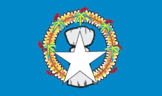
Description: blue with a five-pointed white star on a gray latte stone (a traditional foundation stone) in the center, surrounded by a mwáár or head lei (wreath) meaning: blue stands for the Pacific Ocean, the star for the Commonwealth, and the latte stone and mwáár for Marianas culture; the mwáár is made from four kinds of flowers: flores mayo (Plumeria), ylang-ylang or langilang (Cananga odorata), angagha or peacock flower (Caesalpinia pulcherrima), and teibwo or Pacific basil (Ocimum tenuiflorum)
Latte stone
Blue, white
"The Star-Spangled Banner"
Francis Scott KEY/John Stafford SMITH
Official anthem, as a US commonwealth
💹 Economy⬆️ Top
US Pacific island commonwealth economy; growing Chinese and Korean tourist destination; hit hard by 2018 typhoon; dependent on energy imports; exempt from some US labor and immigration laws; longstanding garment production
$1.242 billion (2016 est.)
$933 million (2015 est.)
$845 million (2014 est.)
16.6% (2022 est.)
5% (2021 est.)
-29.1% (2020 est.)
$1.096 billion (2022 est.)
Vegetables and melons, fruits and nuts; ornamental plants; livestock, poultry, eggs; fish and aquaculture products
Tourism, banking, construction, fishing, handicrafts, other services
$389.6 million (2016 est.)
$344 million (2015 est.)
$244 million (2022 est.)
$55 million (2021 est.)
$128 million (2020 est.)
Sweden 21%, Singapore 20%, Hong Kong 12%, UK 8%, India 7% (2023)
Scrap iron, refined petroleum, scrap copper, hydraulic engines, integrated circuits (2021)
$777 million (2022 est.)
$666 million (2021 est.)
$556 million (2020 est.)
Singapore 63%, Japan 12%, Hong Kong 8%, Taiwan 4%, Philippines 3% (2023)
Refined petroleum, cars, jewelry, trunks and cases, flavored water (2023)
The US dollar is used
⚡ Energy⬆️ Top
100% (2022 est.)
📡 Communications⬆️ Top
20,000 (2021 est.)
42 (2022 est.)
20,474 (2004 est.)
28 (2004)
1 TV station on Saipan; multi-channel cable TV services are available on Saipan; 9 licensed radio stations (2009)
.mp
25.1% (2021 est.)
🚚 Transportation⬆️ Top
4 (2025)
7 (2025)
3 (2024)
0
0
1
2
1
Rota, Saipan, Tinian
🛡️ Military and Security⬆️ Top
Defense is the responsibility of the US
Source: Factbook JSON archive.