Plymouth
 Montserrat
Key facts and a structured country profile. 🧾 Change log 📐 True Size
Locator 🗺️ Map
5,468 (2024 est.)
102 sq km
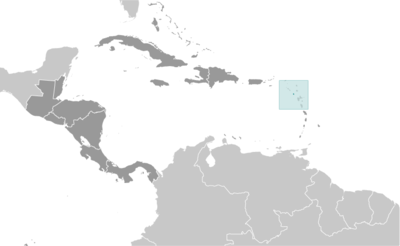
Caribbean, island in the Caribbean Sea, southeast of Puerto Rico
🧭 Background
English and Irish colonists from St. Kitts first settled on Montserrat in 1632; the first African slaves arrived three decades later. The British and French fought for possession of the island for most of the 18th century, but it finally was confirmed as a British possession in 1783. The island's sugar plantation economy was converted to small farm landholdings in the mid-19th century. The Soufriere Hills Volcano erupted in 1995, devastating much of the island; two thirds of the population fled abroad. Montserrat has endured volcanic activity since, with the last eruption occurring in 2013.
🗺️ Geography
Caribbean, island in the Caribbean Sea, southeast of Puerto Rico
16 45 N, 62 12 W
Central America and the Caribbean
102 sq km
102 sq km
0 sq km
About 0.6 times the size of Washington, D.C.
0 km
40 km
12 nm
200 nm
Tropical; little daily or seasonal temperature variation
Volcanic island, mostly mountainous, with small coastal lowland
Soufriere Hills volcano pre-eruption height was 915 m; current lava dome is subject to periodic build up and collapse; estimated dome height was 1,050 m in 2015
Caribbean Sea 0 m
NEGL
30% (2023 est.)
Arable land: 20% (2023 est.)
Permanent crops: 0% (2022 est.)
Permanent pasture: 10% (2023 est.)
24.2% (2023 est.)
45.8% (2023 est.)
0 sq km (2022)
Only the northern half of the island is populated; the southern portion is uninhabitable due to volcanic activity
Volcanic eruptions; severe hurricanes (June to November) volcanism: Soufrière Hills volcano (915 m) has erupted continuously since 1995; a massive eruption in 1997 destroyed most of the capital, Plymouth, and made about half of the island uninhabitable; the island of Montserrat is part of the volcanic island arc of the Lesser Antilles that extends from Saba in the north to Grenada in the south
The island is entirely volcanic in origin and composed of three major volcanic centers of differing ages
👥 People and Society⬆️ Top
5,468 (2024 est.)
2,728
2,740
Montserratian(s)
Montserratian
African/Black 86.2%, mixed 4.8%, Hispanic/Spanish 3%, Caucasian/White 2.7%, East Indian/Indian 1.6%, other 1.8% (2018 est.)
English
Protestant 71.4% (includes Anglican 17.7%, Pentecostal/Full Gospel 16.1%, Seventh Day Adventist 15%, Methodist 13.9%, Church of God 6.7%, other Protestant 2%), Roman Catholic 11.4%, Rastafarian 1.4%, Hindu 1.2%, Jehovah's Witness 1%, Muslim 0.4%, other/not stated 5.1%, none 7.9% (2018 est.)
15.8% (male 446/female 420)
76.1% (male 2,062/female 2,101)
8% (2024 est.) (male 220/female 219)
31.3 (2024 est.)
20.8 (2024 est.)
10.5 (2024 est.)
9.5 (2024 est.)
37.1 years (2025 est.)
35.4 years
37.8 years
0.55% (2025 est.)
11.64 births/1,000 population (2025 est.)
6.18 deaths/1,000 population (2025 est.)
0 migrant(s)/1,000 population (2025 est.)
Only the northern half of the island is populated; the southern portion is uninhabitable due to volcanic activity
9.3% of total population (2023)
0.94% annual rate of change (2020-25 est.)
1.03 male(s)/female
1.06 male(s)/female
0.98 male(s)/female
1 male(s)/female
1 male(s)/female (2024 est.)
9.4 deaths/1,000 live births (2025 est.)
8 deaths/1,000 live births
11.6 deaths/1,000 live births
76.1 years (2024 est.)
76.9 years
75.3 years
1.34 children born/woman (2025 est.)
0.65 (2025 est.)
Total: 98.1% of population (2022 est.)
Total: 1.9% of population (2022 est.)
Total: 99.6% of population (2022 est.)
Total: 0.4% of population (2022 est.)
35.8% (2023 est.)
7.2% of GDP (2023 est.)
5.7% national budget (2025 est.)
🌿 Environment⬆️ Top
Land erosion on slopes that have been cleared for cultivation
Tropical; little daily or seasonal temperature variation
30% (2023 est.)
Arable land: 20% (2023 est.)
Permanent crops: 0% (2022 est.)
Permanent pasture: 10% (2023 est.)
24.2% (2023 est.)
45.8% (2023 est.)
9.3% of total population (2023)
0.94% annual rate of change (2020-25 est.)
24,000 metric tonnes of CO2 (2023 est.)
24,000 metric tonnes of CO2 (2023 est.)
🏛️ Government⬆️ Top
None
Montserrat
Explorer Christopher COLUMBUS named the island in 1493 after the Benedictine abbey Santa Maria de Montserrat, near Barcelona, Spain
Parliamentary democracy; self-governing overseas territory of the UK
Overseas territory of the UK
Plymouth
16 42 N, 62 13 W
UTC-4 (1 hour ahead of Washington, DC, during Standard Time)
Now entirely deserted because of volcanic activity, the city was named after Plymouth, England
3 parishes; Saint Anthony, Saint Georges, Saint Peter
English common law
Previous 1960; latest put into force 20 October 2010 (The Montserrat Constitution Order 2010)
See United Kingdom
18 years of age; universal
King CHARLES III (since 8 September 2022); represented by Governor Sarah TUCKER (since 6 April 2023)
Premier Easton TAYLOR-FARRELL (since 19 November 2019)
Executive Council consists of the governor, the premier, 3 other ministers, the attorney general, and the finance secretary
The monarchy is hereditary; governor appointed by the monarch; following legislative elections, the leader of the majority party usually becomes premier
Legislative Assembly
Unicameral
12 (directly elected)
Plurality/majority
Full renewal
5 years
11/18/2019
MCAP (5); PDM (3); independent (1)
33.3%
2024
The Eastern Caribbean Supreme Court (ECSC) is the superior court of the Organization of Eastern Caribbean States; the ECSC is headquartered on St. Lucia and consists of the Court of Appeal -- headed by the chief justice and 4 judges -- and the High Court with 18 judges; the Court of Appeal travels to member states on a schedule to hear appeals from the High Court and subordinate courts; Montserrat is a member of the Caribbean Court of Justice
Chief justice of Eastern Caribbean Supreme Court appointed by the British monarch; other justices and judges appointed by the Judicial and Legal Services Commission, and independent body of judicial officials; Court of Appeal justices appointed for life with mandatory retirement at age 65; High Court judges appointed for life with mandatory retirement at age 62
Magistrate's court
Movement for Change and Prosperity or MCAP People's Democratic Movement or PDM
None (overseas territory of the UK)
None (overseas territory of the UK); alternate contact is the US Embassy in Barbados [1] (246) 227-4000; US Embassy Bridgetown, Wildey Business Park, St. Michael BB 14006, Barbados, WI
Caricom, CDB, Interpol (subbureau), OECS, UPU
None (overseas territory of the UK)
Official birthday of King Charles III, usually celebrated the second Saturday in June (1948)
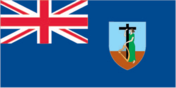
Description: blue with the UK flag in the upper-left quadrant and the Montserratian coat of arms centered in the right half of the flag; the arms show a woman in a green dress standing beside a yellow harp and embracing a large, dark-brown cross with her right arm meaning: the woman is Erin, the female personification of Ireland, the harp is an Irish symbol, and the cross represents the Christian faith; blue stands for awareness, trustworthiness, determination, and righteousness
Montserrat's coat of arms dates back to 1909 and reflects the country's Irish settlers, who first arrived in 1632; the woman in the green dress is Erin, the personification of Ireland, and she holds Ireland's symbol, a gold harp; the cross represents Christianity, Monserrat's predominant religion
"God Save the King"
Unknown
Official anthem, as a UK territory
💹 Economy⬆️ Top
Formerly high-income economy; volcanic activity destroyed much of original infrastructure and economy; new capital and port is being developed; key geothermal and solar power generation; key music recording operations
$89.254 million (2024 est.)
$86.875 million (2023 est.)
$80.972 million (2022 est.)
$19,300 (2024 est.)
$18,200 (2023 est.)
$16,200 (2022 est.)
$84.537 million (2024 est.)
4% (2022 est.)
1.7% (2021 est.)
-1.9% (2020 est.)
90.8% (2017 est.)
50.4% (2017 est.)
17.9% (2017 est.)
-0.1% (2017 est.)
29.5% (2017 est.)
-88.6% (2017 est.)
Cabbages, carrots, cucumbers, tomatoes, onions, peppers; livestock products
Tourism, rum, textiles, electronic appliances
$55.651 million (2014 est.)
$43.652 million (2014 est.)
USA 25%, Antigua & Barbuda 13%, Guyana 13%, Egypt 12%, France 10% (2023)
Gravel and crushed stone, sand (2023)
$15.3 million (2021 est.)
$39.44 million (2017 est.)
$36.1 million (2016 est.)
USA 62%, Antigua & Barbuda 6%, UK 5%, Belgium 4%, Trinidad & Tobago 3% (2023)
Refined petroleum, electric generating sets, cars, stone processing machines, x-ray equipment (2023)
East Caribbean dollars (XCD) per US dollar -
2.7 (2024 est.)
2.7 (2023 est.)
2.7 (2022 est.)
2.7 (2021 est.)
2.7 (2020 est.)
⚡ Energy⬆️ Top
100% (2020)
6,000 kW (2023 est.)
15.968 million kWh (2023 est.)
370,000 kWh (2023 est.)
87.8% of total installed capacity (2023 est.)
12.2% of total installed capacity (2023 est.)
200 bbl/day (2023 est.)
📡 Communications⬆️ Top
3,000 (2020 est.)
67 (2020 est.)
5,000 (2020 est.)
110 (2020 est.)
Radio Montserrat, a public radio broadcaster, transmits on 1 station and has a repeater transmission to a second station; repeater transmissions from the GEM Radio Network of Trinidad and Tobago provide another 2 radio stations; cable and satellite TV available (2007)
.ms
54.6% (2011 est.)
2,700 (2018 est.)
55 (2018 est.)
🚚 Transportation⬆️ Top
VP-M
1 (2025)
🛡️ Military and Security⬆️ Top
No regular military forces; Royal Montserrat Defense Force (ceremonial, civil defense duties), Montserrat Police Force (2025)
Defense is the responsibility of the UK
Source: Factbook JSON archive.