Podgorica
 Montenegro
Key facts and a structured country profile. 🧾 Change log 📐 True Size
Locator 🗺️ Map
599,849 (2024 est.)
13,812 sq km
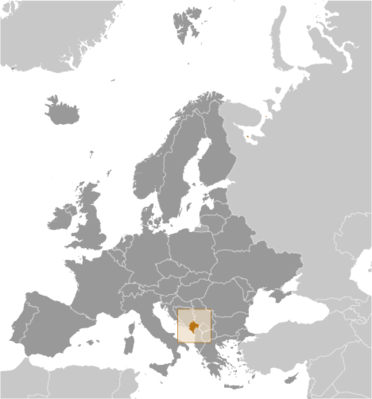
Southeastern Europe, between the Adriatic Sea and Serbia
🧭 Background
The use of the name Crna Gora or Black Mountain (Montenegro) began in the 13th century in reference to a highland region in the Serbian province of Zeta. Under Ottoman control beginning in 1496, Montenegro was a semi-autonomous theocracy ruled by a series of bishop princes until 1852, when it became a secular principality. Montenegro fought a series of wars with the Ottomans and eventually won recognition as an independent sovereign principality at the Congress of Berlin in 1878. In 1918, the country was absorbed by the Kingdom of Serbs, Croats, and Slovenes, which became the Kingdom of Yugoslavia in 1929. At the end of World War II, Montenegro joined the Socialist Federal Republic of Yugoslavia (SFRY). When the SFRY dissolved in 1992, Montenegro and Serbia created the Federal Republic of Yugoslavia (FRY), which shifted in 2003 to a looser State Union of Serbia and Montenegro. Montenegro voted to restore its independence on 3 June 2006. Montenegro became an official EU candidate in 2010 and joined NATO in 2017.
🗺️ Geography
Southeastern Europe, between the Adriatic Sea and Serbia
42 30 N, 19 18 E
Europe
13,812 sq km
13,452 sq km
360 sq km
Slightly smaller than Connecticut; slightly larger than twice the size of Delaware
680 km
Albania 186 km; Bosnia and Herzegovina 242 km; Croatia 19 km; Kosovo 76 km; Serbia 157 km
293.5 km
12 nm
Defined by treaty
Mediterranean climate, hot dry summers and autumns and relatively cold winters with heavy snowfalls inland
Highly indented coastline with narrow coastal plain backed by rugged high limestone mountains and plateaus
Zia Kolata 2,534 m
Adriatic Sea 0 m
1,086 m
Bauxite, hydroelectricity
19.6% (2023 est.)
Arable land: 0.7% (2023 est.)
Permanent crops: 0.4% (2023 est.)
Permanent pasture: 18.5% (2023 est.)
61.5% (2023 est.)
18.9% (2023 est.)
24 sq km (2012)
Lake Scutari (shared with Albania) - 400 sq km note - largest lake in the Balkans
(Black Sea) Danube (795,656 sq km)
Highest population density is concentrated in the south and southwest; the extreme eastern border is the least populated area
Destructive earthquakes
Strategic location along the Adriatic coast
👥 People and Society⬆️ Top
599,849 (2024 est.)
294,482
305,367
Montenegrin(s)
Montenegrin
Montenegrin 45%, Serbian 28.7%, Bosniak 8.7%, Albanian 4.9%, Muslim 3.3%, Romani 1%, Croat 1%, other 2.6%, unspecified 4.9% (2011 est.)
Serbian 42.9%, Montenegrin (official) 37%, Bosnian 5.3%, Albanian 5.3%, Serbo-Croat 2%, other 3.5%, unspecified 4% (2011 est.)
Knjiga svetskih činjenica, neophodan izvor osnovnih informacija. (Serbian) Knjiga svjetskih činjenica, neophodan izvor osnovnih informacija. (Montenegrin/Bosnian) The World Factbook, the indispensable source for basic information.
Orthodox 72.1%, Muslim 19.1%, Catholic 3.4%, atheist 1.2%, other 1.5%, unspecified 2.6% (2011 est.)
17.7% (male 54,608/female 51,594)
64.4% (male 192,631/female 193,515)
17.9% (2024 est.) (male 47,243/female 60,258)
55.3 (2024 est.)
27.5 (2024 est.)
27.8 (2024 est.)
3.6 (2024 est.)
41.5 years (2025 est.)
39.5 years
42.5 years
-0.46% (2025 est.)
10.77 births/1,000 population (2025 est.)
10.29 deaths/1,000 population (2025 est.)
-5.03 migrant(s)/1,000 population (2025 est.)
Highest population density is concentrated in the south and southwest; the extreme eastern border is the least populated area
68.5% of total population (2023)
0.45% annual rate of change (2020-25 est.)
177,000 PODGORICA (capital) (2018)
1.04 male(s)/female
1.06 male(s)/female
1 male(s)/female
0.78 male(s)/female
0.96 male(s)/female (2024 est.)
26.3 years (2010 est.)
6 deaths/100,000 live births (2023 est.)
3.1 deaths/1,000 live births (2025 est.)
2.7 deaths/1,000 live births
3.7 deaths/1,000 live births
78.2 years (2024 est.)
75.8 years
80.7 years
1.8 children born/woman (2025 est.)
0.88 (2025 est.)
Urban: 99.2% of population (2022 est.)
Rural: 98.2% of population (2022 est.)
Total: 98.9% of population (2022 est.)
Urban: 0.8% of population (2022 est.)
Rural: 1.8% of population (2022 est.)
Total: 1.1% of population (2022 est.)
10.6% of GDP (2021)
16.3% of national budget (2022 est.)
2.78 physicians/1,000 population (2023)
3.8 beds/1,000 population (2020 est.)
Urban: 100% of population (2022 est.)
Rural: 93.9% of population (2022 est.)
Total: 98.1% of population (2022 est.)
Urban: 0% of population (2022 est.)
Rural: 6.1% of population (2022 est.)
Total: 1.9% of population (2022 est.)
23.3% (2016)
9.91 liters of pure alcohol (2019 est.)
3.83 liters of pure alcohol (2019 est.)
2.68 liters of pure alcohol (2019 est.)
3.22 liters of pure alcohol (2019 est.)
0.16 liters of pure alcohol (2019 est.)
31.6% (2025 est.)
29.9% (2025 est.)
33.1% (2025 est.)
3.7% (2018 est.)
57.6% (2018 est.)
1.9% (2018)
5.8% (2018)
3.2% (2018)
98.5% (2018 est.)
99.2% (2018 est.)
97.9% (2018 est.)
16 years (2023 est.)
15 years (2023 est.)
16 years (2023 est.)
🌿 Environment⬆️ Top
Pollution of coastal waters from sewage outlets; serious air pollution in some cities from lignite power plants and household use of coal and wood for heating
Air Pollution, Air Pollution-Heavy Metals, Air Pollution-Persistent Organic Pollutants, Biodiversity, Climate Change, Climate Change-Kyoto Protocol, Climate Change-Paris Agreement, Comprehensive Nuclear Test Ban, Desertification, Endangered Species, Hazardous Wastes, Law of the Sea, Marine Dumping-London Convention, Marine Life Conservation, Nuclear Test Ban, Ozone Layer Protection, Ship Pollution, Wetlands
None of the selected agreements
Mediterranean climate, hot dry summers and autumns and relatively cold winters with heavy snowfalls inland
19.6% (2023 est.)
Arable land: 0.7% (2023 est.)
Permanent crops: 0.4% (2023 est.)
Permanent pasture: 18.5% (2023 est.)
61.5% (2023 est.)
18.9% (2023 est.)
68.5% of total population (2023)
0.45% annual rate of change (2020-25 est.)
2.808 million metric tonnes of CO2 (2023 est.)
1.543 million metric tonnes of CO2 (2023 est.)
1.265 million metric tonnes of CO2 (2023 est.)
17.9 micrograms per cubic meter (2019 est.)
329,800 tons (2024 est.)
6.4% (2022 est.)
121.32 million cubic meters (2022 est.)
2.079 billion cubic meters (2022 est.)
6.76 million cubic meters (2022 est.)
🏛️ Government⬆️ Top
None
Montenegro
None
Crna Gora
People's Republic of Montenegro, Socialist Republic of Montenegro, Republic of Montenegro
The name in Italian means "dark mountain" and is a translation of the Serbo-Croatian name Crna Gora; both refer to the dark coniferous forests in the mountainous region
Parliamentary republic
Podgorica
42 26 N, 19 16 E
UTC+1 (6 hours ahead of Washington, DC, during Standard Time)
+1 hr, begins last Sunday in March; ends last Sunday in October
The Slavic name translates as "under the mountain," from pod (under) and gora (mountain)
25 municipalities (opstine, singular - opstina); Andrijevica, Bar, Berane, Bijelo Polje, Budva, Cetinje, Danilovgrad, Gusinje, Herceg Novi, Kolasin, Kotor, Mojkovac, Niksic, Petnjica, Plav, Pljevlja, Pluzine, Podgorica, Rozaje, Savnik, Tivat, Tuzi, Ulcinj, Zabljak, Zeta
Civil law
Several previous; latest adopted 22 October 2007
Proposed by the president of Montenegro, by the government, or by at least 25 members of the Assembly; passage of draft proposals requires two-thirds majority vote of the Assembly, followed by a public hearing; passage of draft amendments requires two-thirds majority vote of the Assembly; changes to certain constitutional articles, such as sovereignty, state symbols, citizenship, and constitutional change procedures, require three-fifths majority vote in a referendum
Has not submitted an ICJ jurisdiction declaration; accepts ICCt jurisdiction
No
At least one parent must be a citizen of Montenegro
No
10 years
18 years of age; universal
President Jakov MILATOVIC (since 20 May 2023)
Prime Minister Milojko SPAJIC (since 31 October 2023)
Ministers serve as the cabinet
President directly elected by absolute-majority popular vote in 2 rounds, if needed, for a 5-year term (eligible for a second term); prime minister nominated by the president, approved by the Assembly
19 March 2023, with a runoff on 2 April 2023
2023: Jakov MILATOVIC elected president in second round; percent of vote in first round - Milo DUKANOVIC (DPS) 35.4%, Jakov MILATOVIC (Europe Now!) 28.9%, Andrija MANDIC (DF) 19.3%, Aleksa BECIC (DCG) 11.1%, other 5.3%; percent of vote in second round - Jakov MILATOVIC 58.9%, Milo DUKANOVIC 41.1% 2018: Milo DJUKANOVIC elected president in first round; percent of vote - Milo DJUKANOVIC (DPS) 53.9%, Mladen BOJANIC (independent) 33.4%, Draginja VUKSANOVIC (SDP) 8.2%, Marko MILACIC (PRAVA) 2.8%, other 1.7%
2028
Parliament (Skupstina)
Unicameral
81 (all directly elected)
Proportional representation
Full renewal
4 years
6/11/2023
Europe now! (Evropa sad) (24); Together! For the future that belongs to you (DPS – SD – DUA – LP - UDSh) (21); For the future of Montenegro (New Serb Democracy; Democratic People’s Party of Montenegro, Labour Party) (13); Bravery counts! (HRABRO se broji!) (11); It’s clear! (Jasno je!) – Bosniak Party (6); Other (6)
27.2%
June 2027
Supreme Court or Vrhovni Sud (consists of the court president, deputy president, and 15 judges); Constitutional Court or Ustavni Sud (consists of the court president and 7 judges)
Supreme Court president proposed by general session of the Supreme Court and elected by the Judicial Council, a 9-member body consisting of judges, lawyers designated by the Assembly, and the minister of judicial affairs; Supreme Court president elected for a single renewable, 5-year term; other judges elected by the Judicial Council for life; Constitutional Court judges - 2 proposed by the president of Montenegro and 5 by the Assembly, and elected by the Assembly; court president elected from among the court members; court president elected for a 3-year term, other judges serve 9-year terms
Administrative Courts; Appellate Court; Commercial Courts; High Courts; basic courts
Albanian Alliance (electoral coalition includes FORCA, PD, DSCG) Albanian Alternative or AA Albanian Democratic League or LDSH Albanian Forum (electoral coalition includes AA, LDSH, UDSH) Aleksa and Dritan - Count Bravely! (electoral coalition includes Democrats, URA) Bosniak Party or BS Civic Movement United Reform Action or United Reform Action or URA Croatian Civic Initiative or HGI Democratic Alliance or DEMOS Democratic League in Montenegro or DSCG Democratic Montenegro or Democrats Democratic Party of Socialists or DPS Democratic People's Party or DNP Democratic Union of Albanians or UDSH Europe Now! For the Future of Montenegro or ZBCG (coalition includes NSD, DNP, RP) Liberal Party or LP New Democratic Power or FORCA New Serb Democracy or NSD or NOVA Social Democrats or SD Socialist People's Party or SNP Together! (electoral coalition includes DPS, SD, LP, UDSH) United Montenegro or UCG (split from DEMOS) Workers' Party or RP
Ambassador Jovan MIRKOVIĆ (since 18 September 2024)
1610 New Hampshire Avenue NW, Washington, DC, 20009
[1] (202) 234-6108
[1] (202) 234-6109
Usa@mfa.gov.me United States of America - Embassies and consulates of Montenegro and visa regimes for foreign citizens (www.gov.me)
New York
Ambassador Judy Rising REINKE (since 20 December 2018)
Dzona Dzeksona 2, 81000 Podgorica
5570 Podgorica Place, Washington DC 20521-5570
[382] (0) 20-410-500
[382] (0) 20-241-358
PodgoricaACS@state.gov https://me.usembassy.gov/
CE, CEI, EAPC, EBRD, FAO, IAEA, IBRD, ICAO, ICC (NGOs), ICCt, ICRM, IDA, IFC, IFRCS, IHO, ILO, IMF, IMO, IMSO, Interpol, IOC, IOM, IPU, ISO (correspondent), ITSO, ITU, ITUC (NGOs), MIGA, NATO, OAS (observer), OIF (observer), OPCW, OSCE, PCA, PFP, SELEC, UN, UNCTAD, UNESCO, UNHCR, UNHRC, UNIDO, UNWTO, UPU, WCO, WHO, WIPO, WMO, WTO
3 June 2006 (from the State Union of Serbia and Montenegro); notable earlier dates: 13 March 1852 (Principality of Montenegro established); 13 July 1878 (Congress of Berlin recognizes Montenegrin independence); 28 August 1910 (Kingdom of Montenegro established)
Statehood Day, 13 July (1878, 1941)
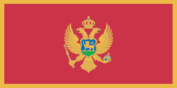
Description: a red field bordered with a narrow golden-yellow stripe; the Montenegrin coat of arms in the center is a double-headed golden eagle, with a crown above; the eagle holds a golden scepter in its right claw and a blue orb in its left; the eagle's breast shield shows a golden lion on a green field in front of a blue sky meaning: the eagle symbolizes the unity of church and state; the lion is a symbol of episcopal authority, a reference to the three-and-a-half centuries when Montenegro was ruled as a theocracy
Double-headed eagle
Red, gold
"Oj, svijetla majska zoro" (Oh, Bright Dawn of May)
Sekula DRLJEVIC/unknown, arranged by Zarko MIKOVIC
Adopted 2004; music based on a Montenegrin folk song
4 (3 cultural, 1 natural)
Natural and Culturo-Historical Region of Kotor (c); Durmitor National Park (n); Stećci Medieval Tombstones Graveyards (c); Fortified City of Kotor Venetian Defense Works (c)
💹 Economy⬆️ Top
Upper-middle-income, small Balkan economy; uses euro as de facto currency; reduced growth due to slowdown in tourism and industrial production; new impetus for EU accession under Europe Now government; energy price cap and declining food and services prices easing inflation rate
$17.375 billion (2024 est.)
$16.862 billion (2023 est.)
$15.857 billion (2022 est.)
3% (2024 est.)
6.3% (2023 est.)
6.4% (2022 est.)
$27,900 (2024 est.)
$27,000 (2023 est.)
$25,400 (2022 est.)
$8.07 billion (2024 est.)
3.3% (2024 est.)
8.6% (2023 est.)
13% (2022 est.)
5.2% (2024 est.)
11.6% (2024 est.)
62.1% (2024 est.)
76.3% (2024 est.)
17.9% (2024 est.)
20.2% (2024 est.)
8.3% (2024 est.)
44.9% (2024 est.)
-67.5% (2024 est.)
Milk, potatoes, watermelons, grapes, sheep milk, cabbages, oranges, eggs, goat milk, figs (2023)
Steelmaking, aluminum, agricultural processing, consumer goods, tourism
-1.7% (2024 est.)
245,300 (2024 est.)
14.1% (2024 est.)
14.7% (2023 est.)
14.9% (2022 est.)
25.9% (2024 est.)
27.5% (2024 est.)
23.6% (2024 est.)
20.3% (2021 est.)
34.3 (2021 est.)
24.8% of household expenditures (2022 est.)
5.6% of household expenditures (2022 est.)
2.1% (2021 est.)
24.7% (2021 est.)
10.6% of GDP (2024 est.)
10.7% of GDP (2023 est.)
13.3% of GDP (2022 est.)
$1.463 billion (2015 est.)
$1.491 billion (2015 est.)
67.2% of GDP (2017 est.)
-$1.406 billion (2024 est.)
-$851.525 million (2023 est.)
-$817.858 million (2022 est.)
$3.629 billion (2024 est.)
$3.769 billion (2023 est.)
$3.177 billion (2022 est.)
Italy 38%, Serbia 13%, Spain 6%, Slovenia 5%, Bosnia & Herzegovina 4% (2023)
Electricity, aluminum, copper ore, aluminum ore, packaged medicine (2023)
$5.478 billion (2024 est.)
$5.167 billion (2023 est.)
$4.614 billion (2022 est.)
Serbia 21%, China 10%, Germany 8%, Croatia 6%, Italy 6% (2023)
Refined petroleum, cars, electricity, packaged medicine, aluminum (2023)
$1.741 billion (2024 est.)
$1.574 billion (2023 est.)
$2.041 billion (2022 est.)
$3.643 billion (2023 est.)
Euros (EUR) per US dollar -
0.924 (2024 est.)
0.925 (2023 est.)
0.951 (2022 est.)
0.845 (2021 est.)
0.877 (2020 est.)
⚡ Energy⬆️ Top
100% (2022 est.)
1.082 million kW (2023 est.)
2.719 billion kWh (2023 est.)
6.288 billion kWh (2023 est.)
5.421 billion kWh (2023 est.)
601.023 million kWh (2023 est.)
39.1% of total installed capacity (2023 est.)
0.4% of total installed capacity (2023 est.)
7.5% of total installed capacity (2023 est.)
53% of total installed capacity (2023 est.)
1.862 million metric tons (2023 est.)
1.658 million metric tons (2023 est.)
205,000 metric tons (2023 est.)
2.8 metric tons (2022 est.)
337 million metric tons (2023 est.)
9,000 bbl/day (2023 est.)
63.407 million Btu/person (2023 est.)
📡 Communications⬆️ Top
190,000 (2023 est.)
30 (2023 est.)
1.31 million (2023 est.)
203 (2022 est.)
State-funded national radio and TV broadcaster operates 2 terrestrial TV networks, 1 satellite TV channel, and 2 radio networks; 4 local public TV stations and 14 private TV stations; 14 local public radio stations, 35 private radio stations, and several online media (2019)
.me
90% (2023 est.)
203,000 (2023 est.)
32 (2023 est.)
🚚 Transportation⬆️ Top
4O
5 (2025)
1 (2025)
250 km (2017)
250 km (2017) 1.435-m gauge (224 km electrified)
18 (2023)
Bulk carrier 4, other 14
4 (2024)
0
0
1
3
1
Bar, Kotor, Risan, Tivat
🛡️ Military and Security⬆️ Top
Army of Montenegro (Vojska Crne Gore or VCG): Ground Forces, Air Force, Navy Ministry of Interior: Police Directorate of Montenegro (2025)
2% of GDP (2025 est.)
1.7% of GDP (2024 est.)
1.5% of GDP (2023 est.)
1.4% of GDP (2022 est.)
1.6% of GDP (2021 est.)
Approximately 2,000 active-duty military personnel (2025)
The military's inventory is small and consists largely of Soviet-era equipment inherited from the former Yugoslavia military, along with a limited but growing mix of imported Western systems (2025)
18-30 for voluntary military service; conscription abolished in 2006 (2025)
The Army of Montenegro is responsible for the defense of Montenegro’s sovereignty and territorial integrity, cooperating in international and multinational security, and assisting civil authorities during emergencies such as natural disasters; since Montenegro joined NATO in 2017, another focus has been integrating into the Alliance, including adapting NATO standards for planning and professionalization, structural reforms, and modernization by replacing its Soviet-era equipment; the Army trains and exercises with NATO partners and actively supports NATO missions and operations, committing small numbers of troops in Afghanistan, Kosovo, and NATO’s Enhanced Forward Presence mission in Eastern Europe; a few personnel have also been deployed on EU- and UN-led operations (2025)
🌐 Transnational Issues⬆️ Top
18,820 (2024 est.)
423 (2024 est.)
Source: Factbook JSON archive.