Guatemala City
 Guatemala
Key facts and a structured country profile. 🧾 Change log 📐 True Size
Locator 🗺️ Map
18,255,216 (2024 est.)
108,889 sq km
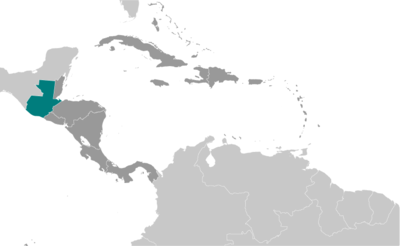
Central America, bordering the North Pacific Ocean, between El Salvador and Mexico, and bordering the Gulf of Honduras (Caribbean Sea) between Honduras and Belize
🧭 Background
The Maya civilization flourished in Guatemala and surrounding regions during the first millennium A.D. After almost three centuries as a Spanish colony, Guatemala won its independence in 1821. During the second half of the 20th century, it experienced a variety of military and civilian governments, as well as a 36-year guerrilla war. In 1996, the government signed a peace agreement formally ending the internal conflict.
🗺️ Geography
Central America, bordering the North Pacific Ocean, between El Salvador and Mexico, and bordering the Gulf of Honduras (Caribbean Sea) between Honduras and Belize
15 30 N, 90 15 W
Central America and the Caribbean
108,889 sq km
107,159 sq km
1,730 sq km
Slightly smaller than Pennsylvania
1,667 km
Belize 266 km; El Salvador 199 km; Honduras 244 km; Mexico 958 km
400 km
12 nm
200 nm
200-m depth or to the depth of exploitation
Tropical; hot, humid in lowlands; cooler in highlands
Two east-west trending mountain chains divide the country into three regions: the mountainous highlands, the Pacific coast south of mountains, and the vast northern Peten lowlands
Volcan Tajumulco (highest point in Central America) 4,220 m
Pacific Ocean 0 m
759 m
Petroleum, nickel, rare woods, fish, chicle, hydropower
43% (2023 est.)
Arable land: 14.5% (2023 est.)
Permanent crops: 11% (2023 est.)
Permanent pasture: 17.5% (2023 est.)
33.2% (2023 est.)
23.7% (2023 est.)
3,375 sq km (2012)
Lago de Izabal - 590 sq km
The vast majority of the populace resides in the southern half of the country, particularly in the mountainous regions; more than half of the population lives in rural areas
Numerous volcanoes in mountains, with occasional violent earthquakes; Caribbean coast extremely susceptible to hurricanes and other tropical storms volcanism: significant volcanic activity in the Sierra Madre range; Santa Maria (3,772 m) has been deemed a Decade Volcano by the International Association of Volcanology and Chemistry of the Earth's Interior, worthy of study due to its explosive history and close proximity to human populations; Pacaya (2,552 m) is one of the country's most active volcanoes, with frequent eruptions since 1965; other historically active volcanoes include Acatenango, Almolonga, Atitlan, Fuego, and Tacana; see note 2 under "Geography - note"
Note 1: despite having both eastern and western coastlines (Caribbean Sea and Pacific Ocean), there are no natural harbors on the west coast note 2: Guatemala is one of the countries along the Ring of Fire, which is a belt bordering the Pacific Ocean that contains about 75% of the world's volcanoes and up to 90% of the world's earthquakes
👥 People and Society⬆️ Top
18,255,216 (2024 est.)
9,050,684
9,204,532
Guatemalan(s)
Guatemalan
Mestizo (mixed Indigenous-Spanish - in local Spanish called Ladino) 56%, Maya 41.7%, Xinca (Indigenous, non-Maya) 1.8%, African descent 0.2%, Garifuna (mixed West and Central African, Island Carib, and Arawak) 0.1%, foreign 0.2% (2018 est.)
Spanish (official) 69.9%, Maya languages 29.7% (Q'eqchi' 8.3%, K'iche 7.8%, Mam 4.4%, Kaqchikel 3%, Q'anjob'al 1.2%, Poqomchi' 1%, other 4%), other 0.4% (includes Xinca and Garifuna) (2018 est.)
La Libreta Informativa del Mundo, la fuente indispensable de información básica. (Spanish) The World Factbook, the indispensable source for basic information.
Evangelical 45.7%, Roman Catholic 42.4%, none 11%, unspecified 0.9% (2023 est.)
31.5% (male 2,925,079/female 2,819,927)
63.2% (male 5,688,500/female 5,839,958)
5.4% (2024 est.) (male 437,105/female 544,647)
58.3 (2024 est.)
49.8 (2024 est.)
8.5 (2024 est.)
11.7 (2024 est.)
26.7 years (2025 est.)
24.2 years
25.4 years
0.99% (2025 est.)
17.12 births/1,000 population (2025 est.)
4.99 deaths/1,000 population (2025 est.)
-2.22 migrant(s)/1,000 population (2025 est.)
The vast majority of the populace resides in the southern half of the country, particularly in the mountainous regions; more than half of the population lives in rural areas
53.1% of total population (2023)
2.59% annual rate of change (2020-25 est.)
3.095 million GUATEMALA CITY (capital) (2023)
1.05 male(s)/female
1.04 male(s)/female
0.97 male(s)/female
0.8 male(s)/female
0.98 male(s)/female (2024 est.)
20.6 years (2014/15 est.)
94 deaths/100,000 live births (2023 est.)
23.4 deaths/1,000 live births (2025 est.)
28.1 deaths/1,000 live births
21.7 deaths/1,000 live births
73.5 years (2024 est.)
71.5 years
75.6 years
1.97 children born/woman (2025 est.)
0.96 (2025 est.)
Urban: 97.8% of population (2022 est.)
Rural: 91% of population (2022 est.)
Total: 94.6% of population (2022 est.)
Urban: 2.2% of population (2022 est.)
Rural: 9% of population (2022 est.)
Total: 5.4% of population (2022 est.)
6.9% of GDP (2021)
16.9% of national budget (2022 est.)
1.28 physicians/1,000 population (2020)
0.4 beds/1,000 population (2021 est.)
Urban: 91.4% of population (2022 est.)
Rural: 68.9% of population (2022 est.)
Total: 80.8% of population (2022 est.)
Urban: 8.6% of population (2022 est.)
Rural: 31.1% of population (2022 est.)
Total: 19.2% of population (2022 est.)
21.2% (2016)
1.63 liters of pure alcohol (2019 est.)
0.9 liters of pure alcohol (2019 est.)
0.05 liters of pure alcohol (2019 est.)
0.68 liters of pure alcohol (2019 est.)
0.01 liters of pure alcohol (2019 est.)
11.8% (2025 est.)
22.5% (2025 est.)
1.5% (2025 est.)
14.4% (2021 est.)
56.2% (2018 est.)
6.2% (2015)
29.5% (2015)
9.6% (2015)
3.1% of GDP (2023 est.)
17.3% national budget (2025 est.)
82.1% (2024 est.)
86.9% (2024 est.)
78.5% (2024 est.)
11 years (2023 est.)
10 years (2023 est.)
11 years (2023 est.)
🌿 Environment⬆️ Top
Deforestation in the Peten rainforest; soil erosion; water pollution
Antarctic Treaty, Biodiversity, Climate Change, Climate Change-Kyoto Protocol, Climate Change-Paris Agreement, Comprehensive Nuclear Test Ban, Desertification, Endangered Species, Environmental Modification, Hazardous Wastes, Law of the Sea, Marine Dumping-London Convention, Marine Dumping-London Protocol, Nuclear Test Ban, Ozone Layer Protection, Ship Pollution, Tropical Timber 2006, Wetlands
None of the selected agreements
Tropical; hot, humid in lowlands; cooler in highlands
43% (2023 est.)
Arable land: 14.5% (2023 est.)
Permanent crops: 11% (2023 est.)
Permanent pasture: 17.5% (2023 est.)
33.2% (2023 est.)
23.7% (2023 est.)
53.1% of total population (2023)
2.59% annual rate of change (2020-25 est.)
18.546 million metric tonnes of CO2 (2023 est.)
2.31 million metric tonnes of CO2 (2023 est.)
16.232 million metric tonnes of CO2 (2023 est.)
4,000 metric tonnes of CO2 (2023 est.)
21.8 micrograms per cubic meter (2019 est.)
2.757 million tons (2024 est.)
10.4% (2022 est.)
835 million cubic meters (2022 est.)
603.1 million cubic meters (2022 est.)
1.886 billion cubic meters (2022 est.)
127.91 billion cubic meters (2022 est.)
🏛️ Government⬆️ Top
Republic of Guatemala
Guatemala
República de Guatemala
Guatemala
The Spanish conquistadors' first capital (established in 1524) was a former Mayan settlement called "Quauhtemallan" by their Nahuatl-speaking Mexican allies, a name that means "land of the eagle" but that the Spanish probably pronounced "Guatemala"
Presidential republic
Guatemala City
14 37 N, 90 31 W
UTC-6 (1 hour behind Washington, DC, during Standard Time)
The Spanish conquistadors' first capital (established in 1524) was a former Mayan settlement called "Quauhtemallan" by their Nahuatl-speaking Mexican allies, a name that means "land of the eagle" but that the Spanish probably pronounced "Guatemala"
22 departments (departamentos, singular - departamento); Alta Verapaz, Baja Verapaz, Chimaltenango, Chiquimula, El Progreso, Escuintla, Guatemala, Huehuetenango, Izabal, Jalapa, Jutiapa, Peten, Quetzaltenango, Quiche, Retalhuleu, Sacatepéquez, San Marcos, Santa Rosa, Sololá, Suchitepéquez, Totonicapán, Zacapa
Civil law system; judicial review of legislative acts
Several previous; latest adopted 31 May 1985, effective 14 January 1986; suspended and reinstated in 1994
Proposed by the president of the republic, by agreement of 10 or more deputies of Congress, by the Constitutional Court, or by public petition of at least 5,000 citizens; passage requires at least two-thirds majority vote by the Congress membership and approval by public referendum, referred to as "popular consultation"; constitutional articles such as national sovereignty, the republican form of government, limitations on those seeking the presidency, or presidential tenure cannot be amended
Has not submitted an ICJ jurisdiction declaration; accepts ICCt jurisdiction
Yes
Yes
Yes
5 years with no absences of six consecutive months or longer or absences totaling more than a year
18 years of age; universal
President Bernardo ARÉVALO de León (since 15 January 2024)
President Bernardo ARÉVALO de León (since 15 January 2024)
Council of Ministers appointed by the president
President and vice president directly elected on the same ballot by absolute-majority popular vote in 2 rounds, if needed, for a 4-year term (not eligible for consecutive terms)
25 June 2023, with a runoff on 20 August 2023
2023: Bernardo ARÉVALO de León elected president in second round; percent of vote in first round - Sandra TORRES (UNE) 21%; Bernardo ARÉVALO de León (SEMILLA) 15.6%, Manuel CONDE Orellana (VAMOS) 10.4%; Armando CASTILLO Alvarado (VIVA) 9.6%, other 43.4%; percent of vote in second round - Bernardo ARÉVALO de León 60.9%, Sandra TORRES 39.1% 2019: Alejandro GIAMMATTEI elected president; percent of vote in first round - Sandra TORRES (UNE) 25.5%, Alejandro GIAMMATTEI (VAMOS) 14%, Edmond MULET (PHG) 11.2%, Thelma CABRERA (MLP) 10.4%, Roberto ARZU (PAN-PODEMOS) 6.1%, other 32.8%; percent of vote in second round - Alejandro GIAMMATTEI 58%, Sandra TORRES 42%
June 2027
Congress of the Republic (Congreso de la República)
Unicameral
160 (all directly elected)
Mixed system
Full renewal
4 years
6/25/2023
Let’s Go for a Different Guatemala (Vamos) (39); National Unity of Hope Party (UNE) (28); Seed Movement (Semilla) (23); Cabal (18); Vision with Values (VIVA) (11); Other (41)
20%
June 2027
Supreme Court of Justice or Corte Suprema de Justicia (consists of 13 magistrates, including the court president and organized into 3 chambers)
Supreme Court magistrates elected by the Congress of the Republic from candidates proposed by the Postulation Committee, an independent body of deans of the country's university law schools, representatives of the country's law associations, and representatives of the Courts of Appeal; magistrates elected for concurrent, renewable 5-year terms; Constitutional Court judges - 1 elected by the Congress of the Republic, 1 by the Supreme Court, 1 by the president of the republic, 1 by the (public) University of San Carlos, and 1 by the Assembly of the College of Attorneys and Notaries; judges elected for renewable, consecutive 5-year terms; the presidency of the court rotates among the magistrates for a single 1-year term
Appellate Courts of Accounts, Contentious Administrative Tribunal, courts of appeal, first instance courts, child and adolescence courts, minor or peace courts
Bienestar Nacional or BIEN Blue Party (Partido Azul) or Blue CABAL Cambio Citizen Prosperity or PC Commitment, Renewal, and Order or CREO Elephant Community (Comunidad Elefante) or Elephant Everyone Together for Guatemala or TODOS Guatemalan National Revolutionary Unity or URNG-MAIZ or URNG Humanist Party of Guatemala or PHG Movement for the Liberation of Peoples or MLP Movimiento Semilla or SEMILLA National Advancement Party or PAN National Convergence Front or FCN-NACION National Unity for Hope or UNE Nationalist Change Union or UCN (dissolved 16 December 2021) Nosotros or PPN PODEMOS Political Movement Winaq or Winaq TODOS Value or VALOR Vamos por una Guatemala Diferente or VAMOS Victory or VICTORIA Vision with Values or VIVA Will, Opportunity and Solidarity (Voluntad, Oportunidad y Solidaridad) or VOS
Ambassador Hugo Eduardo BETETA (since 17 June 2024)
2220 R Street NW, Washington, DC 20008
[1] (202) 745-4953
[1] (202) 745-1908
Embestadosunidos@minex.gob.gt https://estadosunidos.minex.gob.gt/home/home.aspx
Atlanta, Chicago, Columbus (OH), Denver, Houston, Los Angeles, Miami, Nashville (TN), New York, Oklahoma City, Omaha (NE), Philadelphia, Phoenix, Providence (RI), Raleigh (NC), Rockville (MD), San Francisco, Seattle
Dallas, Del Rio (TX), Lake Worth (FL), McAllen (TX), Riverhead (NY), San Bernardino (CA), Tucson (AZ)
Ambassador Tobin BRADLEY (since 12 February 2024)
Boulevard Austriaco 11-51, Zone 16, Guatemala City
3190 Guatemala Place, Washington DC 20521-3190
[502] 2354-0000
[502] 2326-4654
AmCitsGuatemala@state.gov https://gt.usembassy.gov/
ACS, BCIE, CACM, CD, CELAC, EITI (compliant country), FAO, G-24, G-77, IADB, IAEA, IBRD, ICAO, ICC (national committees), ICCt (signatory), ICRM, IDA, IFAD, IFC, IFRCS, IHO, ILO, IMF, IMO, Interpol, IOC, IOM, IPU, ISO (correspondent), ITSO, ITU, ITUC (NGOs), LAES, LAIA (observer), MIGA, MINUSTAH, MONUSCO, NAM, OAS, OPANAL, OPCW, Pacific Alliance (observer), PCA, Petrocaribe, SICA, UN, UNCTAD, UNESCO, UNHCR, UNIDO, UNIFIL, Union Latina, UNISFA, UNITAR, UNMISS, UNOCI, UNOOSA, UNWTO, UPU, WCO, WFTU (NGOs), WHO, WIPO, WMO, WTO
15 September 1821 (from Spain)
Independence Day, 15 September (1821)
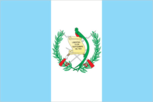
Description: three equal vertical bands of light blue (left side), white, and light blue, with the coat of arms centered in the white band; the coat of arms includes a green-and-red quetzal (the national bird), a scroll with the inscription LIBERTAD 15 DE SEPTIEMBRE DE 1821 (the original date of independence from Spain), a pair of crossed rifles, and a pair of crossed swords; a laurel wreath frames the objects meaning: the rifles stand for Guatemala's willingness to defend itself, the swords for honor, and the laurel wreath for victory; blue stands for the Pacific Ocean and Caribbean Sea, and white for peace and purity
Quetzal (bird)
Blue, white
"Himno Nacional de Guatemala" (National Anthem of Guatemala)
Jose Joaquin PALMA/Rafael Alvarez OVALLE
Adopted 1897, modified lyrics adopted 1934; Cuban poet Jose Joaquin PALMA anonymously submitted lyrics to a public contest calling for a national anthem and it was not discovered until 1911; anthem has four verses with four separate choruses at the end of each verse -- all are official, and the anthem is sung in its entirety when performed in Guatemala
4 (3 cultural, 1 mixed)
Antigua Guatemala (c); Tikal National Park (m); Archaeological Park and Ruins of Quirigua (c); National Archaeological Park Tak'alik Ab'aj (c)
💹 Economy⬆️ Top
Developing Central American economy; steady economic growth fueled by remittances; high poverty and income inequality; limited government services, lack of employment opportunities, and frequent natural disasters impede human development efforts and drive emigration
$232.673 billion (2024 est.)
$224.475 billion (2023 est.)
$216.815 billion (2022 est.)
3.7% (2024 est.)
3.5% (2023 est.)
4.2% (2022 est.)
$12,600 (2024 est.)
$12,400 (2023 est.)
$12,100 (2022 est.)
$113.2 billion (2024 est.)
2.9% (2024 est.)
6.2% (2023 est.)
6.9% (2022 est.)
9.8% (2024 est.)
21.7% (2024 est.)
61.8% (2024 est.)
88% (2024 est.)
10.9% (2024 est.)
16.1% (2024 est.)
0.6% (2024 est.)
15.9% (2024 est.)
-31.5% (2024 est.)
Sugarcane, bananas, oil palm fruit, maize, cantaloupes/melons, potatoes, milk, tomatoes, chicken, pineapples (2023)
Sugar, textiles and clothing, furniture, chemicals, petroleum, metals, rubber, tourism
2% (2024 est.)
7.575 million (2024 est.)
2.3% (2024 est.)
2.4% (2023 est.)
3.1% (2022 est.)
4.2% (2024 est.)
4% (2024 est.)
4.7% (2024 est.)
56% (2023 est.)
45.2 (2023 est.)
35.1% of household expenditures (2023 est.)
1.3% of household expenditures (2023 est.)
1.6% (2023 est.)
34.1% (2023 est.)
19.1% of GDP (2024 est.)
19.1% of GDP (2023 est.)
19% of GDP (2022 est.)
$16.603 billion (2023 est.)
$17.349 billion (2023 est.)
31.56% of GDP (2020 est.)
11.6% (of GDP) (2023 est.)
$3.333 billion (2024 est.)
$3.212 billion (2023 est.)
$1.116 billion (2022 est.)
$17.997 billion (2024 est.)
$17.342 billion (2023 est.)
$18.141 billion (2022 est.)
USA 33%, El Salvador 11%, Honduras 9%, Nicaragua 6%, Mexico 4% (2023)
Garments, bananas, coffee, palm oil, raw sugar (2023)
$35.576 billion (2024 est.)
$33.056 billion (2023 est.)
$33.943 billion (2022 est.)
USA 30%, China 19%, Mexico 11%, El Salvador 4%, Costa Rica 3% (2023)
Refined petroleum, video displays, cars, trucks, packaged medicine (2023)
$24.412 billion (2024 est.)
$21.311 billion (2023 est.)
$20.415 billion (2022 est.)
$11.862 billion (2023 est.)
Quetzales (GTQ) per US dollar -
7.759 (2024 est.)
7.832 (2023 est.)
7.748 (2022 est.)
7.734 (2021 est.)
7.722 (2020 est.)
⚡ Energy⬆️ Top
99.1% (2022 est.)
97.7%
98.2%
4.995 million kW (2023 est.)
12.222 billion kWh (2023 est.)
1.104 billion kWh (2023 est.)
1.573 billion kWh (2023 est.)
1.716 billion kWh (2023 est.)
25.4% of total installed capacity (2023 est.)
1.8% of total installed capacity (2023 est.)
2.6% of total installed capacity (2023 est.)
42% of total installed capacity (2023 est.)
2.5% of total installed capacity (2023 est.)
25.7% of total installed capacity (2023 est.)
1.012 million metric tons (2023 est.)
20 metric tons (2023 est.)
808,000 metric tons (2023 est.)
6,000 bbl/day (2023 est.)
117,000 bbl/day (2023 est.)
86.11 million barrels (2021 est.)
2.016 million cubic meters (2023 est.)
1.991 million cubic meters (2023 est.)
17.096 million Btu/person (2023 est.)
📡 Communications⬆️ Top
1.94 million (2023 est.)
11 (2023 est.)
20.6 million (2023 est.)
115 (2022 est.)
4 privately owned national terrestrial TV channels dominate TV broadcasting; multi-channel satellite and cable services are available; 1 government-owned radio station and hundreds of privately owned radio stations (2019)
.gt
56% (2023 est.)
921,000 (2023 est.)
5 (2023 est.)
🚚 Transportation⬆️ Top
TG
58 (2025)
2 (2025)
800 km (2018)
800 km (2018) 0.914-m gauge
9 (2023)
Oil tanker 1, other 8
3 (2024)
0
0
2
1
2
Puerto Barrios, Puerto Quetzal, Santo Tomas de Castilla
🛡️ Military and Security⬆️ Top
Army of Guatemala (Ejercito de Guatemala; aka Armed Forces of Guatemala or Fuerzas Armadas de Guatemala): Land Forces (Fuerzas de Tierra), Naval Forces (Fuerzas de Mar), and Air Force (Fuerza de Aire) (2025)
0.4% of GDP (2024 est.)
0.4% of GDP (2023 est.)
0.4% of GDP (2022 est.)
0.4% of GDP (2021 est.)
0.4% of GDP (2020 est.)
Approximately 20,000 active Armed Forces (2025)
The military is lightly armed with an inventory mostly comprised of ageing US equipment; in recent years, the US has provided additional secondhand equipment (2025)
18-28 for voluntary service for men and women (17-21 for military schools); all Guatemalan men 18-49 are subject to selective compulsory service; service obligation is 12-24 months (2025)
180 Democratic Republic of the Congo (MONUSCO) (2025)
The military is responsible for maintaining the independence, sovereignty, territorial integrity, and the honor of Guatemala, but has long focused on internal security; since the 2000s, the Guatemalan Government has used the military to support the National Civil Police in internal security operations (as permitted by the constitution) to combat organized crime, gang violence, and narco-trafficking; other responsibilities include border security, cybersecurity, and providing humanitarian assistance; it also participates in UN missions on a small scale and has a peacekeeping operations training command that offers training to regional countries; the military has security ties with regional partners such as Brazil, Colombia, El Salvador, and Honduras; cooperation with El Salvador and Honduras has included a combined police-military anti-gang task force to patrol border areas; it also has ties with the US, including joint training exercises and material assistance the military held power during most of Guatemala’s 36-year civil war (1960-1996) and conducted a campaign of widespread violence and repression, particularly against the country’s majority indigenous population; more than 200,000 people were estimated to have been killed or disappeared during the conflict (2025)
🚨 Terrorism⬆️ Top
La Mara Salvatrucha (MS-13)
🌐 Transnational Issues⬆️ Top
4,676 (2024 est.)
572,813 (2024 est.)
Major illicit drug-producing and/or drug-transit country major precursor-chemical producer (2025)
Source: Factbook JSON archive.