Brasília
 Brazil
Key facts and a structured country profile. 🧾 Change log 📐 True Size
Locator 🗺️ Map
221,359,387 (2025 est.)
8,515,770 sq km
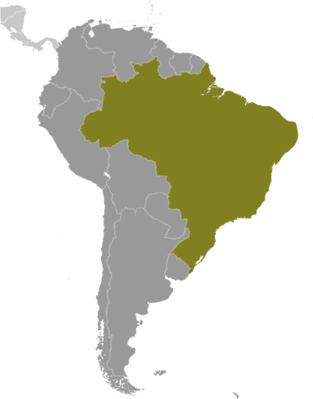
Eastern South America, bordering the Atlantic Ocean
🧭 Background
After more than three centuries under Portuguese rule, Brazil gained its independence in 1822, maintaining a monarchical system of government until the abolition of slavery in 1888 and the subsequent proclamation of a republic by the military in 1889. Brazilian coffee exporters politically dominated the country until populist leader Getúlio VARGAS rose to power in 1930. VARGAS governed through various versions of democratic and authoritarian regimes from 1930 to 1945. Democratic rule returned in 1945 -- including a democratically elected VARGAS administration from 1951 to 1954 -- and lasted until 1964, when the military overthrew President João GOULART. The military regime censored journalists and repressed and tortured dissidents in the late 1960s and early 1970s. The dictatorship lasted until 1985, when the military regime peacefully ceded power to civilian rulers, and the Brazilian Congress passed its current constitution in 1988. By far the largest and most populous country in South America, Brazil continues to pursue industrial and agricultural growth and development of its interior. Having successfully weathered a period of global financial difficulty in the late 20th century, Brazil was soon seen as one of the world's strongest emerging markets and a contributor to global growth under President Luiz Inácio LULA da Silva (2003-2010). The awarding of the 2014 FIFA World Cup and 2016 Summer Olympic Games -- the first ever to be held in South America -- to Brazil was symbolic of the country's rise. However, from about 2013 to 2016, Brazil was plagued by a sagging economy, high unemployment, and high inflation, only emerging from recession in 2017. Congress removed then-President Dilma ROUSSEFF (2011-2016) from office in 2016 for having committed impeachable acts against Brazil's budgetary laws, and her vice president, Michel TEMER, served the remainder of her second term. A money-laundering investigation, Operation Lava Jato, uncovered a vast corruption scheme and prosecutors charged several high-profile Brazilian politicians with crimes. Former President LULA was convicted of accepting bribes and served jail time (2018-19), although his conviction was overturned in 2021. LULA's revival became complete in 2022 when he narrowly defeated incumbent Jair BOLSONARO (2019-2022) in the presidential election. Positioning Brazil as an independent global leader on climate change and promoting sustainable development, LULA took on the 2024 G20 presidency, balancing the fight against deforestation with sustainable energy and other projects designed to alleviate poverty and promote economic growth, such as expanding fossil fuel exploration.
🗺️ Geography
Eastern South America, bordering the Atlantic Ocean
10 00 S, 55 00 W
South America
8,515,770 sq km
8,358,140 sq km
157,630 sq km
Slightly smaller than the US
16,145 km
Argentina 1,263 km; Bolivia 3,403 km; Colombia 1,790 km; French Guiana 649 km; Guyana 1,308 km; Paraguay 1,371 km; Peru 2,659 km; Suriname 515 km; Uruguay 1,050 km; Venezuela 2,137 km
7,491 km
12 nm
24 nm
200 nm
200 nm or to edge of the continental margin
Mostly tropical, but temperate in south
Mostly flat to rolling lowlands in north; some plains, hills, mountains, and narrow coastal belt
Pico da Neblina 2,994 m
Atlantic Ocean 0 m
320 m
Alumina, bauxite, beryllium, gold, iron ore, manganese, nickel, niobium, phosphates, platinum, tantalum, tin, rare earth elements, uranium, petroleum, hydropower, timber
28.3% (2023 est.)
Arable land: 6.7% (2023 est.)
Permanent crops: 0.9% (2023 est.)
Permanent pasture: 20.7% (2023 est.)
58.9% (2023 est.)
12.7% (2023 est.)
91,833 sq km (2022)
Lagoa dos Patos - 10,140 sq km
Lagoa Mirim (shared with Uruguay) - 2,970 sq km
Amazon river mouth (shared with Peru [s]) - 6,400 km; Río de la Plata/Paraná river source (shared with Paraguay, Argentina, and Uruguay [m]) - 4,880 km; Tocantins - 3,650 km; São Francisco - 3,180 km; Paraguay river source (shared with Argentina and Paraguay [m]) - 2,549 km; Rio Negro river mouth (shared with Colombia [s] and Venezuela) - 2,250 km; Uruguay river source (shared with Argentina and Uruguay [m]) - 1,610 km note: [s] after country name indicates river source; [m] after country name indicates river mouth
Amazon (6,145,186 sq km), Orinoco (953,675 sq km), Paraná (2,582,704 sq km), São Francisco (617,814 sq km), Tocantins (764,213 sq km)
Amazon Basin, Guarani Aquifer System, Maranhao Basin
The vast majority of people live along or near the Atlantic coast in the east; the population core is in the southeast, anchored by the cities of São Paolo, Brasília, and Rio de Janeiro
Recurring droughts in northeast; floods and occasional frost in south
Note 1: largest country in South America and in the Southern Hemisphere; shares common boundaries with every South American country except Chile and Ecuador; most of the Pantanal, the world's largest tropical wetland, extends through the west central part of the country; shares Iguaçu Falls (Iguazú Falls), the world's largest waterfalls system, with Argentina note 2: Rocas Atoll, located off the northeast coast of Brazil, is the only atoll in the South Atlantic
👥 People and Society⬆️ Top
221,359,387 (2025 est.)
108,753,532
112,605,855
Brazilian(s)
Brazilian
Mixed 45.3%, White 43.5%, Black 10.2%, Indigenous 0.6%, Asian 0.4% (2022 est.)
Portuguese (official and most widely spoken language); less common languages include Spanish (border areas and schools), German, Italian, Japanese, English, and many minor Amerindian languages
O Livro de Fatos Mundiais, a fonte indispensável para informação básica. (Brazilian Portuguese) The World Factbook, the indispensable source for basic information.
Roman Catholic 56.8%, Evangelical 26.9%, none 9.3%, other 4%, Spirtism (Espírita) 1.8%, unspecified 1.4%, Umbanda and Candomblé 1.1%, Indigenous religions .06%, undeclared 0.2% (2022)
19.6% (male 22,025,593/female 21,088,398)
69.5% (male 75,889,089/female 77,118,722)
10.9% (2024 est.) (male 10,251,809/female 13,677,901)
44.3 (2025 est.)
28.1 (2025 est.)
16.2 (2025 est.)
6.2 (2025 est.)
35.4 years (2025 est.)
34 years
36.1 years
0.58% (2025 est.)
13.04 births/1,000 population (2025 est.)
7.07 deaths/1,000 population (2025 est.)
-0.19 migrant(s)/1,000 population (2025 est.)
The vast majority of people live along or near the Atlantic coast in the east; the population core is in the southeast, anchored by the cities of São Paolo, Brasília, and Rio de Janeiro
87.8% of total population (2023)
0.87% annual rate of change (2020-25 est.)
22.620 million São Paulo, 13.728 million Rio de Janeiro, 6.248 million Belo Horizonte, 4.873 million BRASÍLIA (capital), 4.264 million Recife, 4.212 million Porto Alegre (2023)
1.05 male(s)/female
1.04 male(s)/female
0.98 male(s)/female
0.75 male(s)/female
0.97 male(s)/female (2024 est.)
67 deaths/100,000 live births (2023 est.)
12.7 deaths/1,000 live births (2025 est.)
14.6 deaths/1,000 live births
11.1 deaths/1,000 live births
76.3 years (2024 est.)
72.6 years
80.1 years
1.73 children born/woman (2025 est.)
0.84 (2025 est.)
Urban: 99.8% of population (2022 est.)
Rural: 98% of population (2022 est.)
Total: 99.6% of population (2022 est.)
Urban: 0.2% of population (2022 est.)
Rural: 2% of population (2022 est.)
Total: 0.4% of population (2022 est.)
9.9% of GDP (2021)
9% of national budget (2022 est.)
2.36 physicians/1,000 population (2023)
2.5 beds/1,000 population (2021 est.)
Urban: 94.7% of population (2022 est.)
Rural: 65% of population (2022 est.)
Total: 91% of population (2022 est.)
Urban: 5.3% of population (2022 est.)
Rural: 35% of population (2022 est.)
Total: 9% of population (2022 est.)
22.1% (2016)
6.12 liters of pure alcohol (2019 est.)
3.84 liters of pure alcohol (2019 est.)
0.24 liters of pure alcohol (2019 est.)
2 liters of pure alcohol (2019 est.)
0.04 liters of pure alcohol (2019 est.)
11.2% (2025 est.)
14.4% (2025 est.)
8.3% (2025 est.)
3.5% (2019 est.)
56.9% (2019 est.)
5.6% of GDP (2022 est.)
12.9% national budget (2022 est.)
94.8% (2024 est.)
94.5% (2024 est.)
95.1% (2024 est.)
16 years (2022 est.)
15 years (2022 est.)
17 years (2022 est.)
🌿 Environment⬆️ Top
Deforestation in Amazon Basin; illegal wildlife trade; illegal poaching; air and water pollution in Rio de Janeiro, Sao Paulo, and other large cities; land degradation and water pollution from mining; wetland degradation; oil spills
Antarctic-Environmental Protection, Antarctic-Marine Living Resources, Antarctic Seals, Antarctic Treaty, Biodiversity, Climate Change, Climate Change-Kyoto Protocol, Climate Change-Paris Agreement, Comprehensive Nuclear Test Ban, Desertification, Endangered Species, Environmental Modification, Hazardous Wastes, Law of the Sea, Marine Dumping-London Convention, Nuclear Test Ban, Ozone Layer Protection, Ship Pollution, Tropical Timber 2006, Wetlands, Whaling
Marine Dumping-London Protocol
Mostly tropical, but temperate in south
28.3% (2023 est.)
Arable land: 6.7% (2023 est.)
Permanent crops: 0.9% (2023 est.)
Permanent pasture: 20.7% (2023 est.)
58.9% (2023 est.)
12.7% (2023 est.)
87.8% of total population (2023)
0.87% annual rate of change (2020-25 est.)
437.769 million metric tonnes of CO2 (2023 est.)
53.664 million metric tonnes of CO2 (2023 est.)
331.079 million metric tonnes of CO2 (2023 est.)
53.026 million metric tonnes of CO2 (2023 est.)
10.9 micrograms per cubic meter (2019 est.)
1,759.1 kt (2022-2024 est.)
13,761.9 kt (2019-2021 est.)
3,361.8 kt (2019-2021 est.)
382.6 kt (2019-2021 est.)
79.07 million tons (2024 est.)
2.8% (2022 est.)
16.397 billion cubic meters (2022)
10.2 billion cubic meters (2022)
41.336 billion cubic meters (2022)
8.647 trillion cubic meters (2022 est.)
6
Araripe; Cacapava; Quarta Colonia; Serido; Southern Canyons Pathways; Uberaba (2024)
🏛️ Government⬆️ Top
Federative Republic of Brazil
Brazil
República Federativa do Brasil
Brasil
The country name derives from the brazil tree that used to grow plentifully along the coast of Brazil and that was used to produce a deep red dye
Federal presidential republic
Brasília
15 47 S, 47 55 W
UTC-3 (2 hours ahead of Washington, DC, during Standard Time)
Brazil has four time zones, including one for the Fernando de Noronha Islands
The name is the Latinized form of the country name, bestowed on the new capital of Brazil in 1960; previous Brazilian capitals were Salvador (1549-1763) and Rio de Janeiro (1763 to 1960)
26 states (estados, singular - estado) and 1 federal district* (distrito federal); Acre, Alagoas, Amapa, Amazonas, Bahia, Ceara, Distrito Federal*, Espirito Santo, Goias, Maranhao, Mato Grosso, Mato Grosso do Sul, Minas Gerais, Para, Paraiba, Parana, Pernambuco, Piaui, Rio de Janeiro, Rio Grande do Norte, Rio Grande do Sul, Rondônia, Roraima, Santa Catarina, São Paulo, Sergipe, Tocantins
Civil law
Several previous; latest ratified 5 October 1988
Proposed by at least one third of either house of the National Congress, by the president of the republic, or by simple majority vote by more than half of the state legislative assemblies; passage requires at least three-fifths majority vote by both houses in each of two readings; constitutional provisions affecting the federal form of government, separation of powers, suffrage, or individual rights and guarantees cannot be amended
Has not submitted an ICJ jurisdiction declaration; accepts ICCt jurisdiction
Yes
Yes
Yes
4 years
Voluntary between 16 to 18 years of age, over 70, and if illiterate; compulsory between 18 to 70 years of age
President Luiz Inácio LULA da Silva (since 1 January 2023)
President Luiz Inácio LULA da Silva (since 1 January 2023)
Cabinet appointed by the president
President and vice president directly elected on the same ballot by absolute-majority popular vote in 2 rounds, if needed, for a 4-year term (eligible for a single consecutive term and additional terms after at least one term has elapsed)
2 October 2022, with runoff on 30 October 2022
2022: Luiz Inácio LULA da Silva elected president in second round; percent of vote in first round - Luiz Inácio LULA da Silva (PT) 48.4%, Jair BOLSONARO (PSL) 43.2%, Simone Nassar TEBET (MDB) 4.2%, Ciro GOMES (PDT) 3%, other 1.2%; percent of vote in second round - Luiz Inácio LULA da Silva (PT) 50.9%, Jair BOLSONARO (PSL) 49.1% 2018: Jair BOLSONARO elected president in second round; percent of vote in first round - Jair BOLSONARO (PSL) 46%, Fernando HADDAD (PT) 29.3%, Ciro GOMEZ (PDT) 12.5%, Geraldo ALCKMIN (PSDB) 4.8%, other 7.4%; percent of vote in second round - Jair BOLSONARO (PSL) 55.1%, Fernando HADDAD (PT) 44.9%
4 October 2026
National Congress (Congresso nacional)
Bicameral
Chamber of Deputies (Cámara dos Deputados)
513 (all directly elected)
Proportional representation
Full renewal
4 years
10/2/2022
Liberal Party (PL) (99); Workers' Party (PT) (69); Brazil Union (União) (59); Progressive Party (PP) (47); Brazilian Democratic Movement (MDB) (42); Social Democratic Party (PSD) (42); Republicans (Republicanos) (40); Other (106)
18.1%
October 2026
Federal Senate (Senado Federal)
81 (all directly elected)
Plurality/majority
Partial renewal
8 years
10/2/2022
Liberal Party (PL) (8); Brazil Union (União) (5); Workers' Party (PT) (4); Progressive Party (PP) (3); Social Democratic Party (PSD) (2); Republicans (Republicanos) (2); Other (3)
19.8%
October 2026
Supreme Federal Court or Supremo Tribunal Federal (consists of 11 justices)
Justices appointed by the president and approved by absolute majority by the Federal Senate; justices appointed to serve until mandatory retirement at age 75
Tribunal of the Union, Federal Appeals Court, Superior Court of Justice, Superior Electoral Court, regional federal courts; state court system
Act (Agir) (formerly Christian Labor Party or PTC) Avante (formerly Labor Party of Brazil or PTdoB) Brazil Union (União Brasil); note - founded from a merger between the Democrats (DEM) and the Social Liberal Party (PSL) Brazilian Communist Party or PCB Brazilian Democratic Movement or MDB Brazilian Labor Party or PTB Brazilian Renewal Labor Party or PRTB Brazilian Labor Party or PTB Brazilian Social Democracy Party or PSDB Brazilian Socialist Party or PSB Christian Democracy or DC (formerly Christian Social Democratic Party) Cidadania (formerly Popular Socialist Party or PPS) Communist Party of Brazil or PCdoB Democratic Labor Party or PDT Democratic Party or PSDC Democrats or DEM (formerly Liberal Front Party or PFL); note - dissolved in February 2022 Green Party or PV Liberal Party or PL [Valdemar Costa Neto] (formerly Party of the Republic or PR) National Mobilization Party or PMN New Party or NOVO Patriota (formerly National Ecologic Party or PEN) Podemos (formerly National Labor Party or PTN) Progressive Party (Progressistas) or PP Republican Social Order Party or PROS Republicans (Republicanos) (formerly Brazilian Republican Party or PRB) Social Christian Party or PSC Social Democratic Party or PSD Social Liberal Party or PSL Socialism and Freedom Party or PSOL Solidarity or SD Sustainability Network or REDE United Socialist Workers' Party or PSTU Workers' Cause Party or PCO Workers' Party or PT
Ambassador Maria Luiza Ribeiro VIOTTI (since 30 June 2023)
3006 Massachusetts Avenue NW, Washington, DC 20008
[1] (202) 238-2700
[1] (202) 238-2827
Contact.washington@itamaraty.gov.br https://www.gov.br/mre/pt-br/embaixada-washington
Atlanta, Boston, Chicago, Hartford (CT), Houston, Los Angeles, Miami, New York, Orlando, San Francisco
Ambassador (vacant); Chargé d'Affaires Gabriel ESCOBAR (since 21 January 2025)
SES - Avenida das Nações, Quadra 801, Lote 03, 70403-900 - Brasília, DF
7500 Brasilia Place, Washington DC 20521-7500
[55] (61) 3312-7000
[55] (61) 3225-9136
BrasilliaACS@state.gov https://br.usembassy.gov/
Recife, Porto Alegre, Rio de Janeiro, São Paulo
Belo Horizonte
AfDB (nonregional member), BIS, BRICS, CAN (associate), CD, CELAC, CPLP, FAO, FATF, G-15, G-20, G-24, G-5, G-77, IADB, IAEA, IBRD, ICAO, ICC (national committees), ICCt, ICRM, IDA, IFAD, IFC, IFRCS, IHO, ILO, IMF, IMO, IMSO, Interpol, IOC, IOM, IPU, ISO, ITSO, ITU, ITUC (NGOs), LAES, LAIA, LAS (observer), Mercosur, MIGA, MINURSO, MINUSTAH, MONUSCO, NAM (observer), NSG, OAS, OECD (enhanced engagement), OPANAL, OPCW, Paris Club (associate), PCA, PROSUR, SICA (observer), UN, UNASUR, UNCTAD, UNESCO, UNFICYP, UNHCR, UNHRC, UNIDO, UNISFA, UNIFIL, Union Latina, UNISFA, UNITAR, UNMIL, UNMISS, UNOCI, UNOOSA, UNRWA, UNWTO, UPU, WCO, WFTU (NGOs), WHO, WIPO, WMO, WTO
7 September 1822 (from Portugal)
Independence Day, 7 September (1822)
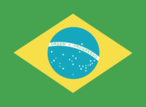
Description: green with a large yellow diamond in the center, showing a blue celestial globe with 27 five-pointed white stars; the globe has a white equatorial band with the motto ORDEM E PROGRESSO (Order and Progress) meaning: green stands for the country's forests, and yellow for its mineral wealth, with the diamond representing the country's shape; the blue globe and stars depict the sky over Rio de Janeiro on the morning of 15 November 1889, the day the Republic of Brazil was declared; the number of stars has risen with the creation of new states, from 21 to 27 (one for each state and the Federal District) history: the flag was inspired by the former Empire of Brazil's flag (1822-1889)
Southern Cross constellation
Green, yellow, blue
"Hino Nacional Brasileiro" (Brazilian National Anthem)
Joaquim Osorio Duque ESTRADA/Francisco Manoel DA SILVA
Music adopted 1890, lyrics adopted 1922; the anthem's music, composed in 1822, was used unofficially for many years
24 (15 cultural, 9 natural, 1 mixed)
Brasilia (c); Historic Salvador de Bahia (c); Historic Ouro Preto (c); Historic Center of the Town of Olinda (c); Iguaçu National Park (n); Jesuit Missions of the Guaranis (c); Rio de Janeiro: Carioca Landscapes (c); Central Amazon Conservation Complex (n); Atlantic Forest South-East Reserves (n); Historic Center of Salvador de Bahia (c); Sanctuary of Bom Jesus do Congonhas (c ); Brasilia (c ); Serra da Capivara National Park (c ); Historic Center of Sao Luis( c); Discovery Coast Atlantic Forest Reserves (n); Historic Center of the Town of Diamantina (c ); Pantanal Conservation Area (n); Brazilian Atlantic Islands: Fernando de Noronha and Atol das Rocas Reserves (n); Cerrado Protected Areas: Chapada dos Veadeiros and Emas National Parks (n); Historic Centre of the Town of Goiás (c); São Francisco Square in the Town of São Cristóvão (c ); Rio de Janeiro: Carioca Landscapes between the Mountain and the Sea (c ); Pampulha Modern Ensemble (c ); Valongo Wharf Archaeological Site (c ); Paraty and Ilha Grande – Culture and Biodiversity (m); Sítio Roberto Burle Marx (c ); Lençóis Maranhenses National Park (n);Peruaçu River Canyon (n)
💹 Economy⬆️ Top
Upper-middle-income, largest Latin American economy; Mercosur, BRICS, G20 member and OECD accession candidate; growth driven by strong domestic consumption; monetary tightening helping curb inflation rate; high inequality in income and access to health and education
$4.165 trillion (2024 est.)
$4.029 trillion (2023 est.)
$3.902 trillion (2022 est.)
3.4% (2024 est.)
3.2% (2023 est.)
3% (2022 est.)
$19,600 (2024 est.)
$19,100 (2023 est.)
$18,600 (2022 est.)
$2.179 trillion (2024 est.)
4.4% (2024 est.)
4.6% (2023 est.)
9.3% (2022 est.)
5.6% (2024 est.)
21.3% (2024 est.)
59.3% (2024 est.)
63.8% (2024 est.)
18.8% (2024 est.)
17% (2024 est.)
-0.1% (2024 est.)
18% (2024 est.)
-17.5% (2024 est.)
Sugarcane, soybeans, maize, milk, cassava, oranges, chicken, beef, rice, wheat (2023)
Textiles, shoes, chemicals, cement, lumber, iron ore, tin, steel, aircraft, motor vehicles and parts, other machinery and equipment
3.3% (2024 est.)
106.79 million (2024 est.)
7.7% (2024 est.)
8% (2023 est.)
9.3% (2022 est.)
18% (2024 est.)
15.7% (2024 est.)
20.9% (2024 est.)
4.2% (2016 est.)
51.6 (2023 est.)
16.2% of household expenditures (2023 est.)
1.7% of household expenditures (2023 est.)
1.3% (2023 est.)
40.8% (2023 est.)
0.2% of GDP (2024 est.)
0.2% of GDP (2023 est.)
0.3% of GDP (2022 est.)
$556.303 billion (2023 est.)
$706.816 billion (2023 est.)
83% of GDP (2023 est.)
14% (of GDP) (2023 est.)
-$61.194 billion (2024 est.)
-$27.933 billion (2023 est.)
-$42.157 billion (2022 est.)
$388.333 billion (2024 est.)
$389.192 billion (2023 est.)
$380.492 billion (2022 est.)
China 30%, USA 10%, Argentina 5%, Netherlands 3%, Chile 2% (2023)
Soybeans, crude petroleum, iron ore, raw sugar, corn (2023)
$377.05 billion (2024 est.)
$340.195 billion (2023 est.)
$369.861 billion (2022 est.)
China 23%, USA 16%, Germany 5%, Argentina 5%, Russia 4% (2023)
Refined petroleum, fertilizers, crude petroleum, vehicle parts/accessories, gas turbines (2023)
$329.732 billion (2024 est.)
$355.021 billion (2023 est.)
$324.673 billion (2022 est.)
$198.582 billion (2023 est.)
Reals (BRL) per US dollar -
5.389 (2024 est.)
4.994 (2023 est.)
5.164 (2022 est.)
5.394 (2021 est.)
5.155 (2020 est.)
⚡ Energy⬆️ Top
100% (2022 est.)
100%
97.3%
240.251 million kW (2023 est.)
608.451 billion kWh (2023 est.)
7.186 billion kWh (2023 est.)
22.294 billion kWh (2023 est.)
106.916 billion kWh (2023 est.)
8.9% of total installed capacity (2023 est.)
2.1% of total installed capacity (2023 est.)
6.9% of total installed capacity (2023 est.)
13.5% of total installed capacity (2023 est.)
60.2% of total installed capacity (2023 est.)
8.3% of total installed capacity (2023 est.)
2 (2025)
1 (2025)
1.88GW (2025 est.)
2.2% (2023 est.)
15.556 million metric tons (2023 est.)
32.223 million metric tons (2023 est.)
5,000 metric tons (2023 est.)
18.257 million metric tons (2023 est.)
6.596 billion metric tons (2023 est.)
4.221 million bbl/day (2023 est.)
3.163 million bbl/day (2023 est.)
12.715 billion barrels (2021 est.)
22.702 billion cubic meters (2023 est.)
29.065 billion cubic meters (2023 est.)
101.203 million cubic meters (2023 est.)
6.356 billion cubic meters (2023 est.)
363.985 billion cubic meters (2021 est.)
48.889 million Btu/person (2023 est.)
📡 Communications⬆️ Top
22.5 million (2024 est.)
11 (2024 est.)
216 million (2024 est.)
102 (2024 est.)
State-run Radiobras operates a radio and a TV network; more than 1,000 radio stations and more than 100 TV channels operating, mostly privately owned; private media ownership highly concentrated (2022)
.br
84% (2023 est.)
48.4 million (2023 est.)
23 (2023 est.)
🚚 Transportation⬆️ Top
PP
5,297 (2025)
1,871 (2025)
29,849.9 km (2014)
194 km (2014) 1.435-m gauge
23,341.6 km (2014) 1.000-m gauge (24 km electrified)
5,822.3 km (2014) 1.600-m gauge (498.3 km electrified)
492 km (2014) 1.600-1.000-m gauge
888 (2023)
Bulk carrier 13, container ship 20, general cargo 38, oil tanker 27, other 790
45 (2024)
4
7
19
15
31
Belem, DTSE/Gegua Oil Terminal, Itajai, Port de Salvador, Porto Alegre, Recife, Rio de Janeiro, Rio Grande, Santos, Tubarao, Vitoria
🛡️ Military and Security⬆️ Top
Brazilian Armed Forces (Forças Armadas Brasileiras): Brazilian Army (Exercito Brasileiro, EB), Brazilian Navy (Marinha do Brasil; includes Naval Aviation (Aviacao Naval Brasileira) and Marine Corps (Corpo de Fuzileiros Navais)), Brazilian Air Force (Forca Aerea Brasileira) (2025)
1.1% of GDP (2024 est.)
1.1% of GDP (2023 est.)
1.2% of GDP (2022 est.)
1.3% of GDP (2021 est.)
1.4% of GDP (2020 est.)
Approximately 360,000 active Armed Forces (220,000 Army; 70,000 Navy; 70,000 Air Force) (2025)
The Brazilian military's inventory consists of a mix of domestically produced and imported weapons, largely from Europe and the US; Brazil's defense industry designs and manufactures equipment for all three military services and for export; it also jointly produces equipment with other countries (2025)
18-45 years of age for compulsory military service for men (only 5-10% of those inducted are required to serve); compulsory service obligation is generally 12 months; 17-45 (18 for women) years of age for voluntary service (2025)
The Brazilian Armed Forces (BAF) are the second largest military in the Western Hemisphere behind the US; they are responsible for external security and protecting the country's sovereignty but also have an internal security role; the BAF’s missions include patrolling and protecting the country’s long borders and coastline and extensive territorial waters and river network, assisting with internal security, providing domestic disaster response and humanitarian assistance, and participating in multinational peacekeeping missions; it also cooperates with neighboring countries such as Argentina and Paraguay to combat cross-border smuggling and trafficking Brazil has Major Non-NATO Ally (MNNA) status with the US, a designation under US law that provides foreign partners with certain benefits in the areas of defense trade and security cooperation the origins of Brazil's military stretch back to the 1640s; Brazil provided a 25,000-man expeditionary force with air and ground units to fight with the Allies in the Mediterranean Theater during World War II; the Navy participated in the Battle of the Atlantic (2025)
🛰️ Space⬆️ Top
Brazilian Space Agency (Agência Espacial Brasileira, AEB; established in 1994 when Brazil’s space program was transferred from the military to civilian control); National Institute for Space Research (INPE, under the Ministry of Science, Technology and Innovations); Department of Aerospace Science and Technology (DCTA, under the Aeronautics Command (COMAER) of the Ministry of Defense) (2025)
Alcantara Launch Center (Maranhão state); Barreira do Inferno Launch Center (Rio Grande do Norte state) (2025)
Develops, builds, operates, and tracks satellites, including communications, remote sensing (RS), multi-mission, navigational, and scientific/testing/research; satellites are launched by foreign partners, but Brazil has a long-standing sounding (research) rocket and satellite launch vehicle (SLV) program and rocket launch facilities; cooperates with a variety of foreign space agencies and commercial entities, including those of Argentina, Canada, the ESA, individual ESA member states (particularly France and Germany), India, Japan, Russia, South Africa, South Korea, Ukraine, and the US; has a state-controlled communications company that operates Brazil’s communications satellites and a growing commercial space sector (2025)
1960s - established a national space program under the Air Force 1984 - began satellite launch vehicle (SLV) program (Veículo Lançador de Satélites or VLS-1) 1985 - first communications satellite jointly produced with Canada and launched on European SLV 1993 - first domestically built experimental communications satellite (Satélite de Coleta de Dados, SCD-1) launched by US 2004 - launched a sounding rocket into sub-orbital space, but the subsequent catastrophic failure of a VLS-1 during a test launch led to scaling back the program 2006 - first Brazilian astronaut to the International Space Station on a Russian rocket 2008 - began work on a 3-stage microsatellite launch vehicle (Veículo Lançador de Microssatélite or VLM-1) in partnership with Germany 2021 - first independently produced remote sensing (RS) satellite (Amazonia-1) launched by India; signed US-led Artemis Accords on space exploration cooperation and signed cooperation agreements with the space agencies of China, India, Russia, and South Africa for the joint development of an RS satellite constellation 2022 - successfully launched suborbital rocket more than 225 km (140 miles) in height
🚨 Terrorism⬆️ Top
Hizballah; Tren de Aragua (TdA)
🌐 Transnational Issues⬆️ Top
331,097 (2024 est.)
19,043 (2024 est.)
27 (2024 est.)
Tier 2 Watch List — Brazil did not demonstrate overall increasing efforts to eliminate trafficking compared with the previous reporting period and was downgraded to Tier 2 Watch List; for more details, go to: https://www.state.gov/reports/2025-trafficking-in-persons-report/brazil/
Major precursor-chemical producer (2025)
Source: Factbook JSON archive.