Brussels
 Belgium
Key facts and a structured country profile. 🧾 Change log 📐 True Size
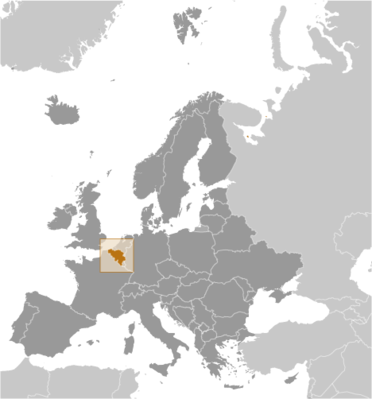
Locator 🗺️ Map
11,960,170 (2025 est.)
30,528 sq km
Western Europe, bordering the North Sea, between France and the Netherlands
🧭 Background
Belgium became independent from the Netherlands in 1830; it was occupied by Germany during World Wars I and II. The country prospered as a modern, technologically advanced European state and member of NATO and the EU. In recent years, longstanding tensions between the Dutch-speaking Flemish of the north and the French-speaking Walloons of the south have led to constitutional amendments granting these regions formal recognition and autonomy. The capital city of Brussels is home to numerous international organizations, including the EU and NATO.
🗺️ Geography
Western Europe, bordering the North Sea, between France and the Netherlands
50 50 N, 4 00 E
Europe
30,528 sq km
30,278 sq km
250 sq km
About the size of Maryland
1,297 km
France 556 km; Germany 133 km; Luxembourg 130 km; Netherlands 478 km
66.5 km
12 nm
24 nm
Geographic coordinates define outer limit
Median line with neighbors
Temperate; mild winters, cool summers; rainy, humid, cloudy
Flat coastal plains in northwest, central rolling hills, rugged mountains of Ardennes Forest in southeast
Botrange 694 m
North Sea 0 m
181 m
Construction materials, silica sand, carbonates, arable land
44.4% (2023 est.)
Arable land: 28.3% (2023 est.)
Permanent crops: 0.8% (2023 est.)
Permanent pasture: 15.3% (2023 est.)
22% (2023 est.)
33.6% (2023 est.)
57 sq km (2013)
Seine (78,919 sq km), Rhine-Maas (198,735 sq km)
Most of the population is concentrated in the northern two thirds of the country; the southeast is more thinly populated; considered to have one of the highest population densities in the world, with approximately 97% living in urban areas
Flooding is a threat along rivers and in areas of reclaimed coastal land, protected from the sea by concrete dikes
Crossroads of Western Europe; most West European capitals are within 1,000 km of Brussels, the seat of both the EU and NATO
👥 People and Society⬆️ Top
11,960,170 (2025 est.)
5,907,498
6,052,672
Belgian(s)
Belgian
Belgian 75.2%, Italian 4.1%, Moroccan 3.7%, French 2.4%, Turkish 2%, Dutch 2%, other 10.6% (2012 est.)
Dutch (official) 60%, French (official) 40%, German (official) less than 1%
Het Wereld Feitenboek, een onmisbare bron van informatie. (Dutch) The World Factbook, une source indispensable d'informations de base. (French) The World Factbook, the indispensable source for basic information.
Roman Catholic 57.1%, Protestant 2.3%, other Christian, 2.8%, Muslim 6.8%, other 1.7%, atheist 9.1%, nonbeliever/agnostic 20.2% (2018 est.)
16.9% (male 1,038,578/female 990,215)
62.8% (male 3,796,844/female 3,730,784)
20.2% (2024 est.) (male 1,073,635/female 1,347,578)
57.6 (2025 est.)
24.9 (2025 est.)
32.6 (2025 est.)
3.1 (2025 est.)
42.4 years (2025 est.)
40.8 years
43.1 years
0.45% (2025 est.)
9.09 births/1,000 population (2025 est.)
9.55 deaths/1,000 population (2025 est.)
4.96 migrant(s)/1,000 population (2025 est.)
Most of the population is concentrated in the northern two thirds of the country; the southeast is more thinly populated; considered to have one of the highest population densities in the world, with approximately 97% living in urban areas
98.2% of total population (2023)
0.38% annual rate of change (2020-25 est.)
2.122 million BRUSSELS (capital), 1.057 million Antwerp (2023)
1.05 male(s)/female
1.05 male(s)/female
1.02 male(s)/female
0.8 male(s)/female
0.97 male(s)/female (2024 est.)
29.2 years (2020 est.)
4 deaths/100,000 live births (2023 est.)
3 deaths/1,000 live births (2025 est.)
3.5 deaths/1,000 live births
2.7 deaths/1,000 live births
82.3 years (2024 est.)
79.7 years
85 years
1.46 children born/woman (2025 est.)
0.71 (2025 est.)
Urban: 100% of population (2022 est.)
Rural: 100% of population (2022 est.)
Total: 100% of population (2022 est.)
Urban: 0% of population (2022 est.)
Rural: 0% of population (2022 est.)
Total: 0% of population (2022 est.)
11% of GDP (2021)
15.2% of national budget (2022 est.)
6.53 physicians/1,000 population (2023)
5.5 beds/1,000 population (2021 est.)
Urban: 100% of population (2022 est.)
Rural: 100% of population (2022 est.)
Total: 100% of population (2022 est.)
Urban: 0% of population (2022 est.)
Rural: 0% of population (2022 est.)
Total: 0% of population (2022 est.)
22.1% (2016)
9.15 liters of pure alcohol (2019 est.)
4.35 liters of pure alcohol (2019 est.)
3.41 liters of pure alcohol (2019 est.)
1.09 liters of pure alcohol (2019 est.)
0.3 liters of pure alcohol (2019 est.)
24.1% (2025 est.)
26.4% (2025 est.)
22% (2025 est.)
0.3% (2023 est.)
52.4% (2021 est.)
0% (2020)
0.1% (2020)
6.3% of GDP (2022 est.)
12% national budget (2022 est.)
19 years (2022 est.)
18 years (2022 est.)
20 years (2022 est.)
🌿 Environment⬆️ Top
Urbanization; possible risks from industry and intensive farming; air and water pollution
Air Pollution, Air Pollution-Heavy Metals, Air Pollution-Multi-effect Protocol, Air Pollution-Nitrogen Oxides, Air Pollution-Persistent Organic Pollutants, Air Pollution-Sulphur 85, Air Pollution-Sulphur 94, Air Pollution-Volatile Organic Compounds, Antarctic-Environmental Protection, Antarctic-Marine Living Resources, Antarctic Seals, Antarctic Treaty, Biodiversity, Climate Change, Climate Change-Kyoto Protocol, Climate Change-Paris Agreement, Comprehensive Nuclear Test Ban, Desertification, Endangered Species, Environmental Modification, Hazardous Wastes, Law of the Sea, Marine Dumping-London Convention, Marine Dumping-London Protocol, Marine Life Conservation, Nuclear Test Ban, Ozone Layer Protection, Ship Pollution, Tropical Timber 2006, Wetlands, Whaling
None of the selected agreements
Temperate; mild winters, cool summers; rainy, humid, cloudy
44.4% (2023 est.)
Arable land: 28.3% (2023 est.)
Permanent crops: 0.8% (2023 est.)
Permanent pasture: 15.3% (2023 est.)
22% (2023 est.)
33.6% (2023 est.)
98.2% of total population (2023)
0.38% annual rate of change (2020-25 est.)
112.083 million metric tonnes of CO2 (2023 est.)
8.166 million metric tonnes of CO2 (2023 est.)
76.635 million metric tonnes of CO2 (2023 est.)
27.282 million metric tonnes of CO2 (2023 est.)
12.3 micrograms per cubic meter (2019 est.)
4.766 million tons (2024 est.)
31.7% (2022 est.)
740.19 million cubic meters (2022 est.)
4.14 billion cubic meters (2022 est.)
41.97 million cubic meters (2022 est.)
18.3 billion cubic meters (2022 est.)
2 (2024)
Famenne-Ardenne; Schelde Delta (includes Netherlands) (2024)
🏛️ Government⬆️ Top
Kingdom of Belgium
Belgium
Royaume de Belgique (French)/Koninkrijk Belgie (Dutch)/Koenigreich Belgien (German)
Belgique/Belgie/Belgien
The name derives from the Belgae, an ancient Celtic tribal confederation that inhabited an area between the English Channel and the west bank of the Rhine in the first centuries B.C.
Federal parliamentary democracy under a constitutional monarchy
Brussels
50 84 N, 4 35 E
UTC+1 (6 hours ahead of Washington, DC, during Standard Time)
+1hr, begins last Sunday in March; ends last Sunday in October
The name is of Germanic origin, from broca (marsh) and sali (room or building)
3 regions (French: régions, singular - région; Dutch: gewesten, singular - gewest); Brussels-Capital Region, also known as Brussels Hoofdstedelijk Gewest (Dutch), Région de Bruxelles-Capitale (French long form), Bruxelles-Capitale (French short form); Flemish Region (Flanders), also known as Vlaams Gewest (Dutch long form), Vlaanderen (Dutch short form), Région Flamande (French long form), Flandre (French short form); Walloon Region (Wallonia), also known as Région Wallonne (French long form), Wallonie (French short form), Waals Gewest (Dutch long form), Wallonie (Dutch short form)
Civil law system based on the French Civil Code; judicial review of legislative acts
Drafted 25 November 1830, approved 7 February 1831, entered into force 26 July 1831, revised 14 July 1993 (creating a federal state)
"Revisions" proposed as declarations by the federal government in accord with the king or by Parliament followed by dissolution of Parliament and new elections; adoption requires two-thirds majority vote of a two-thirds quorum in both houses of the next elected Parliament
Accepts compulsory ICJ jurisdiction with reservations; accepts ICCt jurisdiction
No
At least one parent must be a citizen of Belgium
Yes
5 years
18 years of age; universal and compulsory
King PHILIPPE (since 21 July 2013)
Prime Minister Bart DE WEVER (since 3 February 2025)
Council of Ministers formally appointed by the monarch
The monarchy is hereditary and constitutional; following legislative elections, the monarch usually appoints the leader of the majority party or majority coalition as prime minister, which the legislature approves
Federal Parliament (Parlement fédéral - Federaal Parlement - Föderales Parlament)
Bicameral
House of Representatives (Chambre des Représentants)
150 (all directly elected)
Proportional representation
Full renewal
5 years
6/9/2024
New Flemish Alliance (N-VA) (24); Vlaams Belang (Flemish Interest) (20); Movement for Reform (MR) (20); Socialist Party in Wallonia (PS) (16); Workers' Party of Belgium (PTB*PVDA) (15); LES ENGAGÉS (14); Vooruit (13); Christian Democratic and Flemish (CD&V) (11); Other (17)
41.3%
June 2029
Senate (Sénat - Senaat - Senat)
60 (all indirectly elected)
Full renewal
5 years
7/18/2024
47.5%
July 2029
Constitutional Court or Grondwettelijk Hof (in Dutch) and Cour Constitutionelle (in French) (consists of 12 judges - 6 Dutch-speaking and 6 French-speaking); Supreme Court of Justice or Hof van Cassatie (in Dutch) and Cour de Cassation (in French) (court organized into 3 chambers: civil and commercial; criminal; social, fiscal, and armed forces; each chamber includes a Dutch division and a French division, each with a chairperson and 5-6 judges)
Constitutional Court judges appointed by the monarch from candidates submitted by Parliament; judges appointed for life with mandatory retirement at age 70; Supreme Court judges appointed by the monarch from candidates submitted by the High Council of Justice, a 44-member independent body of judicial and non-judicial members; judges appointed for life
Courts of Appeal; regional courts; specialized courts for administrative, commercial, labor, immigration, and audit issues; magistrate's courts; justices of the peace
Flemish parties: Christian Democratic and Flemish or CD&V Vooruit or Forward (formerly Social Progressive Alternative or SP.A) Groen or Green (formerly AGALEV, Flemish Greens) New Flemish Alliance or N-VA Open Flemish Liberals and Democrats or Open VLD Vlaams Belang (Flemish Interest) or VB Francophone parties: Ecolo (Francophone Greens) Francophone Federalist Democrats or Defi Les Engages (formerly Humanist and Democratic Center or CDH) Movement for Reform or MR Socialist Party or PS Workers' Party or PVDA-PTB
Ambassador Frédéric BERNARD (since 25 February 2025)
1430 K Street NW, Washington DC 20005
[1] (202) 333-6900
[1] (202) 338-4960
Washington@diplobel.fed.be https://unitedstates.diplomatie.belgium.be/en
Atlanta, Los Angeles, New York
Ambassador Bill WHITE (since 17 November 2025)
Regentlaan 27 Boulevard du Regent, B-1000 Brussels
7600 Brussels Place, Washington DC 20521-7600
[32] (2) 811-4000
[32] (2) 811-4500
UscitizenBrussels@state.gov https://be.usembassy.gov/
ADB (nonregional members), AfDB (nonregional members), Australia Group, Benelux, BIS, CD, CE, CERN, EAPC, EBRD, ECB, EIB, EITI (implementing country), EMU, ESA, EU, FAO, FATF, G-9, G-10, IADB, IAEA, IBRD, ICAO, ICC (national committees), ICCt, ICRM, IDA, IEA, IFAD, IFC, IFRCS, IGAD (partners), IHO, ILO, IMF, IMO, IMSO, Interpol, IOC, IOM, IPU, ISO, ITSO, ITU, ITUC (NGOs), MIGA, MONUSCO, NATO, NEA, NSG, OAS (observer), OECD, OIF, OPCW, OSCE, Pacific Alliance (observer), Paris Club, PCA, Schengen Convention, SELEC (observer), UN, UNCTAD, UNESCO, UNHCR, UNIDO, UNIFIL, UNOOSA, UNRWA, UNTSO, UPU, Wassenaar Arrangement, WCO, WHO, WIPO, WMO, WTO, ZC
4 October 1830 (a provisional government declared independence from the Netherlands); 21 July 1831 (King LEOPOLD I ascended to the throne)
Belgian National Day (ascension to the throne of King LEOPOLD I), 21 July (1831)
Description: three equal vertical bands of black (left side), yellow, and red history: the vertical design was based on the flag of France; the colors are from the arms of the duchy of Brabant (yellow lion with red claws and tongue on a black field)
Golden rampant lion
Red, black, yellow
"La Brabançonne" (The Song of Brabant)
Louis-Alexandre DECHET [French] and Victor CEULEMANS [Dutch]/Francois VAN CAMPENHOUT
Adopted 1830; according to legend Louis-Alexandre DECHET, an actor at the theater where the revolution against the Netherlands began, wrote the lyrics with a group of young people in a Brussels cafe
16 (15 cultural, 1 natural)
Belfries of Belgium (c); Historic Brugge (c); The Grand Place, Brussels (c); Major Town Houses of Victor Horta (c); Notre-Dame Cathedral, Tournai (c); Spa, Liege (c); Primeval Beech Forests - Sonian Wood (n); Stoclet Palace (c)
💹 Economy⬆️ Top
High-income, core EU and eurozone economy; slow growth with weakened domestic consumption and export demand; high public debt and structural deficits linked to social spending; aging workforce with weak productivity growth and participation rates
$749.229 billion (2024 est.)
$741.672 billion (2023 est.)
$732.865 billion (2022 est.)
1% (2024 est.)
1.2% (2023 est.)
4.3% (2022 est.)
$63,100 (2024 est.)
$62,900 (2023 est.)
$62,700 (2022 est.)
$664.564 billion (2024 est.)
3.1% (2024 est.)
4% (2023 est.)
9.6% (2022 est.)
0.8% (2024 est.)
17.6% (2024 est.)
72.1% (2024 est.)
50.4% (2023 est.)
23.8% (2023 est.)
24.4% (2023 est.)
1% (2023 est.)
84.2% (2023 est.)
-84.8% (2023 est.)
Sugar beets, milk, potatoes, wheat, pork, lettuce, maize, chicken, barley, pears (2023)
Engineering and metal products, motor vehicle assembly, transportation equipment, scientific instruments, processed food and beverages, chemicals, pharmaceuticals, base metals, textiles, glass, petroleum
-0.6% (2024 est.)
5.416 million (2024 est.)
5.5% (2024 est.)
5.6% (2023 est.)
5.6% (2022 est.)
16.8% (2024 est.)
18.6% (2024 est.)
14.7% (2024 est.)
12.3% (2022 est.)
26.4 (2022 est.)
12.2% of household expenditures (2023 est.)
4% of household expenditures (2023 est.)
3.8% (2022 est.)
22.2% (2022 est.)
2.3% of GDP (2024 est.)
2.3% of GDP (2023 est.)
2.3% of GDP (2022 est.)
$220.657 billion (2022 est.)
$235.767 billion (2022 est.)
92.5% of GDP (2022 est.)
22.7% (of GDP) (2022 est.)
-$5.679 billion (2024 est.)
-$4.503 billion (2023 est.)
-$7.031 billion (2022 est.)
$525.458 billion (2024 est.)
$542.508 billion (2023 est.)
$565.233 billion (2022 est.)
France 20%, Netherlands 15%, Germany 14%, Italy 6%, USA 5% (2023)
Refined petroleum, natural gas, vaccines, cars, packaged medicine (2023)
$531.029 billion (2024 est.)
$546.426 billion (2023 est.)
$573.192 billion (2022 est.)
Netherlands 20%, Germany 13%, France 11%, USA 7%, Ireland 4% (2023)
Cars, natural gas, vaccines, packaged medicine, crude petroleum (2023)
$41.449 billion (2024 est.)
$40.813 billion (2023 est.)
$41.274 billion (2022 est.)
Euros (EUR) per US dollar -
0.924 (2024 est.)
0.925 (2023 est.)
0.95 (2022 est.)
0.845 (2021 est.)
0.876 (2020 est.)
⚡ Energy⬆️ Top
100% (2022 est.)
28.248 million kW (2023 est.)
74.537 billion kWh (2023 est.)
18.279 billion kWh (2023 est.)
18.626 billion kWh (2023 est.)
3.147 billion kWh (2023 est.)
24.1% of total installed capacity (2023 est.)
40.4% of total installed capacity (2023 est.)
9.4% of total installed capacity (2023 est.)
20% of total installed capacity (2023 est.)
-0.1% of total installed capacity (2023 est.) note: Belgium has negative net hydroelectric power generation based on losses from use of pumped storage hydropower
6.2% of total installed capacity (2023 est.)
4 (2025)
3.46GW (2025 est.)
41.2% (2023 est.)
3 (2025)
1.269 million metric tons (2023 est.)
4.372 million metric tons (2023 est.)
184,000 metric tons (2023 est.)
4.046 million metric tons (2023 est.)
4.1 billion metric tons (2023 est.)
11,000 bbl/day (2023 est.)
596,000 bbl/day (2024 est.)
12.938 million cubic meters (2023 est.)
14.382 billion cubic meters (2023 est.)
8.461 billion cubic meters (2023 est.)
23.007 billion cubic meters (2023 est.)
190.416 million Btu/person (2023 est.)
📡 Communications⬆️ Top
2.49 million (2024 est.)
21 (2024 est.)
12.2 million (2024 est.)
104 (2024 est.)
A segmented market with the three major linguistic communities (Flemish-, French-, and German-speaking) each responsible for their own broadcast media; multiple TV channels exist for each community; over 90% of households are connected to cable and can access TV broadcasts from neighboring countries; each community has a public radio network coexisting with private broadcasters
.be
95% (2023 est.)
5.12 million (2023 est.)
44 (2023 est.)
🚚 Transportation⬆️ Top
OO
48 (2025)
112 (2025)
3,602 km (2020) 3,160 km electrified
198 (2023)
Bulk carrier 17, container ship 2, general cargo 16, oil tanker 21, other 142
7 (2024)
1
2
2
2
5
Antwerpen, Bruxelles, Ghent, Oostende, Zeebrugge
🛡️ Military and Security⬆️ Top
Belgian Armed Forces (Defensie or La Défense): Land Component, Marine (Naval) Component, Air Component, Medical Component, Cyber Command (2025)
2% of GDP (2025 est.)
1.3% of GDP (2024 est.)
1.2% of GDP (2023 est.)
1.2% of GDP (2022 est.)
1.1% of GDP (2021 est.)
Approximately 23,000 active-duty military personnel (2025)
The armed forces have a mix of weapons systems from European suppliers and the US; Belgium has an export-focused defense industry that focuses on components and subcontracting (2025)
18 years of age for voluntary military service for men and women; maximum age varies by position; conscription abolished in 1995 (2025)
Has on average about 1,000 personnel deployed on foreign missions, including more than 300 ground forces deployed in Eastern Europe for the defense of NATO's eastern flank (2025)
The Belgian military's responsibilities include territorial defense, humanitarian/disaster relief, assistance to the police if required, international peacekeeping missions, and support to its NATO and EU security commitments, which Belgium considers vital components of its national security policy; outside of the country, the military operates almost always within an international organization or a coalition; Belgium was one of the original 12 countries to sign the North Atlantic Treaty (also known as the Washington Treaty) establishing NATO in 1949; it hosts the NATO headquarters in Brussels; Belgium also cooperates bilaterally with neighboring countries, such as Luxembourg and the Netherlands, in conducting joint patrols of their respective air spaces and in a composite combined special operations command with Denmark and the Netherlands (2025)
🛰️ Space⬆️ Top
Royal Belgian Institute for Space Aeronomy-Interfederal Space Agency of Belgium (BIRA-IASB; established 1964; IASB added 2017); Belgium Federal Science Policy Office (BELSPO) (2025)
Builds satellites, particularly research/science/technology and remote sensing platforms; researches, develops, and produces a wide variety of space technologies, including telecommunications, optics, robotics, scientific instruments, and space launch vehicle components; founding member of the ESA and participates in a variety of ESA and EU projects, such as Space Surveillance and Tracking, Copernicus Earth observation, and Galileo global navigation satellite system; hosts the European Space Security and Education Center (established 1968); participates in international astronomy efforts, particularly through the European Southern Observatory (ESO); has worked with a variety of foreign space agencies and commercial entities outside Europe, including those of Argentina, China, India, Russia, South Africa, UAE, Vietnam, and the US (2025)
1986 - joined first European Earth Observation program; founding member of European Organization for the Exploitation of Meteorological Satellites 1992 - first Belgian astronaut in space on the US Space Shuttle 2001 - first remote sensing satellite (PROBA-1) launched by India 2024 - signed US-led Artemis Accords outlining best practices for space exploration
🚨 Terrorism⬆️ Top
Islamic Revolutionary Guard Corps/Qods Force; Islamic State of Iraq and ash-Sham (ISIS)
🌐 Transnational Issues⬆️ Top
236,689 (2024 est.)
849 (2024 est.)
Major precursor-chemical producer (2025)
Source: Factbook JSON archive.