Oranjestad
 Aruba
Aruba
Key facts and a structured country profile. 🧾 Change log 📐 True Size
Locator 🗺️ Map
125,063 (2024 est.)
180 sq km
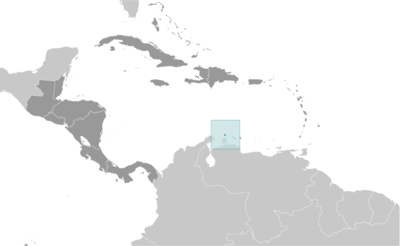
Caribbean, island in the Caribbean Sea, north of Venezuela
🧭 Background
Discovered and claimed for Spain in 1499, Aruba was acquired by the Dutch in 1636. Three main industries have since dominated the island's economy: gold mining, oil refining, and tourism. A 19th-century gold rush was followed by prosperity brought on by the opening of an oil refinery in 1924. The last decades of the 20th century saw a boom in the tourism industry. Aruba seceded from the Netherlands Antilles in 1986 and became a separate, semi-autonomous member of the Kingdom of the Netherlands. Movement toward full independence was halted at Aruba's request in 1990.
🗺️ Geography
Caribbean, island in the Caribbean Sea, north of Venezuela
12 30 N, 69 58 W
Central America and the Caribbean
180 sq km
180 sq km
0 sq km
Slightly larger than Washington, D.C.
0 km
68.5 km
12 nm
200 nm
Tropical marine; little seasonal temperature variation
Flat with a few hills; scant vegetation
Ceru Jamanota 188 m
Caribbean Sea 0 m
NEGL; white sandy beaches foster tourism
11.1% (2023 est.)
Arable land: 11.1% (2023 est.)
Permanent crops: 0% (2022 est.)
Permanent pasture: 0% (2022 est.)
2.7% (2023 est.)
86.2% (2023 est.)
NA
Most residents live in or around Oranjestad and San Nicolaas; most settlements tend to be located on the less mountainous western side of the island
Hurricanes; lies outside the Caribbean hurricane belt and is rarely threatened
A flat, riverless island known for its white sand beaches; its tropical climate is moderated by constant trade winds from the Atlantic Ocean; the temperature is almost constant at about 27 degrees Celsius (81 degrees Fahrenheit)
👥 People and Society⬆️ Top
125,063 (2024 est.)
59,101
65,962
Aruban(s)
Aruban; Dutch
Dutch 78.7%, Colombian 6.6%, Venezuelan 5.5%, Dominican 2.8%, Haitian 1.3%, other 5.1% (2020 est.)
Papiamento (official) (a creole language that mixes Portuguese, Spanish, Dutch, English, French, African languages, and Arawak) 69.4%, Spanish 13.7%, English (widely spoken) 7.1%, Dutch (official) 6.1%, Chinese 1.5%, other 1.7%, unspecified 0.4% (2010 est.)
Roman Catholic 75.3%, Protestant 4.9% (includes Methodist 0.9%, Adventist 0.9%, Anglican 0.4%, other Protestant 2.7%), Jehovah's Witness 1.7%, other 12%, none 5.5%, unspecified 0.5% (2010 est.)
17.2% (male 10,815/female 10,747)
65.7% (male 39,621/female 42,487)
17.1% (2024 est.) (male 8,665/female 12,728)
52.3 (2024 est.)
26.3 (2024 est.)
26.1 (2024 est.)
3.8 (2024 est.)
41.2 years (2025 est.)
39.3 years
42.4 years
1.05% (2025 est.)
11.44 births/1,000 population (2025 est.)
8.85 deaths/1,000 population (2025 est.)
7.91 migrant(s)/1,000 population (2025 est.)
Most residents live in or around Oranjestad and San Nicolaas; most settlements tend to be located on the less mountainous western side of the island
44.3% of total population (2023)
0.77% annual rate of change (2020-25 est.)
30,000 ORANJESTAD (capital) (2018)
1.02 male(s)/female
1.01 male(s)/female
0.93 male(s)/female
0.68 male(s)/female
0.9 male(s)/female (2024 est.)
11.2 deaths/1,000 live births (2025 est.)
15.6 deaths/1,000 live births
7.3 deaths/1,000 live births
78.5 years (2024 est.)
75.4 years
81.6 years
1.82 children born/woman (2025 est.)
0.9 (2025 est.)
Total: 98.8% of population (2022 est.)
Total: 1.2% of population (2022 est.)
46.8% (2020 est.)
3.6% of GDP (2021 est.)
11% national budget (2021 est.)
🌿 Environment⬆️ Top
Difficulty in properly disposing waste from tourists; air pollution from waste-burning; water pollution from plastics
Tropical marine; little seasonal temperature variation
11.1% (2023 est.)
Arable land: 11.1% (2023 est.)
Permanent crops: 0% (2022 est.)
Permanent pasture: 0% (2022 est.)
2.7% (2023 est.)
86.2% (2023 est.)
44.3% of total population (2023)
0.77% annual rate of change (2020-25 est.)
1.163 million metric tonnes of CO2 (2023 est.)
1.163 million metric tonnes of CO2 (2023 est.)
88,100 tons (2024 est.)
🏛️ Government⬆️ Top
Country of Aruba
Aruba
Land Aruba (Dutch); Pais Aruba (Papiamento)
Aruba
The origin of the island's name is unclear; according to tradition, the name comes from the Spanish phrase oro hubo ("there was gold"), but no gold was ever found on the island; other possible sources are either the local word oruba ("well-situated") or a combination of two Carib Indian words, ora and oubao ("shell" and "island," respectively)
Parliamentary democracy; part of the Kingdom of the Netherlands
One of four constituent countries of the Kingdom of the Netherlands; full autonomy in internal affairs obtained in 1986 upon separation from the Netherlands Antilles; Dutch government responsible for defense and foreign affairs
Oranjestad
12 31 N, 70 02 W
UTC-4 (1 hour ahead of Washington, DC, during Standard Time)
Translates as "orange city" in Dutch; in 1824, the city was named after the royal family of the Netherlands, the House of Orange-Nassau
Civil law system based on the Dutch civil code
Previous 1947, 1955; latest drafted and approved August 1985, enacted 1 January 1986 (regulates governance of Aruba but is subordinate to the Charter for the Kingdom of the Netherlands); in 1986, Aruba became a semi-autonomous entity within the Kingdom of the Netherlands
See the Netherlands
18 years of age; universal
King WILLEM-ALEXANDER of the Netherlands (since 30 April 2013); represented by Governor General Alfonso BOEKHOUDT (since 1 January 2017)
Prime Minister Mike EMAN (since 28 March 2025)
Council of Ministers elected by the Legislature (Staten)
The monarchy is hereditary; governor general appointed by the monarch for a 6-year term; prime minister and deputy prime minister indirectly elected by the Staten for 4-year term
6 December 2024
Mike EMAN (AVP) elected prime minister; percent of Staten vote - NA
By December 2028
Legislature (Staten)
Unicameral
21
Proportional representation
Full renewal
4 years
6 December 2024
AVP (9); MEP (8); FUTURO (3); PPA (1)
38.1%
By December 2028
Joint Court of Justice of Aruba, Curacao, Sint Maarten, and of Bonaire, Sint Eustatius and Saba or "Joint Court of Justice" (sits as a 3-judge panel); final appeals heard by the Supreme Court in The Hague, Netherlands
Joint Court judges appointed for life by the monarch
Court in First Instance
Accion21 Aruban People's Party or AVP Democratic Network or RED FUTURO Movimiento Aruba Soberano (Aruban Sovereignty Movement) or MAS Partido Patriotico di Aruba (Aruban Patriotic Party) or APP People's Electoral Movement Party or MEP Pueblo Orguyoso y Respeta or POR RAIZ (ROOTS)
None (represented by the Kingdom of the Netherlands)
The US does not have an embassy in Aruba; the Consul General to Curacao is accredited to Aruba
ACS (associate), Caricom (observer), FATF, ILO, IMF, Interpol, IOC, ITUC (NGOs), UNESCO (associate), UNWTO (associate), UPU
None (part of the Kingdom of the Netherlands)
National Anthem and Flag Day, 18 March (1976)
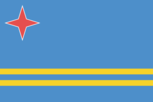
Description: blue, with two narrow, horizontal yellow stripes across the lower portion and a red four-pointed star outlined in white in the upper-left corner meaning: the star stands for Aruba's red soil and white beaches, and its four points for the major languages (Papiamento, Dutch, Spanish, English) and the points of a compass, to indicate that its inhabitants come from all over the world; blue symbolizes Caribbean waters and skies; the stripes represent the island's two main industries, tourism and mining
Hooiberg (Haystack) Hill
Blue, yellow, red, white
“Het Wilhelmus”
Philips VAN MARNIX van Sint Aldegonde (presumed)/unknown
Official anthem, as part of the Kingdom of the Netherlands
💹 Economy⬆️ Top
Small, tourism-dependent, territorial-island economy; very high public debt; COVID-19 crippled economic activity; partial recovery underway via tourism, benefitting from its high amount of timeshare residences; considering reopening oil refinery
$4.35 billion (2023 est.)
$4.172 billion (2022 est.)
$3.844 billion (2021 est.)
4.3% (2023 est.)
8.5% (2022 est.)
24.1% (2021 est.)
$40,500 (2023 est.)
$38,900 (2022 est.)
$35,700 (2021 est.)
$3.649 billion (2023 est.)
4.3% (2019 est.)
3.6% (2018 est.)
-1% (2017 est.)
0% (2019 est.)
11.4% (2019 est.)
78.3% (2019 est.)
52.1% (2023 est.)
19.6% (2023 est.)
21.5% (2023 est.)
0% (2023 est.)
88.3% (2023 est.)
-81.5% (2023 est.)
Aloes; livestock; fish
Tourism, petroleum transshipment facilities, banking
1.1% of GDP (2023 est.)
1.2% of GDP (2022 est.)
1.2% of GDP (2021 est.)
$793 million (2019 est.)
$782 million (2019 est.)
84.7% of GDP (2016 est.)
$194.498 million (2023 est.)
$230.556 million (2022 est.)
$79.257 million (2021 est.)
$3.153 billion (2023 est.)
$2.853 billion (2022 est.)
$2.201 billion (2021 est.)
Jordan 34%, Colombia 31%, USA 7%, Guyana 5%, Slovakia 5% (2023)
Tobacco, gas turbines, refined petroleum, steam turbines, heating machinery (2023)
$2.565 billion (2023 est.)
$2.429 billion (2022 est.)
$1.947 billion (2021 est.)
USA 53%, Netherlands 15%, China 6%, Colombia 3%, Brazil 3% (2023)
Refined petroleum, tobacco, cars, garments, jewelry (2023)
$1.468 billion (2023 est.)
$1.544 billion (2022 est.)
$1.513 billion (2021 est.)
Aruban guilders/florins per US dollar -
1.79 (2024 est.)
1.79 (2023 est.)
1.79 (2022 est.)
1.79 (2021 est.)
1.79 (2020 est.)
⚡ Energy⬆️ Top
99.9% (2022 est.)
100%
100%
305,000 kW (2023 est.)
824.036 million kWh (2023 est.)
166.766 million kWh (2023 est.)
83.6% of total installed capacity (2023 est.)
2.6% of total installed capacity (2023 est.)
13.7% of total installed capacity (2023 est.)
1 metric tons (2023 est.)
8,000 bbl/day (2023 est.)
153.952 million Btu/person (2023 est.)
📡 Communications⬆️ Top
35,000 (2021 est.)
32 (2022 est.)
140,815 (2022 est.)
131 (2022 est.)
Freedom of the press respected, as guaranteed under Dutch law; newspapers are in the Papiamento language; 2 commercial TV stations, with a cable TV subscription service providing access to foreign channels; wide range of commercial radio stations available (2023)
.aw
97% (2017 est.)
19,000 (2022 est.)
17 (2022 est.)
🚚 Transportation⬆️ Top
P4
1 (2025)
1 (2023)
Other 1
2 (2024)
0
0
1
1
1
Paardenbaai (Oranjestad), Sint Nicolaas Baai
🛡️ Military and Security⬆️ Top
No regular military forces; Aruban Militia (ARUMIL); Police Department for local law enforcement, supported by the Royal Netherlands Marechaussee (Gendarmerie), the Dutch Caribbean Police Force (Korps Politie Caribisch Nederland, KPCN), and the Dutch Caribbean Coast Guard (DCCG or Kustwacht Caribisch Gebied (KWCARIB)) (2025)
Defense is the responsibility of the Kingdom of the Netherlands; the Aruba security services focus on organized crime and terrorism; the Dutch Government controls foreign and defense policy; the Dutch Caribbean Coast Guard (DCCG) provides maritime security; the Dutch military maintains a presence on Aruba, including a marine company and a naval base (2024)
Source: Factbook JSON archive.