The Valley
 Anguilla
Key facts and a structured country profile. 🧾 Change log 📐 True Size
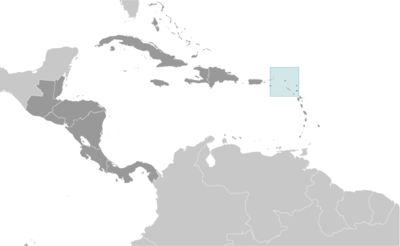
Locator 🗺️ Map
19,416 (2024 est.)
91 sq km
Caribbean, islands between the Caribbean Sea and North Atlantic Ocean, east of Puerto Rico
🧭 Background
English settlers from Saint Kitts first colonized Anguilla in 1650. Great Britain administered the island until the early 19th century, when -- against the wishes of the inhabitants -- Anguilla was incorporated into a single British dependency along with Saint Kitts and Nevis. Several attempts at separation failed. In 1971, two years after a revolt, Anguilla was finally allowed to secede; this arrangement was formally recognized in 1980, when Anguilla became a separate British dependency. In 2017, Hurricane Irma caused extensive damage on the island, particularly to communications and residential and business infrastructure.
🗺️ Geography
Caribbean, islands between the Caribbean Sea and North Atlantic Ocean, east of Puerto Rico
18 15 N, 63 10 W
Central America and the Caribbean
91 sq km
91 sq km
0 sq km
About one-half the size of Washington, D.C.
0 km
61 km
12 nm
200 nm
200 nm
Tropical; moderated by northeast trade winds
Flat and low-lying island of coral and limestone
Crocus Hill 73 m
Caribbean Sea 0 m
Salt, fish, lobster
0% (2022 est.)
Arable land: 0% (2018 est.)
Permanent crops: 0% (2018 est.)
Permanent pasture: 0% (2018 est.)
61.1% (2022 est.)
38.9% (2022 est.)
0 sq km (2020)
Most of the population is concentrated in The Valley in the center of the island; settlement is fairly uniform in the southwest, but rather sparse in the northeast
Frequent hurricanes and other tropical storms (July to October)
The most northerly of the Leeward Islands in the Lesser Antilles
👥 People and Society⬆️ Top
19,416 (2024 est.)
9,107
10,309
Anguillan(s)
Anguillan
African/Black 85.3%, Hispanic 4.9%, mixed 3.8%, White 3.2%, East Indian/Indian 1%, other 1.6%, unspecified 0.3% (2011 est.)
English (official)
Protestant 73.2% (includes Anglican 22.7%, Methodist 19.4%, Pentecostal 10.5%, Seventh Day Adventist 8.3%, Baptist 7.1%, Church of God 4.9%, Presbyterian 0.2%, Brethren 0.1%), Roman Catholic 6.8%, Jehovah's Witness 1.1%, other Christian 10.9%, other 3.2%, unspecified 0.3%, none 4.5% (2011 est.)
20.8% (male 2,056/female 1,992)
67.5% (male 5,958/female 7,147)
11.7% (2024 est.) (male 1,093/female 1,170)
48.2 (2024 est.)
30.9 (2024 est.)
17.3 (2024 est.)
5.8 (2024 est.)
37.5 years (2025 est.)
34.8 years
39 years
1.71% (2025 est.)
11.69 births/1,000 population (2025 est.)
4.76 deaths/1,000 population (2025 est.)
10.13 migrant(s)/1,000 population (2025 est.)
Most of the population is concentrated in The Valley in the center of the island; settlement is fairly uniform in the southwest, but rather sparse in the northeast
100% of total population (2023)
0.47% annual rate of change (2020-25 est.)
1,000 THE VALLEY (capital) (2018)
1.03 male(s)/female
1.03 male(s)/female
0.83 male(s)/female
0.93 male(s)/female
0.88 male(s)/female (2024 est.)
2.9 deaths/1,000 live births (2025 est.)
3.9 deaths/1,000 live births
2.1 deaths/1,000 live births
82.6 years (2024 est.)
80 years
85.3 years
1.72 children born/woman (2025 est.)
0.85 (2025 est.)
Total: 97.5% of population
1.51 physicians/1,000 population (2018)
2.5% of GDP (2022 est.)
10.3% national budget (2024 est.)
🌿 Environment⬆️ Top
Inadequate potable water
Tropical; moderated by northeast trade winds
0% (2022 est.)
Arable land: 0% (2018 est.)
Permanent crops: 0% (2018 est.)
Permanent pasture: 0% (2018 est.)
61.1% (2022 est.)
38.9% (2022 est.)
100% of total population (2023)
0.47% annual rate of change (2020-25 est.)
🏛️ Government⬆️ Top
None
Anguilla
In 1493, Christopher COLUMBUS named the island Anguilla, meaning "eel" in Spanish, because of the island's elongated shape
Parliamentary democracy (House of Assembly); self-governing overseas territory of the UK
Overseas territory of the UK
The Valley
18 13 N, 63 03 W
UTC-4 (1 hour ahead of Washington, DC, during Standard Time)
Name may derive from the capital's location among several hills
Common law based on the English model
Several previous; latest 1 April 1982
See United Kingdom
18 years of age; universal
King CHARLES III (since 8 September 2022); represented by Governor Julia CROUCH (since 11 September 2023)
Premier Cora RICHARDSON-HODGE (since 27 February 2025)
Executive Council appointed by the governor from among elected members of the House of Assembly
The monarchy is hereditary; governor appointed by the monarch; following legislative elections, the governor usually appoints the leader of the majority party or majority coalition as premier
House of Assembly
Unicameral
11 (7 directly elected, 2 appointed, 2 ex-officio members)
Plurality/majority
Full renewal
5 years
6/29/2020
APM (7); AUF (4)
27.3%
The Eastern Caribbean Supreme Court (ECSC) is the superior court of the Organization of Eastern Caribbean States; the ECSC is headquartered on St. Lucia and consists of the Court of Appeal -- headed by the chief justice and 4 judges -- and the High Court with 18 judges; the Court of Appeal travels to member states on a schedule to hear appeals from the High Court and subordinate courts
Eastern Caribbean Supreme Court chief justice appointed by the British monarch; other justices and judges appointed by the Judicial and Legal Services Commission; Court of Appeal justices appointed for life with mandatory retirement at age 65; High Court judges appointed for life with mandatory retirement at age 62
Magistrate's Court; Juvenile Court
Anguilla Progressive Movement or APM; (formerly Anguilla United Movement or AUM) Anguilla United Front or AUF
None (overseas territory of the UK)
None (overseas territory of the UK); alternate contact is the US Embassy in Barbados [1] (246) 227-4000
Caricom (associate), CDB, Interpol (subbureau), OECS, UNESCO (associate), UPU
None (overseas territory of the UK)
Anguilla Day, 30 May (1967)
Description: blue, with the UK flag in the upper-left quadrant and the Anguillan coat of arms centered on the outer half of the flag; the coat of arms shows three orange dolphins in an interlocking circular design on a white background, with a turquoise-blue field below meaning: the white on the coat of arms stands for peace; the blue base for the sea, faith, youth, and hope; and the three dolphins for endurance, unity, and strength
Dolphin
The Anguillan coat of arms features three interlocking dolphins jumping out of seawater; they represent endurance, unity, and strength, and their circular motion stands for continuity; the white background symbolizes peace and tranquility, and the turquoise-blue base represents the sea, as well as faith, youth, and hope
"God Save the King"
Unknown
Official anthem, as an overseas UK territory
💹 Economy⬆️ Top
Small, tourism-dependent, territorial-island economy; very high public debt; COVID-19 crippled economic activity; partial recovery underway via tourism, benefitting from its high amount of timeshare residences; considering reopening oil refinery
$362.499 million (2024 est.)
$345.238 million (2023 est.)
$336.924 million (2022 est.)
$31,000 (2024 est.)
$28,900 (2023 est.)
$27,400 (2022 est.)
$452.73 million (2024 est.)
3% (2022 est.)
1.8% (2021 est.)
-0.5% (2020 est.)
Small quantities of tobacco, vegetables; cattle raising
Tourism, boat building, offshore financial services
$81.925 million (2017 est.)
$72.352 million (2017 est.)
20.8% of GDP (2014 est.)
$7.9 million (2017 est.)
$3.9 million (2016 est.)
Chile 60%, Netherlands 8%, Brazil 5%, Hungary 4%, USA 4% (2023)
Packaged medicine, garments, vehicle parts/accessories, vaccines, cars (2023)
Chile 50%, USA 27%, Botswana 15%, Japan 1%, Dominican Republic 1% (2023)
Poultry, copper ore, natural gas, refined petroleum, fish (2023)
East Caribbean dollars (XCD) per US dollar -
2.7 (2024 est.)
2.7 (2023 est.)
2.7 (2022 est.)
2.7 (2021 est.)
2.7 (2020 est.)
⚡ Energy⬆️ Top
100% (2020)
📡 Communications⬆️ Top
6,000 (2021 est.)
38 (2021 est.)
25,870 (2022 est.)
163 (2022 est.)
1 private TV station; multi-channel cable TV subscription services are available; about 10 radio stations, one of which is government-owned (2024)
.ai
81.6% (2021 est.)
5,000 (2018 est.)
35 (2018 est.)
🚚 Transportation⬆️ Top
VP-A
1 (2025)
2 (2023)
Other 2
🛡️ Military and Security⬆️ Top
Defense is the responsibility of the UK
Source: Factbook JSON archive.