Abu Dhabi
 United Arab Emirates
Key facts and a structured country profile. 🧾 Change log 📐 True Size
Locator 🗺️ Map
10,093,593 (2025 est.)
83,600 sq km
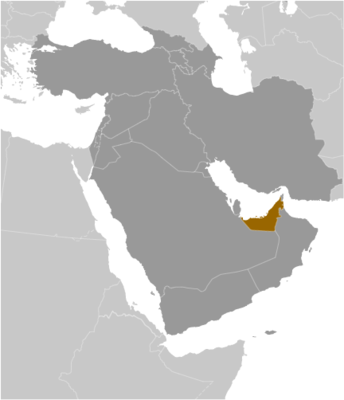
Middle East, bordering the Gulf of Oman and the Persian Gulf, between Oman and Saudi Arabia
🧭 Background
The Trucial States of the Persian Gulf coast granted the UK control of their defense and foreign affairs in 19th-century treaties. In 1971, six of these states -- Abu Dhabi, 'Ajman, Al Fujayrah, Ash Shariqah, Dubayy, and Umm al Qaywayn -- merged to form the United Arab Emirates (UAE). Ra's al Khaymah joined in 1972. The UAE's per-capita GDP is on par with those of leading West European nations. For more than three decades, oil and global finance drove the UAE's economy. In 2008-09, the confluence of falling oil prices, collapsing real estate prices, and the international banking crisis hit the UAE especially hard. The UAE did not experience the "Arab Spring" unrest seen elsewhere in the Middle East in 2010-11, partly because of the government's multi-year, $1.6-billion infrastructure investment plan for the poorer northern emirates, and its aggressive pursuit of advocates for political reform. The UAE in recent years has played a growing role in regional affairs. In addition to donating billions of dollars in economic aid to help stabilize Egypt, the UAE was one of the first countries to join the Defeat ISIS coalition, and to participate as a key partner in a Saudi-led military campaign in Yemen. In 2020, the UAE and Bahrain signed a peace agreement (the Abraham Accords) with Israel -- brokered by the US -- in Washington, D.C. The UAE and Bahrain thus became the third and fourth Middle Eastern countries, along with Egypt and Jordan, to recognize Israel.
🗺️ Geography
Middle East, bordering the Gulf of Oman and the Persian Gulf, between Oman and Saudi Arabia
24 00 N, 54 00 E
Middle East
83,600 sq km
83,600 sq km
0 sq km
Slightly larger than South Carolina; slightly smaller than Maine
1,066 km
Oman 609 km; Saudi Arabia 457 km
1,318 km
12 nm
24 nm
200 nm
200 nm or to the edge of the continental margin
Desert; cooler in eastern mountains
Flat, barren coastal plain merging into rolling sand dunes of vast desert; mountains in east
Jabal Bil 'Ays 1,905 m
Persian Gulf 0 m
149 m
Petroleum, natural gas
5.5% (2023 est.)
Arable land: 0.7% (2023 est.)
Permanent crops: 0.6% (2023 est.)
Permanent pasture: 4.2% (2023 est.)
4.6% (2023 est.)
89.7% (2023 est.)
940 sq km (2022)
Population is heavily concentrated to the northeast on the Musandam Peninsula; the three largest emirates -- Abu Dhabi, Dubai, and Sharjah -- are home to nearly 85% of the population
Frequent sand and dust storms
Strategic location along southern approaches to Strait of Hormuz, a transit point for crude oil; Abu Zaby (Abu Dhabi) and Dubayy (Dubai) together account for over 90% of UAE's area and two-thirds of the population
👥 People and Society⬆️ Top
10,093,593 (2025 est.)
6,831,802
3,261,791
Emirati(s)
Emirati
Emirati 11.6%, South Asian 59.4% (includes Indian 38.2%, Bangladeshi 9.5%, Pakistani 9.4%, other 2.3%), Egyptian 10.2%, Filipino 6.1%, other 12.8% (2015 est.)
Arabic (official), English, Hindi, Malayalam, Urdu, Pashto, Tagalog, Persian
كتاب حقائق العالم، المصدر الذي لا يمكن الاستغناء عنه للمعلومات الأساسية (Arabic) The World Factbook, the indispensable source for basic information.
Muslim 74.5% (official) (Sunni 63.3%, Shia 6.7%, other 4.4%), Christian 12.9%, Hindu 6.2%, Buddhist 3.2%, agnostic 1.3%, other 1.9% (2020 est.)
16.4% (male 842,577/female 802,302)
81.4% (male 5,812,470/female 2,353,750)
2.2% (2024 est.) (male 169,084/female 52,030)
23.4 (2025 est.)
20.4 (2025 est.)
3 (2025 est.)
33.4 (2025 est.)
35.8 years (2025 est.)
38.1 years
29.8 years
0.62% (2025 est.)
10.65 births/1,000 population (2025 est.)
1.73 deaths/1,000 population (2025 est.)
-2.67 migrant(s)/1,000 population (2025 est.)
Population is heavily concentrated to the northeast on the Musandam Peninsula; the three largest emirates -- Abu Dhabi, Dubai, and Sharjah -- are home to nearly 85% of the population
87.8% of total population (2023)
1.5% annual rate of change (2020-25 est.)
3.008 million Dubai, 1.831 million Sharjah, 1.567 million ABU DHABI (capital) (2023)
1.06 male(s)/female
1.05 male(s)/female
2.47 male(s)/female
3.25 male(s)/female
2.13 male(s)/female (2024 est.)
3 deaths/100,000 live births (2023 est.)
4.9 deaths/1,000 live births (2025 est.)
5.5 deaths/1,000 live births
4.4 deaths/1,000 live births
79.9 years (2024 est.)
78.6 years
81.4 years
1.6 children born/woman (2025 est.)
0.78 (2025 est.)
Urban: 100% of population (2022 est.)
Rural: 100% of population (2022 est.)
Total: 100% of population (2022 est.)
Urban: 0% of population (2022 est.)
Rural: 0% of population (2022 est.)
Total: 0% of population (2022 est.)
5.3% of GDP (2021)
12.1% of national budget (2022 est.)
2.99 physicians/1,000 population (2023)
2 beds/1,000 population (2021 est.)
Urban: 99.8% of population (2022 est.)
Rural: 99.9% of population (2022 est.)
Total: 99.8% of population (2022 est.)
Urban: 0.2% of population (2022 est.)
Rural: 0.1% of population (2022 est.)
Total: 0.2% of population (2022 est.)
31.7% (2016)
2.03 liters of pure alcohol (2019 est.)
0.21 liters of pure alcohol (2019 est.)
0.14 liters of pure alcohol (2019 est.)
1.65 liters of pure alcohol (2019 est.)
0.02 liters of pure alcohol (2019 est.)
10.7% (2025 est.)
13.9% (2025 est.)
2.4% (2025 est.)
67.4% (2018 est.)
3.9% of GDP (2021 est.)
14.8% national budget (2021 est.)
98.8% (2024 est.)
99% (2024 est.)
98.4% (2024 est.)
16 years (2023 est.)
15 years (2023 est.)
16 years (2023 est.)
🌿 Environment⬆️ Top
Air pollution; water scarcity; lack of natural freshwater resources; land degradation and desertification; waste generation, beach pollution from oil spills
Biodiversity, Climate Change, Climate Change-Kyoto Protocol, Climate Change-Paris Agreement, Comprehensive Nuclear Test Ban, Desertification, Endangered Species, Hazardous Wastes, Marine Dumping-London Convention, Ozone Layer Protection, Ship Pollution, Wetlands
Law of the Sea
Desert; cooler in eastern mountains
5.5% (2023 est.)
Arable land: 0.7% (2023 est.)
Permanent crops: 0.6% (2023 est.)
Permanent pasture: 4.2% (2023 est.)
4.6% (2023 est.)
89.7% (2023 est.)
87.8% of total population (2023)
1.5% annual rate of change (2020-25 est.)
271.703 million metric tonnes of CO2 (2023 est.)
12.788 million metric tonnes of CO2 (2023 est.)
126.038 million metric tonnes of CO2 (2023 est.)
132.876 million metric tonnes of CO2 (2023 est.)
38.9 micrograms per cubic meter (2019 est.)
1,573.7 kt (2022-2024 est.)
47.4 kt (2019-2021 est.)
448.4 kt (2019-2021 est.)
2.5 kt (2019-2021 est.)
5.618 million tons (2024 est.)
24.5% (2022 est.)
2.297 billion cubic meters (2022)
55 million cubic meters (2022)
2.466 billion cubic meters (2022)
150 million cubic meters (2022 est.)
🏛️ Government⬆️ Top
United Arab Emirates
None
Al Imarat al Arabiyah al Muttahidah
None
Trucial Oman, Trucial States
UAE
Self-descriptive country name; the name Arabia can be traced back at least as far as the ancient Egyptians, who referred to the region as "Ar Rabi;" "emirates" derives from amir, the Arabic word for "commander," "lord," or "prince;" the former name, Trucial States, refers to a maritime truce from 1820 between the British and the Arab sheikhdoms
Federation of monarchies
Abu Dhabi
24 28 N, 54 22 E
UTC+4 (9 hours ahead of Washington, DC, during Standard Time)
In Arabic, abu means "father," and dhabi refers to a personal name, Dhabi or Zabi, that comes from the word zab, or "gazelle"
7 emirates (imarat, singular - imarah); Abu Zaby (Abu Dhabi), 'Ajman, Al Fujayrah, Ash Shariqah (Sharjah), Dubayy (Dubai), Ra's al Khaymah, Umm al Qaywayn
Mixed system of Islamic (sharia) law and civil law
Previous 1971 (provisional); latest drafted in 1979, became permanent May 1996
Proposed by the Supreme Council and submitted to the Federal National Council; passage requires at least a two-thirds majority vote of Federal National Council members present and approval of the Supreme Council president
Has not submitted an ICJ jurisdiction declaration; non-party state to the ICCt
No
The father must be a citizen of the United Arab Emirates; if the father is unknown, the mother must be a citizen
No
30 years
Limited
President MUHAMMAD BIN ZAYID Al Nuhayyan (since 14 May 2022)
Prime Minister and Co-Vice President MUHAMMAD BIN RASHID Al Maktum (since 5 January 2006)
Council of Ministers announced by the prime minister and approved by the president
President and vice president indirectly elected by the Federal Supreme Council -- composed of the rulers of the 7 emirates -- for a 5-year term (no term limits); prime minister appointed by the president
Unscheduled election held on 14 May 2022, after the death of President KHALIFA bin Zayid Al-Nuhayyan
2022: MUHAMMAD BIN ZAYID Al-Nuhayyan elected president; Federal Supreme Council vote - NA
2027
Federal National Council (Majlis Watani Itihadi)
Unicameral
40 (20 indirectly elected; 20 appointed)
Other systems
Full renewal
4 years
10/7/2023
50%
October 2027
Federal Supreme Court (consists of the court president and 4 judges; jurisdiction limited to federal cases)
Judges appointed by the federal president after approval from the Federal Supreme Council, the highest executive and legislative authority consisting of the 7 emirate rulers; judges serve until retirement age or the expiration of their appointment terms
Federal Court of Cassation (determines the constitutionality of laws); the emirates of Abu Dhabi, Dubai, and Ra's al Khaymah have parallel court systems; the other 4 emirates have incorporated their courts into the federal system
Note: political parties are banned; all candidates run as independents
Ambassador Yousif AL OTAIBA (since 28 July 2008)
3522 International Court NW, Suite 400, Washington, DC 20008
[1] (202) 243-2400
[1] (202) 243-2408
Info@uaeembassy-usa.org https://www.uae-embassy.org/
Houston, Los Angeles, New York
Ambassador (vacant); Chargé d’Affaires Eric GAUDIOSI (since August 2025)
Embassies District, Plot 38, Sector W59-02, Street No. 4, Abu Dhabi
6010 Abu Dhabi Place, Washington DC 20521-6010
[971] (2) 414-2200
[971] (2) 414-2241
Abudhabiacs@state.gov https://ae.usembassy.gov/
Dubai
ABEDA, AfDB (nonregional member), AFESD, AMF, BIS, BRICS, CAEU, CICA, FAO, G-77, GCC, IAEA, IBRD, ICAO, ICC (national committees), ICRM, IDA, IDB, IFAD, IFC, IFRCS, IHO, ILO, IMF, IMO, IMSO, Interpol, IOC, IPU, ISO, ITSO, ITU, LAS, MIGA, NAM, OAPEC, OIC, OIF (observer), OPCW, OPEC, PCA, UN, UNCTAD, UNESCO, UNHRC, UNIDO, UNOOSA, UNRWA, UNWTO, UPU, WCO, WHO, WIPO, WMO, WTO
2 December 1971 (from the UK)
Independence Day (National Day), 2 December (1971)
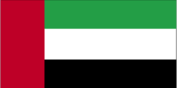
Description: three equal horizontal bands of green (top), white, and black, with a wider vertical red band on the left side meaning: the flag incorporates all four pan-Arab colors, which in this case represent fertility (green), neutrality (white), oil (black), and unity (red); red is a traditional color that was part of all the emirates' flags before their unification
Golden falcon
Green, white, black, red
"Nashid al-watani al-imarati" (National Anthem of the UAE)
AREF Al Sheikh Abdullah Al Hassan/Mohamad Abdel WAHAB
Music adopted 1971, lyrics adopted 1986; Mohamad Abdel WAHAB also composed the music for Tunisia's and Libya's anthem
2 ( both cultural)
Cultural Sites of Al Ain (Hafit, Hili, Bidaa Bint Saud, and Oases Areas); Faya Palaeolandscape (c)
💹 Economy⬆️ Top
High-income, oil-driven Middle Eastern economy; fastest GDP growth of Gulf states; diversification through tourism, construction, and services; strong foreign direct investment orientation; continued government investment and business-friendly reforms
$745.994 billion (2024 est.)
$718.95 billion (2023 est.)
$693.842 billion (2022 est.)
3.8% (2024 est.)
3.6% (2023 est.)
7.5% (2022 est.)
$68,600 (2024 est.)
$68,600 (2023 est.)
$68,900 (2022 est.)
$537.079 billion (2024 est.)
1.7% (2024 est.)
1.6% (2023 est.)
5.3% (2022 est.)
0.7% (2023 est.)
47.7% (2023 est.)
51.6% (2023 est.)
45.6% (2023 est.)
12.4% (2023 est.)
27.1% (2023 est.)
0% (2023 est.)
108.6% (2023 est.)
-93.7% (2023 est.)
Dates, cucumbers/gherkins, camel milk, goat milk, tomatoes, chicken, goat meat, eggs, milk, camel meat (2023)
Petroleum and petrochemicals; fishing, aluminum, cement, fertilizer, commercial ship repair, construction materials, handicrafts, textiles
0.8% (2023 est.)
7.09 million (2024 est.)
2.2% (2024 est.)
2.2% (2023 est.)
2.9% (2022 est.)
6.4% (2024 est.)
4.1% (2024 est.)
12.1% (2024 est.)
26.4 (2018 est.)
12.2% of household expenditures (2023 est.)
0.3% of household expenditures (2023 est.)
2.8% (2018 est.)
20.5% (2018 est.)
$23.248 billion (2023 est.)
$19.349 billion (2023 est.)
19.7% of GDP (2017 est.)
0.6% (of GDP) (2023 est.)
$558.402 billion (2023 est.)
$521.897 billion (2022 est.)
$425.156 billion (2021 est.)
China 11%, India 11%, Japan 10%, Iraq 6%, Thailand 4% (2023)
Crude petroleum, refined petroleum, gold, broadcasting equipment, natural gas (2023)
$481.852 billion (2023 est.)
$427.992 billion (2022 est.)
$347.529 billion (2021 est.)
China 19%, India 7%, USA 6%, Turkey 4%, Japan 4% (2023)
Gold, broadcasting equipment, cars, refined petroleum, diamonds (2023)
$237.931 billion (2024 est.)
$189.491 billion (2023 est.)
$138.433 billion (2022 est.)
Emirati dirhams (AED) per US dollar -
3.672 (2024 est.)
3.672 (2023 est.)
3.672 (2022 est.)
3.672 (2021 est.)
3.672 (2020 est.)
⚡ Energy⬆️ Top
100% (2022 est.)
44.462 million kW (2023 est.)
157.974 billion kWh (2023 est.)
613 million kWh (2023 est.)
501.067 million kWh (2023 est.)
7.914 billion kWh (2023 est.)
75.3% of total installed capacity (2023 est.)
19.9% of total installed capacity (2023 est.)
4.8% of total installed capacity (2023 est.)
4 (2025)
5.35GW (2025 est.)
19.7% (2023 est.)
5.411 million metric tons (2023 est.)
82,000 metric tons (2023 est.)
5.512 million metric tons (2023 est.)
4.146 million bbl/day (2023 est.)
846,000 bbl/day (2023 est.)
97.8 billion barrels (2021 est.)
55.8 billion cubic meters (2023 est.)
67.734 billion cubic meters (2023 est.)
6.863 billion cubic meters (2023 est.)
18.938 billion cubic meters (2023 est.)
6.091 trillion cubic meters (2021 est.)
450.432 million Btu/person (2023 est.)
📡 Communications⬆️ Top
2.259 million (2023 est.)
21 (2023 est.)
22.4 million (2024 est.)
203 (2024 est.)
Most TV and radio stations state-owned, but many private organizations now operating in media free zones in Abu Dhabi and Dubai; widespread use of satellite dishes to access pan-Arab and other international broadcasts (2022)
.ae
100% (2023 est.)
3.95 million (2023 est.)
37 (2023 est.)
🚚 Transportation⬆️ Top
A6
42 (2025)
204 (2025)
655 (2023)
Bulk carrier 2, container ship 3, general cargo 122, oil tanker 16, other 512
20 (2024)
1
4
9
6
17
Abu Zaby, Jabal Az Zannah/Ruways, Khawr Fakkan, Mina Jabal Ali, Zirkuh
🛡️ Military and Security⬆️ Top
United Arab Emirates Armed Forces: Land Forces (Army), Navy, Air Force, Presidential Guard (includes special operations forces), National Guard (includes Coast Guard) (2025)
4% of GDP (2024 est.)
4.3% of GDP (2023 est.)
4% of GDP (2022 est.)
4.5% of GDP (2021 est.)
6.1% of GDP (2020 est.)
Approximately 65,000 active Armed Forces (45,000 Land Forces; 3,000 Navy; 5,000 Air Force; 12,000 Presidential Guard) (2025)
The military is equipped with mostly modern imported armaments, and a smaller amount of domestically produced weapons; foreign suppliers have included China, France, Germany, Israel, Italy, Russia, South Africa, South Korea, Türkiye, and the US; the UAE's domestic defense industry produces or co-produces such items as armored vehicles, naval vessels, precision munitions, and unmanned aerial vehicles/drones for both internal use and export (2025)
18-40 for voluntary service; 18-30 years of age for compulsory national service for men with a 36-month service obligation for those without a secondary education and 11 months for secondary school graduates; women may volunteer for national service (11-month service obligation regardless of education) (2025)
Maintains a few hundred troops in Somalia and Yemen (2025)
The UAE Armed Forces (UAEAF) are responsible for defending the state, its resources, and territory, preserving internal security, and supporting the UAE's foreign policy objectives; key security concerns include regional stability and cross-border threats, such as piracy and terrorism; in recent years, the UAE has undertaken a military modernization program to go along with an assertive security policy which has included military involvements in Afghanistan, Libya, Somalia, Syria, and Yemen the UAE has close security ties to France and the US; it hosts a multi-service French military base, which includes the French naval command for the Indian Ocean (ALINDIEN); the UAE has a defense cooperation agreement with the US and hosts thousands of US military troops, mostly air and naval personnel; it also has defense ties with a number of other countries, including Australia, China, Egypt, Israel, Jordan, Malaysia, South Korea, and the UK, as well as NATO and fellow members of the Gulf Cooperation Council, particularly Saudi Arabia the UAEAF traces its origins to the establishment of the Trucial Oman Scouts in 1951, a joint UK-Abu Dhabi organization modeled after Jordan’s Arab Legion, which became the Abu Dhabi Defense Force in 1965; the modern UAEAF were formed in 1976 (2025)
🛰️ Space⬆️ Top
UAE Space Agency (created in 2014); Mohammed bin Rashid Space Centre (MBRSC; established 2006) (2025)
Has an ambitious and growing national space program; focused on satellite development, including communications, remote sensing, and navigation, as well as deep space exploration; is building expertise, infrastructure, technology, and research and development capabilities; has elected to use foreign partners to launch payloads from spaceports abroad; has looked to invest in foreign commercial space companies and develop global partnerships; has a foreign-assisted astronaut training program; seeking to establish UAE as an international hub for space education; founding member of the Arab Space Cooperation Group; works with major global and regional players, including China, Egypt, the ESA, France, Germany, India, Japan, Russia, South Korea, Turkey, the UK, and the US; sees its commercial space industry as a key to diversifying and developing the country’s non-oil economy; dozens of space companies operate in the UAE, including international and start-ups, plus several space-science research centers (2025)
1997 - initiated a national space sector 2009 - first remote sensing (RS) satellite (DubaiSat-1) developed jointly with South Korea and launched by Russia 2017 - announced Mars 2117 project, which included building a “Mars Science City” as the first step to establishing a human settlement on Mars within 100 years 2018 - first domestically produced RS satellite (KhalifaSat or DubaiSat-3) launched by Japan 2019 - first UAE astronaut (trained by Russia and US) in space on the International Space Station 2020 - signed US-led Artemis Accords for space and lunar exploration 2021 - became first Arab country to successfully place a probe (al Amal or Hope) in Mars orbit; announced plans to launch a probe in 2028 to land on an asteroid between Mars and Jupiter 2025 - domestically produced advanced RS/Earth imaging satellite (MBZ-SAT) launched by US
🌐 Transnational Issues⬆️ Top
7,634 (2024 est.)
Major precursor-chemical producer (2025)
Source: Factbook JSON archive.