London
 United Kingdom
Key facts and a structured country profile. 🧾 Change log 📐 True Size
Locator 🗺️ Map
68,751,311 (2025 est.)
243,610 sq km
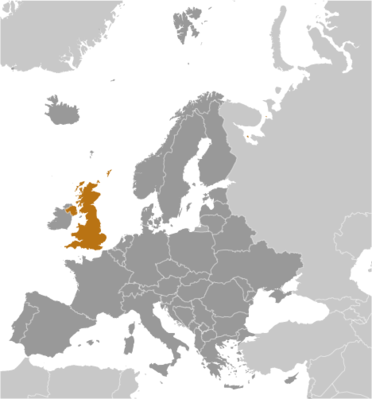
Western Europe, islands - including the northern one-sixth of the island of Ireland - between the North Atlantic Ocean and the North Sea; northwest of France
🧭 Background
The United Kingdom of Great Britain and Northern Ireland was created when the Kingdoms of England and Scotland -- which previously had been distinct states under a single monarchy -- were joined under the 1707 Acts of Union. The island of Ireland was incorporated under the 1800 Acts of Union, while Wales had been part of the Kingdom of England since the 16th century. The United Kingdom has historically played a leading role in developing parliamentary democracy and in advancing literature and science. The 18th and 19th centuries saw the rapid expansion of the British Empire despite the loss of the Thirteen Colonies, and at its zenith in the early 20th century, the British Empire stretched over one fourth of the earth's surface. The first half of the 20th century saw two World Wars seriously deplete the UK's strength and the Irish Republic withdraw from the union. The second half witnessed the dismantling of the Empire and the UK rebuilding itself into a modern and prosperous European nation. As one of five permanent members of the UN Security Council and a founding member of NATO and the Commonwealth of Nations, the UK pursues a global approach to foreign policy. The devolved Scottish Parliament, the National Assembly for Wales, and the Northern Ireland Assembly were established in 1998. The UK was an active member of the EU after its accession in 1973, although it chose to remain outside the Economic and Monetary Union. However, motivated in part by frustration at a remote bureaucracy in Brussels and massive migration into the country, UK citizens in 2016 voted by 52 to 48 percent to leave the EU. On 31 January 2020, the UK became the only country to depart the EU -- a move known as "Brexit" -- after prolonged negotiations on EU-UK economic and security relationships.
🗺️ Geography
Western Europe, islands - including the northern one-sixth of the island of Ireland - between the North Atlantic Ocean and the North Sea; northwest of France
54 00 N, 2 00 W
Europe
243,610 sq km
241,930 sq km
1,680 sq km
Twice the size of Pennsylvania; slightly smaller than Oregon
499 km
Ireland 499 km
12,429 km
12 nm
As defined in continental shelf orders or in accordance with agreed upon boundaries
200 nm
Temperate; moderated by prevailing southwest winds over the North Atlantic Current; more than one-half of the days are overcast
Mostly rugged hills and low mountains; level to rolling plains in east and southeast
Ben Nevis 1,345 m
The Fens -4 m
162 m
Coal, petroleum, natural gas, iron ore, lead, zinc, gold, tin, limestone, salt, clay, chalk, gypsum, potash, silica sand, slate, arable land
70.3% (2023 est.)
Arable land: 25% (2023 est.)
Permanent crops: 0.2% (2023 est.)
Permanent pasture: 45.2% (2023 est.)
13.4% (2023 est.)
14.7% (2023 est.)
718 sq km (2018)
The core of the population lies in and around London, with significant clusters found in central Britain around Manchester and Liverpool, in the Scottish lowlands between Edinburgh and Glasgow, in southern Wales in and around Cardiff, and in far-eastern Northern Ireland, centered on Belfast
Winter windstorms; floods
Lies near vital North Atlantic sea lanes; only 35 km (22 mi) from France and linked by tunnel under the English Channel (the Channel Tunnel or Chunnel); because of heavily indented coastline, no location is more than 125 km (78 mi) from tidal waters
👥 People and Society⬆️ Top
68,751,311 (2025 est.)
34,145,455
34,605,856
Briton(s), British (collective plural)
British
White 87.2%, Black/African/Caribbean/black British 3%, Asian/Asian British: Indian 2.3%, Asian/Asian British: Pakistani 1.9%, mixed 2%, other 3.7% (2011 est.)
English
Christian (includes Anglican, Roman Catholic, Presbyterian, Methodist) 59.5%, Muslim 4.4%, Hindu 1.3%, other 2%, unspecified 7.2%, none 25.7% (2011 est.)
16.7% (male 5,872,937/female 5,592,665)
63.9% (male 22,062,643/female 21,702,401)
19.3% (2024 est.) (male 6,069,865/female 7,158,544)
56.7 (2025 est.)
26 (2025 est.)
30.7 (2025 est.)
3.3 (2025 est.)
40.9 years (2025 est.)
40.1 years
41.5 years
0.4% (2025 est.)
10.76 births/1,000 population (2025 est.)
9.25 deaths/1,000 population (2025 est.)
2.52 migrant(s)/1,000 population (2025 est.)
The core of the population lies in and around London, with significant clusters found in central Britain around Manchester and Liverpool, in the Scottish lowlands between Edinburgh and Glasgow, in southern Wales in and around Cardiff, and in far-eastern Northern Ireland, centered on Belfast
84.6% of total population (2023)
0.8% annual rate of change (2020-25 est.)
9.648 million LONDON (capital), 2.791 million Manchester, 2.665 million Birmingham, 1.929 million West Yorkshire, 1.698 million Glasgow, 952,000 Southampton/Portsmouth (2023)
1.05 male(s)/female
1.05 male(s)/female
1.02 male(s)/female
0.85 male(s)/female
0.99 male(s)/female (2024 est.)
29 years (2018 est.)
8 deaths/100,000 live births (2023 est.)
3.7 deaths/1,000 live births (2025 est.)
4.2 deaths/1,000 live births
3.3 deaths/1,000 live births
82.2 years (2024 est.)
80.1 years
84.4 years
1.64 children born/woman (2025 est.)
0.8 (2025 est.)
Urban: 100% of population (2022 est.)
Rural: 100% of population (2022 est.)
Total: 100% of population (2022 est.)
Urban: 0% of population (2022 est.)
Rural: 0% of population (2022 est.)
Total: 0% of population (2022 est.)
11.3% of GDP (2022)
20.7% of national budget (2022 est.)
3.3 physicians/1,000 population (2023)
2.4 beds/1,000 population (2021 est.)
Urban: 99.8% of population (2022 est.)
Rural: 99.8% of population (2022 est.)
Total: 99.8% of population (2022 est.)
Urban: 0.2% of population (2022 est.)
Rural: 0.2% of population (2022 est.)
Total: 0.2% of population (2022 est.)
27.8% (2016)
9.8 liters of pure alcohol (2019 est.)
3.53 liters of pure alcohol (2019 est.)
3.3 liters of pure alcohol (2019 est.)
2.35 liters of pure alcohol (2019 est.)
0.61 liters of pure alcohol (2019 est.)
11.5% (2025 est.)
13.3% (2025 est.)
9.8% (2025 est.)
0.6% (2019 est.)
49.7% (2021 est.)
0% (2021)
5.9% of GDP (2021 est.)
11.8% national budget (2021 est.)
18 years (2022 est.)
17 years (2022 est.)
18 years (2022 est.)
🌿 Environment⬆️ Top
Air pollution in the London region; soil pollution from pesticides and heavy metals; decline in marine and coastal habitats from housing, tourism, and industry
Air Pollution, Air Pollution-Heavy Metals, Air Pollution-Multi-effect Protocol, Air Pollution-Nitrogen Oxides, Air Pollution-Persistent Organic Pollutants, Air Pollution-Sulphur 94, Air Pollution-Volatile Organic Compounds, Antarctic-Environmental Protection, Antarctic-Marine Living Resources, Antarctic Seals, Antarctic Treaty, Biodiversity, Climate Change, Climate Change-Kyoto Protocol, Climate Change-Paris Agreement, Comprehensive Nuclear Test Ban, Desertification, Endangered Species, Environmental Modification, Hazardous Wastes, Law of the Sea, Marine Dumping-London Convention, Marine Dumping-London Protocol, Marine Life Conservation, Nuclear Test Ban, Ozone Layer Protection, Ship Pollution, Tropical Timber 2006, Wetlands, Whaling
None of the selected agreements
Temperate; moderated by prevailing southwest winds over the North Atlantic Current; more than one-half of the days are overcast
70.3% (2023 est.)
Arable land: 25% (2023 est.)
Permanent crops: 0.2% (2023 est.)
Permanent pasture: 45.2% (2023 est.)
13.4% (2023 est.)
14.7% (2023 est.)
84.6% of total population (2023)
0.8% annual rate of change (2020-25 est.)
340.94 million metric tonnes of CO2 (2023 est.)
17.093 million metric tonnes of CO2 (2023 est.)
197.133 million metric tonnes of CO2 (2023 est.)
126.713 million metric tonnes of CO2 (2023 est.)
7.8 micrograms per cubic meter (2019 est.)
353.4 kt (2022-2024 est.)
1,030.2 kt (2019-2021 est.)
1,070.1 kt (2019-2021 est.)
62 kt (2019-2021 est.)
30.771 million tons (2024 est.)
34.2% (2022 est.)
6.227 billion cubic meters (2022 est.)
1.01 billion cubic meters (2022 est.)
1.183 billion cubic meters (2022 est.)
147 billion cubic meters (2022 est.)
10 (2025)
Arran; Black Country; Cuilcagh Lakelands (includes Ireland); English Riviera; Fforest Fawr; GeoMôn; Mourne Gullion Strangford; North Pennines AONB; North-West Highlands; Shetland (2025)
🏛️ Government⬆️ Top
United Kingdom of Great Britain and Northern Ireland; note - the island of Great Britain includes England, Scotland, and Wales
United Kingdom
UK
The name United Kingdom is self-descriptive; the name Britain probably derives from the Celtic word pretani, meaning "painted people;" the designation of Great Britain for England, Scotland, and Wales dates back to medieval times and was used to distinguish the island from Little Britain, or Brittany, in modern France; the name Ireland evolved from the Gaelic name Eriu, which is possibly derived from the Old Celtic iveriu, meaning "good land"
Parliamentary constitutional monarchy; a Commonwealth realm
London
51 30 N, 0 05 W
UTC 0 (5 hours ahead of Washington, DC, during Standard Time)
+1hr, begins last Sunday in March; ends last Sunday in October
The time statements apply to the United Kingdom proper, not to its crown dependencies or overseas territories
The name derives from the Roman settlement of Londinium, established on the current site of London around A.D. 43; the original meaning of the name is uncertain
England: 24 two-tier counties, 32 London boroughs and 1 City of London or Greater London, 36 metropolitan districts, 59 unitary authorities (including 4 single-tier counties*) two-tier counties: Cambridgeshire, Cumbria, Derbyshire, Devon, East Sussex, Essex, Gloucestershire, Hampshire, Hertfordshire, Kent, Lancashire, Leicestershire, Lincolnshire, Norfolk, North Yorkshire, Nottinghamshire, Oxfordshire, Somerset, Staffordshire, Suffolk, Surrey, Warwickshire, West Sussex, Worcestershire London boroughs and City of London or Greater London: Barking and Dagenham, Barnet, Bexley, Brent, Bromley, Camden, Croydon, Ealing, Enfield, Greenwich, Hackney, Hammersmith and Fulham, Haringey, Harrow, Havering, Hillingdon, Hounslow, Islington, Kensington and Chelsea, Kingston upon Thames, Lambeth, Lewisham, City of London, Merton, Newham, Redbridge, Richmond upon Thames, Southwark, Sutton, Tower Hamlets, Waltham Forest, Wandsworth, Westminster metropolitan districts: Barnsley, Birmingham, Bolton, Bradford, Bury, Calderdale, Coventry, Doncaster, Dudley, Gateshead, Kirklees, Knowlsey, Leeds, Liverpool, Manchester, Newcastle upon Tyne, North Tyneside, Oldham, Rochdale, Rotherham, Salford, Sandwell, Sefton, Sheffield, Solihull, South Tyneside, St. Helens, Stockport, Sunderland, Tameside, Trafford, Wakefield, Walsall, Wigan, Wirral, Wolverhampton unitary authorities: Bath and North East Somerset; Bedford; Blackburn with Darwen; Blackpool; Bournemouth, Christchurch and Poole; Bracknell Forest; Brighton and Hove; City of Bristol; Buckinghamshire; Central Bedfordshire; Cheshire East; Cheshire West and Chester; Cornwall; Darlington; Derby; Dorset; Durham County*; East Riding of Yorkshire; Halton; Hartlepool; Herefordshire*; Isle of Wight*; Isles of Scilly; City of Kingston upon Hull; Leicester; Luton; Medway; Middlesbrough; Milton Keynes; North East Lincolnshire; North Lincolnshire; North Northamptonshire; North Somerset; Northumberland*; Nottingham; Peterborough; Plymouth; Portsmouth; Reading; Redcar and Cleveland; Rutland; Shropshire; Slough; South Gloucestershire; Southampton; Southend-on-Sea; Stockton-on-Tees; Stoke-on-Trent; Swindon; Telford and Wrekin; Thurrock; Torbay; Warrington; West Berkshire; West Northamptonshire; Wiltshire; Windsor and Maidenhead; Wokingham; York Northern Ireland: 5 borough councils, 4 district councils, 2 city councils borough councils: Antrim and Newtownabbey; Ards and North Down; Armagh City, Banbridge, and Craigavon; Causeway Coast and Glens; Mid and East Antrim district councils: Derry City and Strabane; Fermanagh and Omagh; Mid Ulster; Newry, Murne, and Down city councils: Belfast; Lisburn and Castlereagh Scotland: 32 council areas council areas: Aberdeen City, Aberdeenshire, Angus, Argyll and Bute, Clackmannanshire, Dumfries and Galloway, Dundee City, East Ayrshire, East Dunbartonshire, East Lothian, East Renfrewshire, City of Edinburgh, Eilean Siar (Western Isles), Falkirk, Fife, Glasgow City, Highland, Inverclyde, Midlothian, Moray, North Ayrshire, North Lanarkshire, Orkney Islands, Perth and Kinross, Renfrewshire, Shetland Islands, South Ayrshire, South Lanarkshire, Stirling, The Scottish Borders, West Dunbartonshire, West Lothian Wales: 22 unitary authorities unitary authorities: Blaenau Gwent, Bridgend, Caerphilly, Cardiff, Carmarthenshire, Ceredigion, Conwy, Denbighshire, Flintshire, Gwynedd, Isle of Anglesey, Merthyr Tydfil, Monmouthshire, Neath Port Talbot, Newport, Pembrokeshire, Powys, Rhondda Cynon Taff, Swansea, The Vale of Glamorgan, Torfaen, Wrexham
Anguilla; Bermuda; British Indian Ocean Territory; British Virgin Islands; Cayman Islands; Falkland Islands; Gibraltar; Montserrat; Pitcairn Islands; Saint Helena, Ascension, and Tristan da Cunha; South Georgia and the South Sandwich Islands; Turks and Caicos Islands (12)
Common law system; has nonbinding judicial review of Acts of Parliament under the Human Rights Act of 1998
Uncoded; partly statutes, partly common law and practice
Proposed as a bill for an Act of Parliament by the government, by the House of Commons, or by the House of Lords; passage requires agreement by both houses and by the monarch (Royal Assent)
Accepts compulsory ICJ jurisdiction with reservations; accepts ICCt jurisdiction
No
At least one parent must be a citizen of the United Kingdom
Yes
5 years
18 years of age; universal
King CHARLES III (since 8 September 2022)
Prime Minister Keir STARMER (since 5 July 2024)
Cabinet appointed by the prime minister
The monarchy is hereditary; following legislative elections, the leader of the majority party or majority coalition usually becomes the prime minister
UK Parliament
Bicameral
House of Commons
650 (all directly elected)
Plurality/majority
Full renewal
5 years
7/4/2024
Labour Party (411); Conservative Party (121); Liberal Democrats (72); Other (46)
40.5%
July 2029
House of Lords
800 (all appointed)
Conservative Party (286); Labour Party (212); Liberal Democrats (76); Crossover (Independents) 180; other (6)
31%
Supreme Court (consists of 12 justices, including the court president and deputy president)
Judge candidates selected by an independent committee of several judicial commissions, then recommended to the prime minister, and appointed by the monarch; justices serve for life
England and Wales: Court of Appeal (civil and criminal divisions); High Court; Crown Court; County Courts; Magistrates' Courts; Scotland: Court of Sessions; Sheriff Courts; High Court of Justiciary; tribunals; Northern Ireland: Court of Appeal in Northern Ireland; High Court; county courts; magistrates' courts; specialized tribunals
Alliance Party or APNI (Northern Ireland) Conservative and Unionist Party Democratic Unionist Party or DUP (Northern Ireland) Green Party of England and Wales or Greens Labor (Labour) Party Liberal Democrats (Lib Dems) Party of Wales (Plaid Cymru) Reform UK Scottish National Party or SNP Sinn Fein (Northern Ireland) Social Democratic and Labor Party or SDLP (Northern Ireland) Traditional Unionist Voice or TUV UK Independence Party or UKIP Ulster Unionist Party or UUP (Northern Ireland) Workers Party of Great Britian
Ambassador (vacant); Chargé d'Affaires James ROSCOE (since 11 September 2025)
3100 Massachusetts Avenue NW, Washington, DC 20008
[1] (202) 588-6500
[1] (202) 588-7870
Ukin.washington@fcdo.gov.uk https://www.gov.uk/world/organisations/british-embassy-washington
Atlanta, Boston, Chicago, Houston, Los Angeles, Miami, New York, San Francisco
Ambassador Warren A. STEPHENS (since 21 May 2025)
33 Nine Elms Lane, London, SW11 7US
8400 London Place, Washington DC 20521-8400
[44] (0) 20-7499-9000
[44] (0) 20-7891-3845
SCSLondon@state.gov https://uk.usembassy.gov/
Belfast, Edinburgh
ADB (nonregional member), AfDB (nonregional member), Arctic Council (observer), Australia Group, BIS, C, CBSS (observer), CD, CDB, CE, CERN, EAPC, EBRD, ECB, EIB, EITI (implementing country), ESA, EU, FAO, FATF, G-5, G-7, G-8, G-10, G-20, IADB, IAEA, IBRD, ICAO, ICC (national committees), ICCt, ICRM, IDA, IEA, IFAD, IFC, IFRCS, IGAD (partners), IHO, ILO, IMF, IMO, IMSO, Interpol, IOC, IOM, IPU, ISO, ITSO, ITU, ITUC (NGOs), MIGA, MONUSCO, NATO, NEA, NSG, OAS (observer), OECD, OPCW, OSCE, Pacific Alliance (observer), Paris Club, PCA, PIF (partner), SELEC (observer), SICA (observer), UN, UNCTAD, UNESCO, UNFICYP, UNHCR, UNMISS, UNOOSA, UNRWA, UN Security Council (permanent), UNSOM, UPU, Wassenaar Arrangement, WCO, WHO, WIPO, WMO, WTO, ZC
No official date of independence: 927 (minor English kingdoms unite); 3 March 1284 (enactment of the Statute of Rhuddlan uniting England and Wales); 1536 (Act of Union incorporates England and Wales); 1 May 1707 (Acts of Union unite England, Scotland, and Wales as Great Britain); 1 January 1801 (Acts of Union unite Great Britain and Ireland as the United Kingdom of Great Britain and Ireland); 6 December 1921 (Anglo-Irish Treaty formalizes partition of Ireland; six counties become Northern Ireland and remain part of the UK); 12 April 1927 (Royal and Parliamentary Titles Act establishes current name of the United Kingdom of Great Britain and Northern Ireland)
The UK does not celebrate one particular national holiday
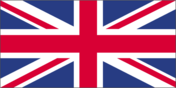
Description: blue field with the red cross of Saint George (patron saint of England) edged in white on top of the diagonal red cross of Saint Patrick (patron saint of Ireland), which is on top of the diagonal white cross of Saint Andrew (patron saint of Scotland) history: the official name is the Union Flag, but commonly called the Union Jack; the design and colors have been the basis for a number of other flags
Lion (all of Britain); lion, Tudor rose, oak (England); lion, unicorn, thistle (Scotland); dragon, daffodil, leek (Wales); shamrock, flax (Northern Ireland)
Red, white, blue (all of Britain); red, white (England); blue, white (Scotland); red, white, green (Wales)
"God Save the King"
Unknown
In use since 1745; by tradition, the song serves as both the national and royal anthem; it is known as either "God Save the Queen" or "God Save the King," depending on the gender of the reigning monarch; it also serves as the royal anthem for many Commonwealth nations
33 (28 cultural, 4 natural, 1 mixed); note - includes one site in Bermuda
Giant's Causeway and Causeway Coast (n); Ironbridge Gorge (c); Stonehenge, Avebury, and Associated Sites (c); Castles and Town Walls of King Edward in Gwynedd (c); Blenheim Palace (c); City of Bath (c); Tower of London (c); St Kilda (m); Maritime Greenwich (c); Old and New Towns of Edinburgh (c); Royal Botanic Gardens, Kew (c); The English Lake District (c)
💹 Economy⬆️ Top
High-income, non-EU European economy; global financial center and dominant service sector; sluggish growth from stringent monetary policy, reduced business investment, low productivity and participation rates; fiscal austerity in face of high public debt
$3.636 trillion (2024 est.)
$3.596 trillion (2023 est.)
$3.582 trillion (2022 est.)
1.1% (2024 est.)
0.4% (2023 est.)
4.8% (2022 est.)
$52,500 (2024 est.)
$52,500 (2023 est.)
$53,000 (2022 est.)
$3.644 trillion (2024 est.)
3.3% (2024 est.)
6.8% (2023 est.)
7.9% (2022 est.)
0.6% (2024 est.)
16.7% (2024 est.)
72.8% (2024 est.)
61.3% (2023 est.)
20.5% (2023 est.)
17.6% (2023 est.)
-0.4% (2023 est.)
32% (2023 est.)
-33.1% (2023 est.)
Milk, wheat, sugar beets, barley, potatoes, chicken, rapeseed, pork, beef, oats (2023)
Machine tools, electric power equipment, automation equipment, railroad equipment, shipbuilding, aircraft, motor vehicles and parts, electronics and communications equipment, metals, chemicals, coal, petroleum, paper and paper products, food processing, textiles, clothing, other consumer goods
-0.5% (2024 est.)
35.359 million (2024 est.)
4.2% (2024 est.)
4% (2023 est.)
3.8% (2022 est.)
12.4% (2024 est.)
14.9% (2024 est.)
9.7% (2024 est.)
18.6% (2017 est.)
32.4 (2021 est.)
8.7% of household expenditures (2023 est.)
3% of household expenditures (2023 est.)
3% (2021 est.)
24.6% (2021 est.)
0.1% of GDP (2024 est.)
0.1% of GDP (2023 est.)
0.1% of GDP (2022 est.)
$1.211 trillion (2023 est.)
$1.442 trillion (2023 est.)
138.6% of GDP (2023 est.)
27.4% (of GDP) (2023 est.)
-$96.634 billion (2024 est.)
-$118.354 billion (2023 est.)
-$70.962 billion (2022 est.)
$1.117 trillion (2024 est.)
$1.078 trillion (2023 est.)
$1.041 trillion (2022 est.)
USA 14%, China 8%, Germany 8%, Netherlands 7%, Ireland 7% (2023)
Cars, gold, gas turbines, packaged medicine, crude petroleum (2023)
$1.158 trillion (2024 est.)
$1.114 trillion (2023 est.)
$1.1 trillion (2022 est.)
China 13%, USA 11%, Germany 10%, France 5%, Norway 4% (2023)
Cars, gold, crude petroleum, refined petroleum, natural gas (2023)
$174.598 billion (2024 est.)
$177.915 billion (2023 est.)
$176.41 billion (2022 est.)
British pounds (GBP) per US dollar -
0.782 (2024 est.)
0.805 (2023 est.)
0.811 (2022 est.)
0.727 (2021 est.)
0.78 (2020 est.)
⚡ Energy⬆️ Top
100% (2022 est.)
99.9%
100%
114.749 million kW (2023 est.)
262.166 billion kWh (2023 est.)
9.449 billion kWh (2023 est.)
33.212 billion kWh (2023 est.)
28.961 billion kWh (2023 est.)
36.2% of total installed capacity (2023 est.)
13.8% of total installed capacity (2023 est.)
4.9% of total installed capacity (2023 est.)
30.7% of total installed capacity (2023 est.)
1.7% of total installed capacity (2023 est.)
12.6% of total installed capacity (2023 est.)
9 (2025)
2 (2025)
5.88GW (2025 est.)
12.5% (2023 est.)
36 (2025)
1.568 million metric tons (2023 est.)
7.372 million metric tons (2023 est.)
981,000 metric tons (2023 est.)
6.633 million metric tons (2023 est.)
26 million metric tons (2023 est.)
753,000 bbl/day (2023 est.)
1.406 million bbl/day (2024 est.)
2.5 billion barrels (2021 est.)
34.029 billion cubic meters (2023 est.)
63.553 billion cubic meters (2023 est.)
15.842 billion cubic meters (2023 est.)
45.226 billion cubic meters (2023 est.)
180.661 billion cubic meters (2021 est.)
94.28 million Btu/person (2023 est.)
📡 Communications⬆️ Top
26.627 million (2023 est.)
39 (2023 est.)
84.1 million (2024 est.)
122 (2024 est.)
Public-service British Broadcasting Corporation (BBC) is the largest broadcasting company in the world; BBC operates multiple TV networks with regional and local TV; mixed system of public and commercial TV broadcasters along with satellite and cable systems provide access to hundreds of international TV stations; BBC operates multiple national, regional, and local radio networks with multiple transmission sites; large number of commercial and satellite radio stations available (2018)
.uk
96% (2023 est.)
28.2 million (2023 est.)
41 (2023 est.)
🚚 Transportation⬆️ Top
G
1,057 (2025)
139 (2025)
16,390 km (2020) 6,167 km electrified
868 (2023)
Bulk carrier 34, container ship 46, general cargo 62, oil tanker 13, other 713
185 (2024)
7
24
67
86
1
67
Aberdeen, Barrow-in-Furness, Barry, Belfast, Blyth, Bristol, Cardiff, Dundee, Falmouth Harbour, Glasgow, Greenock, Grimsby, Immingham, Kingston-upon-Hull, Leith, Lerwick, Liverpool, London, Londonderry, Lyness, Manchester, Milford Haven, Newport, Peterhead, Plymouth, Portland Harbour, Portsmouth Harbour, Southampton, Sunderland, Teesport, Tynemouth
Begun in 1988 and completed in 1994, the Channel Tunnel (nicknamed the Chunnel) is a 50.5-km (31.4-mi) rail tunnel under the English Channel at the Strait of Dover; it runs from Folkestone, Kent, in England to Coquelles, Pas-de-Calais, in northern France and is the only fixed link between the island of Great Britain and mainland Europe
🛡️ Military and Security⬆️ Top
United Kingdom Armed Forces (aka British Armed Forces, aka His Majesty's Armed Forces): British Army, Royal Navy (includes Royal Marines), Royal Air Force (2025)
2.4% of GDP (2025 est.)
2.3% of GDP (2024 est.)
2.3% of GDP (2023 est.)
2.3% of GDP (2022 est.)
2.3% of GDP (2021 est.)
Approximately 138,000 Regular Forces (75,000 Army including the Gurkhas; 32,000 Navy including the Royal Marines; 31,000 Air Force) (2025)
The British military's inventory is comprised of domestically produced armaments and imported Western weapons systems, particularly from the US; the UK defense industry is capable of producing air, land, and sea weapons systems and is one of the world's top weapons suppliers; it also cooperates with other European countries, as well as Australia and the US, in the research and development of weapons systems (2025)
16 years of age for enlisted ranks (with parental consent for under 18) and 18 years of age for officers; maximum age varies by military service; conscription abolished in 1963 (2026)
The British military has more than 8,000 personnel on permanent or long-term rotational deployments around the globe in support of NATO, UN, or other commitments and agreements; key deployments include approximately 1,000 in Brunei, approximately 2,500 in Cyprus (includes 250 for UNFICYP), approximately 900-1,000 in Estonia (NATO), over 1,000 in the Falkland Islands, 500-600 in Gibraltar, and more than 1,000 in the Middle East; its air and naval forces conduct missions on a global basis; the British military also participates in large scale NATO exercises, including providing some 16,000 personnel for the 6-month 2024 Steadfast Defender exercise (2024)
The British military has a long history, a global presence, and a wide range of missions and responsibilities, including protecting the UK, its dependencies and territories, national interests, and values, preventing conflict, providing humanitarian assistance, participating in international peacekeeping, building relationships, and fulfilling the UK’s alliance and treaty commitments; in addition to its role in the UN, the UK is a leading member of NATO the UK is a member of the Five Power Defense Arrangements (FPDA), a series of mutual assistance agreements reached in 1971 embracing Australia, Malaysia, New Zealand, Singapore, and the UK; in 2014, the UK led the formation of the Joint Expeditionary Force (JEF), a pool of high-readiness military forces from the Baltic and Scandinavian countries intended to respond to a wide range of contingencies both in peacetime and in times of crisis or conflict; the UK military also has strong bilateral ties with a variety of foreign militaries, particularly the US, with which it has a mutual defense treaty; British and US military forces have routinely operated side-by-side across a wide range of operations; other close military relationships include Australia, France, Germany, and the Netherlands; in 2010, for example, France and the UK signed a declaration on defense and security cooperation that included greater military interoperability and a Combined Joint Expeditionary Force (CJEF), a deployable, combined Anglo-French military force for use in a range of crisis scenarios (2025)
🛰️ Space⬆️ Top
UK Space Agency (UKSA; established in 2010) (2025)
Spaceport 1 (Outer Hebrides, Scotland); Spaceport Machrihanish (Argyll, Scotland); Glasgow Prestwick (South Ayrshire, Scotland); Spaceport Snowdonia (Gwynedd, Wales); SaxaVord UK Spaceport (Unst, Shetland Islands); Sutherland Spaceport (Sutherland, Scotland); Sutherland, Scotland (Cornwall Airport Newquay, Cornwall) (2024)
Has a long-standing, comprehensive national space program; is active across all areas of the space sector except human space flight, including satellite launch vehicles (SLVs)/rockets, probes, satellites, and spaceports; is a founding member of the ESA and is deeply involved in ESA programs; has bilateral relations with many ESA members and is a close partner of the US NASA; since 2016 has forged over 350 relationships with international organizations across nearly 50 countries; participates in international programs such as the International Space Station and the James Webb Space Telescope; has a large commercial space sector; the UK has a space industrial plan, and the UK Space Agency has provided funding for commercial space projects (2025)
1957 - first suborbital sounding rocket (Skylark) launched 1960s - first satellite (Ariel) launched by US; development of Black Arrow satellite launch vehicle (SLV); launched first of Skynet family of communications satellites 1971 - first successful placement of satellite (Prospero) in orbit on a 3-stage Black Arrow SLV (Black Arrow SLV program ended in early 1970s) 1973 - began participating in development of Ariane SLV along with other European states, particularly France and Germany 1991 - first British astronaut into space to Russian Mir space station 2015 - first British astronaut on International Space Station 2019-2020 - began participating in US Gateway lunar orbital station program and signed US-led Artemis Accords for space and lunar exploration 2024 - first military remote sensing satellite (Tyche) launched by US
🚨 Terrorism⬆️ Top
Continuity Irish Republican Army (CIRA); Islamic State of Iraq and ash-Sham (ISIS); al-Qa'ida; Real Irish Republican Army (RIRA)
🌐 Transnational Issues⬆️ Top
640,460 (2024 est.)
4,672 (2024 est.)
Major precursor-chemical producer (2025)
Source: Factbook JSON archive.