Panama City
 Panama
Key facts and a structured country profile. 🧾 Change log 📐 True Size
Locator 🗺️ Map
4,536,008 (2025 est.)
75,420 sq km
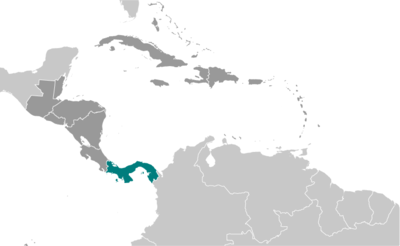
Central America, bordering both the Caribbean Sea and the North Pacific Ocean, between Colombia and Costa Rica
🧭 Background
Explored and settled by the Spanish in the 16th century, Panama broke with Spain in 1821 and joined a union of Colombia, Ecuador, and Venezuela that was named the Republic of Gran Colombia. When the union dissolved in 1830, Panama remained part of Colombia. With US backing, Panama seceded from Colombia in 1903 and promptly signed a treaty with the US allowing for the construction of a canal and US sovereignty over a strip of land known as the Panama Canal Zone on either side of the structure. The US Army Corps of Engineers built the Panama Canal between 1904 and 1914. In 1977, an agreement was signed for the complete transfer of the Canal from the US to Panama by the end of the century. Certain portions of the Zone and increasing responsibility over the Canal were turned over in the subsequent decades. With US help, Panamanian dictator Manuel NORIEGA was deposed in 1989. The entire Panama Canal, the area supporting the Canal, and remaining US military bases were transferred to Panama by the end of 1999. An ambitious expansion project to more than double the Canal's capacity by allowing for more Canal transits and larger ships was carried out between 2007 and 2016.
🗺️ Geography
Central America, bordering both the Caribbean Sea and the North Pacific Ocean, between Colombia and Costa Rica
9 00 N, 80 00 W
Central America and the Caribbean
75,420 sq km
74,340 sq km
1,080 sq km
Slightly smaller than South Carolina
687 km
Colombia 339 km; Costa Rica 348 km
2,490 km
12 nm
24 nm
200 nm or edge of continental margin
Tropical maritime; hot, humid, cloudy; prolonged rainy season (May to January), short dry season (January to May)
Interior mostly steep, rugged mountains with dissected, upland plains; coastal plains with rolling hills
Volcan Baru 3,475 m
Pacific Ocean 0 m
360 m
Copper, mahogany forests, shrimp, hydropower
29.5% (2023 est.)
Arable land: 7.6% (2023 est.)
Permanent crops: 1.6% (2023 est.)
Permanent pasture: 20.3% (2023 est.)
62.3% (2023 est.)
8.2% (2023 est.)
394 sq km (2022)
Laguna de Chiriqui - 900 sq km
Population is concentrated towards the center of the country, particularly around the Canal, but a sizeable segment of the populace also lives in the far west around David; the eastern third of the country is sparsely inhabited
Occasional severe storms and forest fires in the Darien area
Strategic location on eastern end of isthmus forming land bridge that connects North and South America; controls the Panama Canal, which links the North Atlantic Ocean with the North Pacific Ocean via the Caribbean Sea
👥 People and Society⬆️ Top
4,536,008 (2025 est.)
2,284,105
2,251,903
Panamanian(s)
Panamanian
Mestizo (mixed Indigenous and White) 65%, Indigenous 12.3% (Ngabe 7.6%, Kuna 2.4%, Embera 0.9%, Bugle 0.8%, other 0.4%, unspecified 0.2%), Black or African descent 9.2%, Mulatto 6.8%, White 6.7% (2010 est.)
Spanish (official), Indigenous languages (including Ngabere (Guaymi), Buglere, Kuna, Embera, Wounaan, Naso (Teribe), and Bri Bri), Panamanian English Creole (a mixture of English and Spanish with elements of Ngabere, also known as Guari Guari and Colon Creole), English, Chinese (Yue and Hakka), Arabic, French Creole, other (Yiddish, Hebrew, Korean, Japanese)
La Libreta Informativa del Mundo, la fuente indispensable de información básica. (Spanish) The World Factbook, the indispensable source for basic information.
Evangelical 55%, Roman Catholic 33.4%, none 10.1%, unspecified 1.5% (2023 est.)
25% (male 574,336/female 544,180)
64.8% (male 1,465,907/female 1,433,023)
10.1% (2024 est.) (male 211,014/female 241,781)
54.4 (2025 est.)
38.4 (2025 est.)
16 (2025 est.)
6.3 (2025 est.)
31.7 years (2025 est.)
31 years
31.9 years
1.44% (2025 est.)
17.11 births/1,000 population (2025 est.)
5.48 deaths/1,000 population (2025 est.)
2.82 migrant(s)/1,000 population (2025 est.)
Population is concentrated towards the center of the country, particularly around the Canal, but a sizeable segment of the populace also lives in the far west around David; the eastern third of the country is sparsely inhabited
69.5% of total population (2023)
1.92% annual rate of change (2020-25 est.)
1.977 million PANAMA CITY (capital) (2023)
1.06 male(s)/female
1.06 male(s)/female
1.02 male(s)/female
0.87 male(s)/female
1.02 male(s)/female (2024 est.)
37 deaths/100,000 live births (2023 est.)
13.2 deaths/1,000 live births (2025 est.)
15.4 deaths/1,000 live births
12.9 deaths/1,000 live births
79.2 years (2024 est.)
76.4 years
82.2 years
2.33 children born/woman (2025 est.)
1.13 (2025 est.)
Urban: 98.5% of population (2022 est.)
Rural: 86.1% of population (2022 est.)
Total: 94.7% of population (2022 est.)
Urban: 1.5% of population (2022 est.)
Rural: 13.9% of population (2022 est.)
Total: 5.3% of population (2022 est.)
9.7% of GDP (2021)
22.2% of national budget (2022 est.)
1.63 physicians/1,000 population (2022)
1.9 beds/1,000 population (2020 est.)
Urban: 96.1% of population (2022 est.)
Rural: 70.1% of population (2022 est.)
Total: 88% of population (2022 est.)
Urban: 3.9% of population (2022 est.)
Rural: 29.9% of population (2022 est.)
Total: 12% of population (2022 est.)
22.7% (2016)
6.54 liters of pure alcohol (2019 est.)
5.29 liters of pure alcohol (2019 est.)
0.02 liters of pure alcohol (2019 est.)
1.2 liters of pure alcohol (2019 est.)
0.02 liters of pure alcohol (2019 est.)
4.5% (2025 est.)
7.4% (2025 est.)
1.7% (2025 est.)
2.9% (2019 est.)
53.2% (2023 est.)
2.5% of GDP (2023 est.)
16.3% national budget (2024 est.)
96.3% (2024 est.)
97.3% (2024 est.)
95.9% (2024 est.)
13 years (2016 est.)
12 years (2016 est.)
14 years (2016 est.)
🌿 Environment⬆️ Top
Water pollution from agricultural runoff; deforestation of tropical rainforest; land degradation and soil erosion in Panama Canal; air pollution in urban areas; effects of mining
Antarctic-Marine Living Resources, Biodiversity, Climate Change, Climate Change-Kyoto Protocol, Climate Change-Paris Agreement, Comprehensive Nuclear Test Ban, Desertification, Endangered Species, Environmental Modification, Hazardous Wastes, Law of the Sea, Marine Dumping-London Convention, Nuclear Test Ban, Ozone Layer Protection, Ship Pollution, Tropical Timber 2006, Wetlands, Whaling
Marine Life Conservation
Tropical maritime; hot, humid, cloudy; prolonged rainy season (May to January), short dry season (January to May)
29.5% (2023 est.)
Arable land: 7.6% (2023 est.)
Permanent crops: 1.6% (2023 est.)
Permanent pasture: 20.3% (2023 est.)
62.3% (2023 est.)
8.2% (2023 est.)
69.5% of total population (2023)
1.92% annual rate of change (2020-25 est.)
23.458 million metric tonnes of CO2 (2023 est.)
1.969 million metric tonnes of CO2 (2023 est.)
20.389 million metric tonnes of CO2 (2023 est.)
1.101 million metric tonnes of CO2 (2023 est.)
11.9 micrograms per cubic meter (2019 est.)
1.472 million tons (2024 est.)
14.2% (2022 est.)
759.1 million cubic meters (2022 est.)
6.2 million cubic meters (2022 est.)
446.1 million cubic meters (2022 est.)
139.304 billion cubic meters (2022 est.)
🏛️ Government⬆️ Top
Republic of Panama
Panama
República de Panama
Panama
Origin is unclear; may come from a Guarani word meaning "place of many fish"
Presidential republic
Panama City
8 58 N, 79 32 W
UTC-5 (same time as Washington, DC, during Standard Time)
Origin is unclear; may come from a Guaraní word meaning "place of many fish"
10 provinces (provincias, singular - provincia) and 4 indigenous regions* (comarcas); Bocas del Toro, Chiriquí, Coclé, Colon, Darien, Embera-Wounaan*, Guna Yala*, Herrera, Los Santos, Naso Tjer Di*, Ngabe-Bugle*, Panama, Panama Oeste, Veraguas
Civil law system; Supreme Court of Justice reviews legislative acts
Several previous; latest effective 11 October 1972
Proposed by the National Assembly, by the Cabinet, or by the Supreme Court of Justice; passage requires approval by one of two procedures: 1) absolute majority vote of the Assembly membership in each of three readings and by absolute majority vote of the next elected Assembly in a single reading without textual modifications; 2) absolute majority vote of the Assembly membership in each of three readings, followed by absolute majority vote of the next elected Assembly in each of three readings with textual modifications, and approval in a referendum
Accepts compulsory ICJ jurisdiction with reservations; accepts ICCt jurisdiction
Yes
Yes
No
5 years
18 years of age; universal
President José Raúl MULINO Quintero (since 1 July 2024)
President José Raúl MULINO Quintero (since 1 July 2024)
Cabinet appointed by the president
President and vice president directly elected on the same ballot by simple-majority popular vote for a 5-year term; president eligible for a single non-consecutive term)
5 May 2024
2024: José Raúl MULINO Quintero elected president; percent of vote - José Raúl MULINO Quintero (RM) 34.2%, Ricardo Alberto LOMBANA González (MOCA) 24.6%, Martín Erasto TORRIJOS Espino (PP) 16%, Alberto ROUX Moses (CD) 11.4%, Zulay RODRÍGUEZ Lu (independent) 6.6%, José Gabriel CARRIZO Jaén (PRD) 5.9%, other 1.3% 2019: Laurentino "Nito" CORTIZO Cohen elected president; percent of vote - Laurentino CORTIZO Cohen (PRD) 33.3%, Romulo ROUX (CD) 31%, Ricardo LOMBANA (independent) 18.8%, Jose BLANDON (Panameñista Party) 10.8%, Ana Matilde GOMEZ Ruiloba (independent) 4.8%, other 1.3%
May 2029
National Assembly (Asamblea Nacional)
Unicameral
71 (all directly elected)
Mixed system
Full renewal
5 years
5/5/2024
Realizing Goals (RM) (14); Democratic Revolutionary Party (PRD) (13); Democratic Change (CD) (8); Panamenista Party (8); Independents (20); Other (8)
21.7%
May 2029
Supreme Court of Justice or Corte Suprema de Justicia (consists of 9 magistrates and 9 alternates and divided into civil, criminal, administrative, and general business chambers)
Magistrates appointed by the president for staggered 10-year terms
Appellate courts or Tribunal Superior; Labor Supreme Courts; Court of Audit; circuit courts or Tribunal Circuital (2 each in 9 of the 10 provinces); municipal courts; electoral, family, maritime, and adolescent courts
Alliance Party or PA Alternative Independent Socialist Party or PAIS Another Way Movement or MOCA Democratic Change or CD Democratic Revolutionary Party or PRD Nationalist Republican Liberal Movement or MOLIRENA Panameñista Party (formerly the Arnulfista Party) Popular Party or PP (formerly Christian Democratic Party or PDC) Realizing Goals Party or RM
Ambassador José Miguel ALEMÁN HEALY (since 18 September 2024)
2862 McGill Terrace NW, Washington, DC 20008
[1] (202) 483-1407
[1] (202) 483-8413
Info@embassyofpanama.org https://www.embassyofpanama.org/
Houston, Los Angeles, Miami, New Orleans, New York, Philadelphia, Tampa
Ambassador Kevin Marino CABRERA (since 5 May 2025)
Building 783, Demetrio Basilio Lakas Avenue, Clayton
9100 Panama City PL, Washington, DC 20521-9100
[507] 317-5000
[507] 317-5568
Panama-ACS@state.gov https://pa.usembassy.gov/
ACS, BCIE, CAN (observer), CD, CELAC, FAO, G-77, IADB, IAEA, IBRD, ICAO, ICC (national committees), ICCt, ICRM, IDA, IFAD, IFC, IFRCS, ILO, IMF, IMO, IMSO, Interpol, IOC, IOM, IPU, ISO, ITSO, ITU, ITUC (NGOs), LAES, LAIA, MIGA, NAM, OAS, OPANAL, OPCW, Pacific Alliance (observer), PCA, SICA, UN, UNASUR (observer), UNCTAD, UNESCO, UNIDO, Union Latina, UNOOSA, UNWTO, UPU, WCO, WFTU (NGOs), WHO, WIPO, WMO, WTO
3 November 1903 (from Colombia); 28 November 1821 (from Spain)
Independence Day (Separation Day), 3 November (1903)
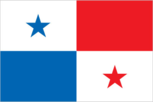
Description: divided into four equal rectangles; one of the top quadrants is white (left side) with a five-pointed blue star in the center, and the other is plain red; one of the bottom quadrants is plain blue (left side), and the other is white with a five-pointed red star in the center meaning: blue and red stand for the main political parties, and white for peace between them; the blue star stands for the civic virtues of purity and honesty, and the red star for authority and law
Harpy eagle
Blue, white, red
"Himno Istmeno" (Isthmus Hymn)
Jeronimo DE LA OSSA/Santos A. JORGE
Adopted 1925
6 (3 cultural, 3 natural)
Caribbean Fortifications (c); Darien National Park (n); Talamanca Range-La Amistad National Park (n); Panamá Viejo and Historic District of Panamá (c); Coiba National Park (n); The Colonial Transisthmian Route of Panamá (c)
💹 Economy⬆️ Top
Upper middle-income Central American economy; increasing Chinese trade; US dollar user; canal expansion fueling broader infrastructure investment; services sector dominates economy; historic money-laundering and illegal drug hub
$164.484 billion (2024 est.)
$159.908 billion (2023 est.)
$148.891 billion (2022 est.)
2.9% (2024 est.)
7.4% (2023 est.)
10.8% (2022 est.)
$36,400 (2024 est.)
$35,900 (2023 est.)
$33,800 (2022 est.)
$86.26 billion (2024 est.)
0.7% (2024 est.)
1.5% (2023 est.)
2.9% (2022 est.)
2.6% (2024 est.)
26.3% (2024 est.)
68.8% (2024 est.)
46.7% (2023 est.)
12.2% (2023 est.)
32.3% (2023 est.)
5.4% (2023 est.)
46.5% (2023 est.)
-43.1% (2023 est.)
Sugarcane, rice, bananas, oranges, oil palm fruit, chicken, plantains, maize, milk, pineapples (2023)
Construction, brewing, cement and other construction materials, sugar milling
-2.6% (2024 est.)
2.206 million (2024 est.)
6.6% (2024 est.)
6.6% (2023 est.)
8.1% (2022 est.)
16.8% (2024 est.)
13.4% (2024 est.)
22.1% (2024 est.)
21.8% (2021 est.)
48.9 (2023 est.)
15.4% of household expenditures (2023 est.)
1.6% of household expenditures (2023 est.)
1.2% (2023 est.)
36.9% (2023 est.)
0.6% of GDP (2024 est.)
0.6% of GDP (2023 est.)
0.7% of GDP (2022 est.)
$7.57 billion (2021 est.)
$12.046 billion (2021 est.)
37.4% of GDP (2016 est.)
7.5% (of GDP) (2021 est.)
$1.672 billion (2024 est.)
-$2.581 billion (2023 est.)
$28.769 million (2022 est.)
$37.376 billion (2024 est.)
$37.905 billion (2023 est.)
$35.717 billion (2022 est.)
China 25%, Japan 10%, USA 6%, Thailand 5%, Costa Rica 5% (2023)
Copper ore, ships, refined petroleum, bananas, fish (2023)
$30.887 billion (2024 est.)
$35.927 billion (2023 est.)
$32.646 billion (2022 est.)
USA 15%, Colombia 13%, China 13%, Ecuador 13%, Japan 11% (2023)
Crude petroleum, ships, refined petroleum, nitrogen compounds, cars (2023)
$6.856 billion (2024 est.)
$6.757 billion (2023 est.)
$6.876 billion (2022 est.)
Balboas (PAB) per US dollar -
1 (2024 est.)
1 (2023 est.)
1 (2022 est.)
1 (2021 est.)
1 (2020 est.)
⚡ Energy⬆️ Top
95% (2022 est.)
99%
100%
4.485 million kW (2023 est.)
11.777 billion kWh (2023 est.)
404.9 million kWh (2023 est.)
234 million kWh (2023 est.)
924.16 million kWh (2023 est.)
38.2% of total installed capacity (2023 est.)
6.8% of total installed capacity (2023 est.)
6.9% of total installed capacity (2023 est.)
47.8% of total installed capacity (2023 est.)
0.3% of total installed capacity (2023 est.)
863,000 metric tons (2023 est.)
863,000 metric tons (2023 est.)
131,000 bbl/day (2023 est.)
564.786 million cubic meters (2023 est.)
564.786 million cubic meters (2023 est.)
78.01 million Btu/person (2023 est.)
📡 Communications⬆️ Top
811,000 (2023 est.)
18 (2023 est.)
6.98 million (2023 est.)
157 (2023 est.)
Multiple privately owned TV networks and a government-owned educational TV station; multi-channel cable and satellite TV subscription services are available; more than 100 commercial radio stations (2019)
.pa
78% (2023 est.)
809,000 (2023 est.)
18 (2023 est.)
🚚 Transportation⬆️ Top
HP
77 (2025)
1 (2025)
77 km (2014)
77 km (2014) 1.435-m gauge
8,174 (2023)
Bulk carrier 2732, container ship 671, general cargo 1,428, oil tanker 866, other 2,477
12 (2024)
0
3
3
5
1
5
Bahia de las Minas, Balboa, Pedregal, Puerto Armuelles, Puerto Colon, Puerto Cristobal
🛡️ Military and Security⬆️ Top
No regular military forces Ministry of Public Security: National Police (Policía Nacional, PN), National Aeronaval Service (Servicio Nacional Aeronaval, SENAN), National Border Service (Servicio Nacional de Fronteras, SENAFRONT) (2025)
1.1% of GDP (2024 est.)
1.1% of GDP (2023 est.)
1.2% of GDP (2022 est.)
1.3% of GDP (2021 est.)
1.4% of GDP (2020 est.)
Approximately 30,000 Ministry of Public Security personnel (2025)
The Panamanian Public Forces focus on law enforcement, border control, and maritime security; the National Police are responsible for internal law enforcement and public order, while the National Border Service (SENAFRONT) handles border security; the Aeronaval Service is responsible for carrying out air and naval operations that include some internal security responsibilities; key areas of focus are countering narcotics trafficking and securing the border, particularly along the frontier with Colombia where SENAFRONT maintains a significant presence Panama created a paramilitary National Guard (Guardia Nacional de Panamá) in the 1950s from the former National Police (established 1904); the National Guard subsequently evolved into more of a military force with some police responsibilities; it seized power in a coup in 1968 and military officers ran the country until 1989; in 1983, the National Guard was renamed the Panama Defense Force (PDF); the PDF was disbanded after the 1989 US invasion and the current national police forces were formed in 1990; the armed forces were officially abolished under the 1994 Constitution (2025)
🚨 Terrorism⬆️ Top
Tren de Aragua (TdA)
🌐 Transnational Issues⬆️ Top
10,801 (2024 est.)
928 (2024 est.)
Major illicit drug-producing and/or drug-transit country (2025)
Source: Factbook JSON archive.