Monrovia
 Liberia
Key facts and a structured country profile. 🧾 Change log 📐 True Size
Locator 🗺️ Map
5,563,541 (2025 est.)
111,369 sq km
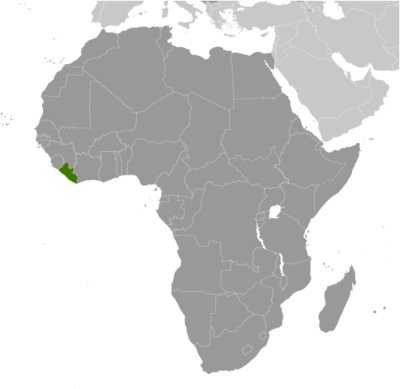
Western Africa, bordering the North Atlantic Ocean, between Cote d'Ivoire and Sierra Leone
🧭 Background
With 28 ethnic groups and languages, Liberia is one of the most ethnically diverse countries in the world. For hundreds of years, the Mali and Songhai Empires claimed most of Liberia. Beginning in the 15th century, European traders began establishing outposts along the Liberian coast. Unlike its neighbors, however, Liberia did not fall under European colonial rule. In the early 19th century, the US began sending freed enslaved people and other people of color to Liberia to establish settlements. In 1847, these settlers declared independence from the US, writing their own constitution and establishing Africa’s first republic. Early in Liberia’s history, tensions arose between the Americo-Liberian settlers and the indigenous population. In 1980, Samuel DOE, who was from the indigenous population, led a military coup and ushered in a decade of authoritarian rule. In 1989, Charles TAYLOR launched a rebellion that led to a prolonged civil war in which DOE was killed. A period of relative peace in 1997 permitted an election that brought TAYLOR to power. In 2000, fighting resumed. A 2003 peace agreement ended the war and prompted TAYLOR’s resignation. He was later convicted by the UN-backed Special Court for Sierra Leone in The Hague for his involvement in Sierra Leone's civil war. In 2005, Ellen JOHNSON SIRLEAF became president after two years of transitional governments; she was the first female head of state in Africa. In 2011, JOHNSON SIRLEAF won reelection but struggled to rebuild Liberia's economy -- particularly after the 2014-15 Ebola epidemic -- and to reconcile a nation still recovering from 14 years of fighting. In 2017, former soccer star George WEAH won the presidential runoff election, marking the first successful transfer of power from one democratically elected government to another since the end of Liberia’s civil wars. Like his predecessor, WEAH struggled to improve the country’s economy. In 2023, former Vice President Joseph BOAKAI was elected president, edging out WEAH by a thin margin, the first time since 1927 that an incumbent was not re-elected after one term.
🗺️ Geography
Western Africa, bordering the North Atlantic Ocean, between Cote d'Ivoire and Sierra Leone
6 30 N, 9 30 W
Africa
111,369 sq km
96,320 sq km
15,049 sq km
Slightly larger than Virginia
1,667 km
Guinea 590 km; Cote d'Ivoire 778 km; Sierra Leone 299 km
579 km
12 nm
24 nm
200 nm
200 nm
Tropical; hot, humid; dry winters with hot days and cool to cold nights; wet, cloudy summers with frequent heavy showers
Mostly flat to rolling coastal plains rising to rolling plateau and low mountains in northeast
Mount Wuteve 1,447 m
Atlantic Ocean 0 m
243 m
Iron ore, timber, diamonds, gold, hydropower
20% (2023 est.)
Arable land: 5.2% (2023 est.)
Permanent crops: 2.1% (2023 est.)
Permanent pasture: 12.7% (2023 est.)
66.5% (2023 est.)
13.5% (2023 est.)
30 sq km (2012)
More than half of the population lives in urban areas, with approximately one third living within an 80-km (50-mi) radius of Monrovia, as shown in this population distribution map
Dust-laden harmattan winds blow from the Sahara (December to March)
Facing the Atlantic Ocean, the coastline is characterized by lagoons, mangrove swamps, and river-deposited sandbars; the inland grassy plateau supports limited agriculture
👥 People and Society⬆️ Top
5,563,541 (2025 est.)
2,774,006
2,789,535
Liberian(s)
Liberian
Kpelle 20.2%, Bassa 13.6%, Grebo 9.9%, Gio 7.9%, Mano 7.2%, Kru 5.5%, Lorma 4.8%, Krahn 4.5%, Kissi, 4.3%, Mandingo 4.2%, Vai 3.8%, Gola 3.8%, Gbandi 2.9%, Mende 1.7%, Sapo 1%, Belle 0.7%, Dey 0.3%, other Liberian ethnic group 0.4%, other African 3%, non-African 0.2% (2022 est.)
English 20% (official) and 27 indigenous languages, including Liberian English variants
Christian 84.9%, Muslim 12%, Traditional 0.5%, other 0.1%, none 2.6% (2022 est.)
38.9% (male 1,064,100/female 1,052,556)
57.9% (male 1,566,263/female 1,579,835)
3.2% (2024 est.) (male 80,961/female 93,534)
72 (2025 est.)
66.4 (2025 est.)
5.6 (2025 est.)
18 (2025 est.)
20.1 years (2025 est.)
19.8 years
20 years
2.27% (2025 est.)
31.72 births/1,000 population (2025 est.)
8.17 deaths/1,000 population (2025 est.)
-0.84 migrant(s)/1,000 population (2025 est.)
More than half of the population lives in urban areas, with approximately one third living within an 80-km (50-mi) radius of Monrovia, as shown in this population distribution map
53.6% of total population (2023)
3.41% annual rate of change (2015-20 est.)
1.678 million MONROVIA (capital) (2023)
1.03 male(s)/female
1.01 male(s)/female
0.99 male(s)/female
0.87 male(s)/female
1 male(s)/female (2024 est.)
19.1 years (2019/20 est.)
628 deaths/100,000 live births (2023 est.)
55.2 deaths/1,000 live births (2025 est.)
61 deaths/1,000 live births
50.2 deaths/1,000 live births
61.6 years (2024 est.)
59.9 years
63.3 years
3.84 children born/woman (2025 est.)
1.89 (2025 est.)
Urban: 84.6% of population (2022 est.)
Rural: 65.5% of population (2022 est.)
Total: 75.6% of population (2022 est.)
Urban: 15.4% of population (2022 est.)
Rural: 34.5% of population (2022 est.)
Total: 24.4% of population (2022 est.)
16.6% of GDP (2021)
4.8% of national budget (2022 est.)
0.18 physicians/1,000 population (2022)
1.6 beds/1,000 population (2021 est.)
Urban: 70.1% of population (2022 est.)
Rural: 25.1% of population (2022 est.)
Total: 49% of population (2022 est.)
Urban: 29.9% of population (2022 est.)
Rural: 74.9% of population (2022 est.)
Total: 51% of population (2022 est.)
9.9% (2016)
3.12 liters of pure alcohol (2019 est.)
0.38 liters of pure alcohol (2019 est.)
0.44 liters of pure alcohol (2019 est.)
2.28 liters of pure alcohol (2019 est.)
0.02 liters of pure alcohol (2019 est.)
6.4% (2025 est.)
11.5% (2025 est.)
1.5% (2025 est.)
10.9% (2019 est.)
51.4% (2020 est.)
5.8% (2020)
24.9% (2020)
8.4% (2020)
2.3% of GDP (2023 est.)
7.4% national budget (2021 est.)
🌿 Environment⬆️ Top
Tropical rainforest deforestation; soil erosion; loss of biodiversity; hunting of endangered species for bushmeat; pollution of coastal waters from oil residue and raw sewage; pollution of rivers from industrial run-off; burning and dumping of household waste
Biodiversity, Climate Change, Climate Change-Kyoto Protocol, Climate Change-Paris Agreement, Comprehensive Nuclear Test Ban, Desertification, Endangered Species, Hazardous Wastes, Law of the Sea, Nuclear Test Ban, Ozone Layer Protection, Ship Pollution, Tropical Timber 2006, Wetlands, Whaling
Environmental Modification, Marine Life Conservation
Tropical; hot, humid; dry winters with hot days and cool to cold nights; wet, cloudy summers with frequent heavy showers
20% (2023 est.)
Arable land: 5.2% (2023 est.)
Permanent crops: 2.1% (2023 est.)
Permanent pasture: 12.7% (2023 est.)
66.5% (2023 est.)
13.5% (2023 est.)
53.6% of total population (2023)
3.41% annual rate of change (2015-20 est.)
671,000 metric tonnes of CO2 (2023 est.)
4 metric tonnes of CO2 (2023 est.)
671,000 metric tonnes of CO2 (2023 est.)
41.9 micrograms per cubic meter (2019 est.)
564,500 tons (2024 est.)
7.9% (2022 est.)
80.2 million cubic meters (2022 est.)
53.4 million cubic meters (2022 est.)
12.3 million cubic meters (2022 est.)
232 billion cubic meters (2022 est.)
🏛️ Government⬆️ Top
Republic of Liberia
Liberia
Name derives from the Latin word liber, meaning "free;" so named because the nation was created as a homeland for liberated African-American slaves
Presidential republic
Monrovia
6 18 N, 10 48 W
UTC 0 (5 hours ahead of Washington, DC, during Standard Time)
Named after James MONROE (1758-1831), the fifth president of the United States and supporter of Liberia's colonization by freed slaves
15 counties; Bomi, Bong, Gbarpolu, Grand Bassa, Grand Cape Mount, Grand Gedeh, Grand Kru, Lofa, Margibi, Maryland, Montserrado, Nimba, River Cess, River Gee, Sinoe
Mixed system of common law, based on Anglo-American law and customary law
Previous 1847 (at independence); latest drafted 19 October 1983, revision adopted by referendum 3 July 1984, effective 6 January 1986
Proposed by agreement of at least two thirds of both National Assembly houses or by petition of at least 10,000 citizens; passage requires at least two-thirds majority approval of both houses and approval in a referendum by at least two-thirds majority of registered voters
Accepts compulsory ICJ jurisdiction with reservations; accepts ICCt jurisdiction
No
At least one parent must be a citizen of Liberia
No
2 years
18 years of age; universal
President Joseph BOAKAI (since 22 January 2024)
President Joseph BOAKAI (since 22 January 2024)
Cabinet appointed by the president, confirmed by the Senate
President directly elected by absolute-majority popular vote in 2 rounds, if needed, for a 6-year term (eligible for a second term)
10 October 2023, with a runoff on 14 November 2023
2023: Joseph BOAKAI elected president in second round; percent of vote in first round - George WEAH (CDC) 43.8%, Joseph BOAKAI (UP) 43.4%, Edward APPLETON (GDM) 2.2%, Lusinee KAMARA (ALCOP) 2%, Alexander B. CUMMINGS, Jr. (CPP) 1.6%, Tiawan Saye GONGLOE (LPP) 1.4%, other 5.6%; percentage of vote in second round - Joseph BOAKAI 50.6%, George WEAH 49.4% 2017: George WEAH elected president in second round; percent of vote in first round - George WEAH (Coalition for Democratic Change) 38.4%, Joseph BOAKAI (UP) 28.8%, Charles BRUMSKINE (LP) 9.6%, Prince JOHNSON (MDR) 8.2%, Alexander B. CUMMINGS (ANC) 7.2%, other 7.8%; percentage of vote in second round - George WEAH 61.5%, Joseph BOAKAI 38.5%
October 2029
Legislature
Bicameral
House of Representatives
73 (all directly elected)
Plurality/majority
Full renewal
6 years
10/10/2023
Congress for Democratic Change (CDC) (25); Unity Party (UP) (11); Collaborating Political Parties (CPP) (6); Movement for Democracy and Reconstruction (MDR) (4); Independents (19); Other (8)
11%
October 2029
The Liberian Senate
30 (all directly elected)
Plurality/majority
Partial renewal
9 years
10/10/2023
Congress for Democratic Change (CDC) (6); Unity Party (UP) (1); Movement for Democracy and Reconstruction (MDR) (1); Liberia Restoration Party (LRP) (1); Independents (6)
10%
October 2029
Supreme Court (consists of a chief justice and 4 associate justices)
Chief justice and associate justices appointed by the president of Liberia with consent of the Senate; judges can serve until age 70
Judicial circuit courts; special courts, including criminal, civil, labor, traffic; magistrate and traditional or customary courts
All Liberian Party or ALP Alliance for Peace and Democracy or APD Alternative National Congress or ANC Coalition for Democratic Change (includes CDC, NPP, and LPDP) Collaborating Political Parties or CPP (coalition includes ANC, LP; CPP dissolved in April 2024) Congress for Democratic Change or CDC Liberia Destiny Party or LDP Liberia National Union or LINU Liberia Transformation Party or LTP Liberian People Democratic Party or LPDP Liberian People's Party or LPP Liberian Restoration Party or LRP Liberty Party or LP Movement for Democracy and Reconstruction or MDR Movement for Economic Empowerment Movement for Progressive Change or MPC National Democratic Coalition or NDC National Democratic Party of Liberia or NDPL National Patriotic Party or NPP National Reformist Party or NRP National Union for Democratic Progress or NUDP People's Unification Party or PUP Unity Party or UP United People's Party Victory for Change Party or VCP
Ambassador Al-Hassan CONTEH (since 24 July 2025)
5201 16th Street NW, Washington, DC 20011
[1] (202) 723-0437
[1] (202) 723-0436
Info@liberianembassyus.org http://www.liberianembassyus.org/
New York
Ambassador (vacant); Chargé d’Affaires Joseph ZADROZNY (since August 2025)
502 Benson Street, Monrovia
8800 Monrovia Place, Washington DC 20521-8800
[231] 77-677-7000
[231] 77-677-7370
ACSMonrovia@state.gov https://lr.usembassy.gov/
ACP, AfDB, AU, ECOWAS, EITI (compliant country), FAO, G-77, IAEA, IBRD, ICAO, ICC (NGOs), ICCt, ICRM, IDA, IFAD, IFC, IFRCS, ILO, IMF, IMO, IMSO, Interpol, IOC, IOM, ISO (correspondent), ITU, ITUC (NGOs), MIGA, NAM, OPCW, UN, UNCTAD, UNESCO, UNIDO, UNISFA, UNWTO, UPU, WCO, WFTU (NGOs), WHO, WIPO, WMO, WTO
26 July 1847
Independence Day, 26 July (1847)
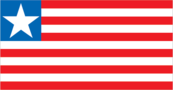
Description: 11 equal horizontal stripes of red alternating with white; a five-pointed white star sits on a blue square in the upper-left corner meaning: the stripes stand for the signatories of the Liberian Declaration of Independence, the blue square for the African mainland, and the star for the freedom granted to ex-slaves; the blue stands for liberty, justice, and fidelity; the white for purity, cleanliness, and guilelessness; the red for steadfastness, valor, and fervor
White star
Red, white, blue
"All Hail, Liberia, Hail!"
Daniel Bashiel WARNER/Olmstead LUCA
Lyrics adopted 1847, music adopted 1860; the anthem's author later became the third president of Liberia
💹 Economy⬆️ Top
Low-income West African economy; food scarcity, especially in rural areas; high poverty and inflation; bad recession prior to COVID-19 due to Ebola crisis; growing government debt; longest continuously operated rubber plantation; large informal economy
$9.308 billion (2024 est.)
$8.882 billion (2023 est.)
$8.484 billion (2022 est.)
4.8% (2024 est.)
4.7% (2023 est.)
4.8% (2022 est.)
$1,700 (2024 est.)
$1,600 (2023 est.)
$1,600 (2022 est.)
$4.75 billion (2024 est.)
10.1% (2023 est.)
7.6% (2022 est.)
7.8% (2021 est.)
33.6% (2024 est.)
23.3% (2024 est.)
42.1% (2024 est.)
Cassava, sugarcane, rice, oil palm fruit, bananas, rubber, vegetables, plantains, taro, maize (2023)
Mining (iron ore and gold), rubber processing, palm oil processing, diamonds
6.1% (2024 est.)
2.607 million (2024 est.)
2.9% (2024 est.)
3% (2023 est.)
3% (2022 est.)
2.1% (2024 est.)
2.2% (2024 est.)
2% (2024 est.)
50.9% (2016 est.)
35.3 (2016 est.)
2.9% (2016 est.)
27.1% (2016 est.)
18.2% of GDP (2023 est.)
17.2% of GDP (2022 est.)
15.1% of GDP (2021 est.)
$5 million (2019 est.)
$6 million (2019 est.)
28.3% of GDP (2016 est.)
$64.806 million (2022 est.)
-$101.746 million (2021 est.)
-$274.971 million (2020 est.)
$1.22 billion (2022 est.)
$1.041 billion (2021 est.)
$731.658 million (2020 est.)
Switzerland 30%, UK 13%, France 8%, Germany 7%, Lebanon 4% (2023)
Gold, ships, iron ore, rubber, refined petroleum (2023)
$1.961 billion (2022 est.)
$1.739 billion (2021 est.)
$1.371 billion (2020 est.)
China 48%, Japan 21%, Germany 8%, Brazil 3%, Cote d'Ivoire 3% (2023)
Ships, refined petroleum, rice, trucks, centrifuges (2023)
$599.66 million (2022 est.)
$700.829 million (2021 est.)
$340.966 million (2020 est.)
$1.335 billion (2023 est.)
Liberian dollars (LRD) per US dollar -
174.956 (2023 est.)
152.934 (2022 est.)
166.154 (2021 est.)
191.518 (2020 est.)
186.43 (2019 est.)
⚡ Energy⬆️ Top
31.8% (2022 est.)
53.7%
14.9%
199,000 kW (2023 est.)
215.96 million kWh (2023 est.)
179.222 million kWh (2023 est.)
66.1% of total installed capacity (2023 est.)
1.3% of total installed capacity (2023 est.)
32.4% of total installed capacity (2023 est.)
0.3% of total installed capacity (2023 est.)
75,000 metric tons (2023 est.)
5,000 bbl/day (2023 est.)
1.822 million Btu/person (2023 est.)
📡 Communications⬆️ Top
6,000 (2021 est.)
(2022 est.) less than 1
1.72 million (2022 est.)
32 (2022 est.)
8 private and 1 state-owned TV station; satellite TV service available; 1 state-owned radio station; about 20 independent radio stations broadcasting in Monrovia, with about 80 more local stations operating in other areas; transmissions of 4 international broadcasters are available (2019)
.lr
24% (2023 est.)
15,000 (2022 est.)
(2022 est.) less than 1
🚚 Transportation⬆️ Top
A8
19 (2025)
429 km (2008)
345 km (2008) 1.435-m gauge
84 km (2008) 1.067-m gauge
4,821 (2023)
Bulk carrier 1,895, container ship 1,013, general cargo 170, oil tanker 1,038, other 705
4 (2024)
0
0
1
3
3
Buchanan, Cape Palmas, Greenville, Monrovia
🛡️ Military and Security⬆️ Top
Armed Forces of Liberia (AFL): Army, Liberian Coast Guard Ministry of Justice: Liberia National Police, Liberia Drug Enforcement Agency (2025)
0.7% of GDP (2024 est.)
1.3% of GDP (2023 est.)
1.3% of GDP (2022 est.)
0.8% of GDP (2021 est.)
0.5% of GDP (2020 est.)
Approximately 2,000 active Armed Forces (2025)
The military has a limited inventory; in recent years, it has received small quantities of equipment, including donations, from countries such as China, UAE, and the US (2025)
18 years of age for men and women for voluntary military service (2025)
The Armed Forces of Liberia (AFL) are responsible for external defense and some domestic security responsibilities if called upon, such as humanitarian assistance during natural disasters and support to law enforcement; it is a small, lightly equipped force comprised of two combat infantry battalions and supporting units, as well as a few coastal patrol craft for the Coast Guard; the infantry battalions were rebuilt with US assistance in 2007-2008 from the restructured AFL following the end of the second civil war in 2003 when military and police forces were disbanded and approximately 100,000 military, police, and rebel combatants were disarmed the first militia unit established for defense of the Liberia colony was raised in 1832; the AFL traces its origins to the 1908 establishment of the Liberia Frontier Force, which became the Liberian National Guard in 1965; the AFL was established in 1970 (2025)
🌐 Transnational Issues⬆️ Top
1,854 (2024 est.)
Tier 2 Watch List — the government did not demonstrate overall increasing efforts to eliminate trafficking compared with the previous reporting period, therefore Liberia remained on Tier 2 Watch List for the second consecutive year; for more details, go to: https://www.state.gov/reports/2025-trafficking-in-persons-report/liberia/
Source: Factbook JSON archive.