Pristina (Prishtine, Prishtina)
 Kosovo
Key facts and a structured country profile. 🧾 Change log 📐 True Size
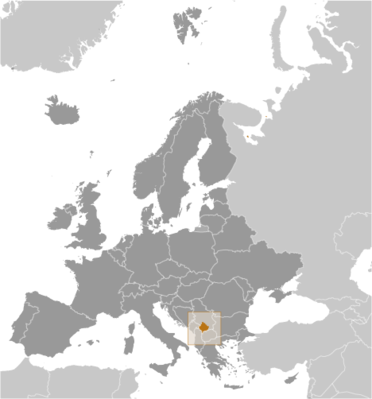
Locator 🗺️ Map
1,977,093 (2024 est.)
10,887 sq km
Southeastern Europe, between Serbia and Macedonia
🧭 Background
The Ottoman Empire took control of Kosovo in 1389 after defeating Serbian forces. Large numbers of Turks and Albanians moved to the region, and by the end of the 19th century, Albanians had replaced Serbs as the majority ethnic group in Kosovo. Serbia reacquired control of Kosovo during the First Balkan War of 1912, and after World War II, Kosovo became an autonomous province of Serbia in the Socialist Federal Republic of Yugoslavia (SFRY). Increasing Albanian nationalism in the 1980s led to riots and calls for Kosovo's independence, but in 1989, Belgrade -- which has in turn served as the capital of Serbia and Yugoslavia -- revoked Kosovo's autonomous status. When the SFRY broke up in 1991, Kosovo Albanian leaders organized an independence referendum, and Belgrade's repressive response led to an insurgency. Kosovo remained part of Serbia, which joined with Montenegro to declare a new Federal Republic of Yugoslavia (FRY) in 1992. In 1998, Belgrade launched a brutal counterinsurgency campaign, with some 800,000 ethnic Albanians expelled from their homes in Kosovo. After international mediation failed, a NATO military operation began in March 1999 and forced Belgrade to withdraw its forces from Kosovo. UN Security Council Resolution 1244 (1999) placed Kosovo under the temporary control of the UN Interim Administration Mission in Kosovo (UNMIK). Negotiations in 2006-07 ended without agreement between Serbia and Kosovo, though the UN issued a comprehensive report that endorsed independence. On 17 February 2008, the Kosovo Assembly declared Kosovo independent. Serbia continues to reject Kosovo's independence, but the two countries began EU-facilitated discussions in 2013 to normalize relations, which resulted in several agreements. Additional agreements were reached in 2015 and 2023, but implementation remains incomplete. In 2022, Kosovo formally applied for membership in the EU, which is contingent on fulfillment of accession criteria, and the Council of Europe. Kosovo is also seeking UN and NATO memberships.
🗺️ Geography
Southeastern Europe, between Serbia and Macedonia
42 35 N, 21 00 E
Europe
10,887 sq km
10,887 sq km
0 sq km
Slightly larger than Delaware
714 km
Albania 112 km; North Macedonia 160 km; Montenegro 76 km; Serbia 366 km
0 km (landlocked)
None (landlocked)
Influenced by continental air masses resulting in relatively cold winters with heavy snowfall and hot, dry summers and autumns; Mediterranean and alpine influences create regional variation; maximum rainfall between October and December
Flat fluvial basin at an elevation of 400-700 m above sea level surrounded by several high mountain ranges with elevations of 2,000 to 2,500 m
Gjeravica/Deravica 2,656 m
Drini i Bardhe/Beli Drim (located on the border with Albania) 297 m
450 m
Nickel, lead, zinc, magnesium, lignite, kaolin, chrome, bauxite
52.8% (2018 est.)
Arable land: 27.4% (2018 est.)
Permanent crops: 1.9% (2018 est.)
Permanent pasture: 23.5% (2018 est.)
41.7% (2018 est.)
5.5% (2018 est.)
NA
(Black Sea) Danube (795,656 sq km)
Population clusters exist throughout the country, with the largest in the east in and around the capital of Pristina
The 41-km (25-mi) Nerodimka River divides into two branches, each of which flows into a different sea: the northern branch flows into the Sitnica River, which via the Ibar, Morava, and Danube Rivers ultimately flows into the Black Sea; the southern branch flows via the Lepenac and Vardar Rivers into the Aegean Sea
👥 People and Society⬆️ Top
1,977,093 (2024 est.)
1,017,992
959,101
Kosovan
Kosovan
Albanians 92.9%, Bosniaks 1.6%, Serbs 1.5%, Turk 1.1%, Ashkali 0.9%, Egyptian 0.7%, Gorani 0.6%, Romani 0.5%, other/unspecified 0.2% (2011 est.)
Albanian (official) 94.5%, Bosnian 1.7%, Serbian (official) 1.6%, Turkish 1.1%, other 0.9% (includes Romani), unspecified 0.1% (2011 est.)
Libri i fakteve boterore, burimi i pazevendesueshem per informacione elementare (Albanian) Knjiga svetskih činjenica, neophodan izvor osnovnih informacija. (Serbian) The World Factbook, the indispensable source for basic information.
Muslim 95.6%, Roman Catholic 2.2%, Orthodox 1.5%, other 0.1%, none 0.1%, unspecified 0.6% (2011 est.)
22.7% (male 233,010/female 216,304)
68.9% (male 712,403/female 649,932)
8.4% (2024 est.) (male 72,579/female 92,865)
45.1 (2024 est.)
33 (2024 est.)
12.1 (2024 est.)
8.2 (2024 est.)
32.3 years (2025 est.)
31.7 years
32.4 years
0.73% (2025 est.)
14.16 births/1,000 population (2025 est.)
6.88 deaths/1,000 population (2025 est.)
0 migrant(s)/1,000 population (2025 est.)
Population clusters exist throughout the country, with the largest in the east in and around the capital of Pristina
218,782 PRISTINA (capital) (2020)
1.08 male(s)/female
1.08 male(s)/female
1.1 male(s)/female
0.78 male(s)/female
1.06 male(s)/female (2024 est.)
21 deaths/1,000 live births (2025 est.)
24.2 deaths/1,000 live births
21.5 deaths/1,000 live births
73.1 years (2024 est.)
71 years
75.5 years
1.85 children born/woman (2025 est.)
0.89 (2025 est.)
0.2 physicians/1,000 population (2015)
61.6% (2020 est.)
🌿 Environment⬆️ Top
Air pollution from power plants and lignite mines; water scarcity and pollution; land degradation
Influenced by continental air masses resulting in relatively cold winters with heavy snowfall and hot, dry summers and autumns; Mediterranean and alpine influences create regional variation; maximum rainfall between October and December
52.8% (2018 est.)
Arable land: 27.4% (2018 est.)
Permanent crops: 1.9% (2018 est.)
Permanent pasture: 23.5% (2018 est.)
41.7% (2018 est.)
5.5% (2018 est.)
7.444 million metric tonnes of CO2 (2023 est.)
5.005 million metric tonnes of CO2 (2023 est.)
2.439 million metric tonnes of CO2 (2023 est.)
319,000 tons (2024 est.)
🏛️ Government⬆️ Top
Republic of Kosovo
Kosovo
Republika e Kosoves (Albanian)/ Republika Kosovo (Serbian)
Kosove (Albanian)/ Kosovo (Serbian)
Name may derive from the Serbian word kos, meaning "blackbird," or from a personal name
Parliamentary republic
Pristina (Prishtine, Prishtina)
42 40 N, 21 10 E
UTC+1 (6 hours ahead of Washington, DC, during Standard Time)
+1hr, begins last Sunday in March; ends last Sunday in October
The town takes its name from the river; the origin of the river's name is unclear but could come from a pre-Slavic language
38 municipalities (komunat, singular - komuna (Albanian); opstine, singular - opstina (Serbian)); Decan (Decani), Dragash (Dragas), Ferizaj (Urosevac), Fushe Kosove (Kosovo Polje), Gjakove (Dakovica), Gjilan (Gnjilane), Gllogovc (Glogovac), Gracanice (Gracanica), Hani i Elezit (Deneral Jankovic), Istog (Istok), Junik, Kacanik, Kamenice (Kamenica), Kline (Klina), Kllokot (Klokot), Leposaviq (Leposavic), Lipjan (Lipljan), Malisheve (Malisevo), Mamushe (Mamusa), Mitrovice e Jugut (Juzna Mitrovica) [South Mitrovica], Mitrovice e Veriut (Severna Mitrovica) [North Mitrovica], Novoberde (Novo Brdo), Obiliq (Obilic), Partesh (Partes), Peje (Pec), Podujeve (Podujevo), Prishtine (Pristina), Prizren, Rahovec (Orahovac), Ranillug (Ranilug), Shterpce (Strpce), Shtime (Stimlje), Skenderaj (Srbica), Suhareke (Suva Reka), Viti (Vitina), Vushtrri (Vucitrn), Zubin Potok, Zvecan
Civil law system
Previous 1974, 1990; latest (post-independence) draft finalized 2 April 2008, signed 7 April 2008, ratified 9 April 2008, entered into force 15 June 2008
Proposed by the government, by the president of the republic, or by one fourth of Assembly deputies; passage requires two-thirds majority vote of the Assembly, including two-thirds majority vote of deputies representing non-majority communities, followed by a favorable Constitutional Court assessment
Has not submitted an ICJ jurisdiction declaration; non-party state to the ICCt
No
At least one parent must be a citizen of Kosovo
Yes
5 years
18 years of age; universal
President Vjosa OSMANI-Sadriu (since 4 April 2021)
Acting Prime Minister Albin KURTI (since 15 April 2025)
Cabinet elected by the Assembly
President indirectly elected for a 5-year term (eligible for a second term) by at least two-thirds majority vote of the Assembly; if a candidate does not reach this threshold in the first two ballots, the candidate winning a simple majority vote in the third ballot is elected; prime minister indirectly elected by the Assembly
3-4 April 2021
2021: Vjosa OSMANI-Sadriu elected president in third ballot; Assembly vote - Vjosa OSMANI-Sadriu (Guxo!) 71 votes; Albin KURTI (LVV) elected prime minister; Assembly vote - 67 for, 30 against 2017: Ramush HARADINAJ (AAK) elected prime minister; Assembly vote - 61 for, 1 abstention, 0 against (opposition boycott) 2016: Hashim THACI elected president in third ballot; Assembly vote - Hashim THACI (PDK) 71 votes
2026
Assembly (Kuvendi i Kosoves/Skupstina Kosova)
Unicameral
120 (all directly elected)
Proportional representation
Full renewal
4 years
2/14/2021
Self-Determination Movement (LVV) (58), Democratic Party of Kosovo (PDK) (19), Democratic League of Kosovo (LDK) (15), Serb List (10), Alliance for the Future of Kosovo (AAK) (8), other (10)
34%
2025
Supreme Court (consists of the court president and 18 judges and organized into Appeals Panel of the Kosovo Property Agency and Special Chamber); Constitutional Court (consists of the court president, vice president, and 7 judges)
Supreme Court judges nominated by the Kosovo Judicial Council, a 13-member independent body staffed by judges and lay members, and also responsible for overall administration of Kosovo's judicial system; judges appointed by the president of the Republic of Kosovo; judges appointed until mandatory retirement age; Constitutional Court judges nominated by the Kosovo Assembly and appointed by the president of the republic to serve single, 9-year terms
Court of Appeals (organized into 4 departments: General, Serious Crime, Commercial Matters, and Administrative Matters); Basic Court (located in 7 municipalities, each with several branches)
Alliance for the Future of Kosovo or AAK Ashkali Party for Integration or PAI Civic Initiative for Freedom, Justice, and Survival Democratic League of Kosovo or LDK Democratic Party of Kosovo or PDK New Democratic Initiative of Kosovo or IRDK New Democratic Party or NDS Progressive Movement of Kosovar Roma or LPRK Romani Initiative Self-Determination Movement (Lëvizja Vetevendosje or Vetevendosie) or LVV or VV Serb List or SL Social Democratic Union or SDU Turkish Democratic Party of Kosovo or KDTP Unique Gorani Party or JGP Vakat Coalition or VAKAT
Ambassador Ilir DUGOLLI (since 13 January 2022)
3612 Massachusetts Ave NW, Washington, D.C. 20007
[1] (202) 450-2130
[1] (202) 735-0609
Embassy.usa@rks-gov.net U.S. Embassies of the Republic of Kosovo (ambasadat.net)
New York
Des Moines (IA)
Ambassador (vacant); Chargé d'Affaires Anu PRATTIPATI (since January 2025)
Arberia/Dragodan, Rr. 4 KORRIKU Nr. 25, Pristina
9520 Pristina Place, Washington DC 20521-9520
[383] 38-59-59-3000
[383] 38-604-890
PristinaACS@state.gov https://xk.usembassy.gov/
FIFA, IBRD, IDA, IFC, IMF, IOC, ITUC (NGOs), MIGA, OIF (observer)
17 February 2008 (from Serbia)
Independence Day, 17 February (2008)
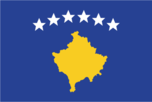
Description: a dark blue field with a gold-colored silhouette of Kosovo in the center, with six five-pointed white stars in a slight arc over it meaning: each star represents one of the major ethnic groups of Kosovo: Albanians, Serbs, Turks, Gorani, Roma, and Bosniaks
Six five-pointed white stars
Blue, gold, white
Uses the national colors of blue, gold, and white, and is featured on the country’s flag; the golden map symbolizes a rich and peaceful Kosovo, with a blue background that represents the country’s aspirations for Euro-Atlantic integration; the six white stars stand for the major ethnic groups in Kosovo: Albanians, Serbs, Bosniaks, Turks, Roma (including Ashkali and Egyptians), and Gorani
"Europe"
No lyrics/Mendi MENGJIQI
Adopted 2008; Kosovo chose not to include lyrics in its anthem to avoid offending the country's minority ethnic groups
1 (cultural)
Medieval Monuments in Kosovo
💹 Economy⬆️ Top
Small-but-growing European economy; non-EU member but unilateral euro user; very high unemployment, especially youth; vulnerable reliance on diaspora tourism services, curtailed by COVID-19 disruptions; unclear public loan portfolio health
$25.019 billion (2024 est.)
$23.962 billion (2023 est.)
$23.025 billion (2022 est.)
4.4% (2024 est.)
4.1% (2023 est.)
4.3% (2022 est.)
$16,400 (2024 est.)
$14,200 (2023 est.)
$13,000 (2022 est.)
$11.149 billion (2024 est.)
1.6% (2024 est.)
4.9% (2023 est.)
11.6% (2022 est.)
6.9% (2024 est.)
26.2% (2024 est.)
45.7% (2024 est.)
84.3% (2024 est.)
12.3% (2024 est.)
33.8% (2024 est.)
0% (2024 est.)
41.9% (2024 est.)
-72.3% (2024 est.)
Wheat, corn, berries, potatoes, peppers, fruit; dairy, livestock; fish
Mineral mining, construction materials, base metals, leather, machinery, appliances, foodstuffs and beverages, textiles
4% (2024 est.)
500,300 (2017 est.)
17.6% (2015 est.)
49.4 (2021 est.)
0.4% (2021 est.)
32.9% (2021 est.)
17.5% of GDP (2023 est.)
17.2% of GDP (2022 est.)
18% of GDP (2021 est.)
$1.951 billion (2020 est.)
$2.547 billion (2020 est.)
19.4% of GDP (2016 est.)
-$785.09 million (2023 est.)
-$983.283 million (2022 est.)
-$818.351 million (2021 est.)
$4.156 billion (2023 est.)
$3.579 billion (2022 est.)
$3.138 billion (2021 est.)
United States 16%, Albania 15%, North Macedonia 12%, Germany 8%, Italy 8% (2021)
Mattress materials, iron alloys, metal piping, scrap iron, building plastics (2021)
$7.362 billion (2023 est.)
$6.661 billion (2022 est.)
$6.128 billion (2021 est.)
Germany 13%, Turkey 13%, China 10%, Serbia 7%, Italy 6% (2021)
Refined petroleum, cars, iron rods, electricity, cigars, packaged medicines (2021)
$1.31 billion (2024 est.)
$1.245 billion (2023 est.)
$1.248 billion (2022 est.)
$785.739 million (2023 est.)
Euros (EUR) per US dollar -
0.924 (2024 est.)
0.925 (2023 est.)
0.951 (2022 est.)
0.845 (2021 est.)
0.877 (2020 est.)
⚡ Energy⬆️ Top
1.555 million kW (2023 est.)
6.571 billion kWh (2023 est.)
2.442 billion kWh (2023 est.)
3.449 billion kWh (2023 est.)
789.167 million kWh (2023 est.)
87.3% of total installed capacity (2023 est.)
0.1% of total installed capacity (2023 est.)
6.3% of total installed capacity (2023 est.)
6.2% of total installed capacity (2023 est.)
6.924 million metric tons (2023 est.)
6.931 million metric tons (2023 est.)
13,000 metric tons (2023 est.)
20,000 metric tons (2023 est.)
1.564 billion metric tons (2023 est.)
16,000 bbl/day (2023 est.)
52.085 million Btu/person (2023 est.)
📡 Communications⬆️ Top
383,763 (2022 est.)
7 (2022 est.)
593,000 (2022 est.)
35 (2022 est.)
.xk
89% (2018 est.)
🚚 Transportation⬆️ Top
Z6
2 (2025)
11 (2025)
437 km (2020)
🛡️ Military and Security⬆️ Top
Kosovo Security Force (KSF; Forca e Sigurisë së Kosovës or FSK): Land Force, National Guard (2025)
1.5% of GDP (2024 est.)
1.3% of GDP (2023 est.)
1.1% of GDP (2022 est.)
1.1% of GDP (2021 est.)
1% of GDP (2020 est.)
Approximately 3,300 Kosovo Security Forces, including about 800 reserves (2024)
The KSF is equipped with small arms and light vehicles and has relied on limited amounts of donated equipment from several countries, particularly Türkiye and the US (2025)
Any citizen of Kosovo over the age of 18 is eligible to serve in the Kosovo Security Force; upper age for enlisting is 30 for officers, 25 for other ranks, although these may be waived for recruits with key skills considered essential for the KSF (2025)
The Kosovo Security Force (KSF) was established in 2009 as a small (1,500 personnel), lightly armed disaster response force; the NATO-led Kosovo Force (KFOR) was charged with assisting in the development of the KSF and bringing it up to standards designated by NATO; the KSF was certified as fully operational by the North Atlantic Council in 2013, indicating the then 2,200-strong KSF was entirely capable of performing the tasks assigned under its mandate, which included non-military security functions that were not appropriate for the police, plus missions such as search and rescue, explosive ordnance disposal, control and clearance of hazardous materials, firefighting, and other humanitarian assistance tasks in 2019, Kosovo approved legislation that began a process to transition the KSF by 2028 into a professional military (the Kosovo Armed Forces) led by a General Staff and comprised of a Land Force, a National Guard, a Logistics Command, and a Doctrine and Training Command; it would have a strength of up to 5,000 with about 3,000 reserves; at the same time, the KSF’s mission was expanded to include traditional military functions, such as territorial defense and international peacekeeping; the KSF’s first international mission was the deployment of a small force to Kuwait in 2021 the NATO-led KFOR has operated in the country as a peace support force since 1999; in addition to assisting in the development of the KSF, KFOR is responsible for providing a safe and secure environment and ensuring freedom of movement for all citizens; as of 2025, it had approximately 4,700 troops from more than 30 countries (2025)
🚨 Terrorism⬆️ Top
Islamic State of Iraq and ash-Sham (ISIS)
🌐 Transnational Issues⬆️ Top
15,582 (2024 est.)
Source: Factbook JSON archive.