Rome
 Italy
Italy
Key facts and a structured country profile. 🧾 Change log 📐 True Size
Locator 🗺️ Map
60,924,851 (2025 est.)
301,340 sq km
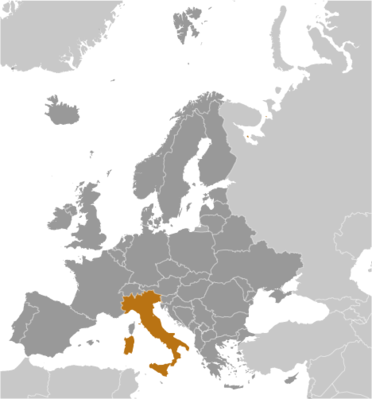
Southern Europe, a peninsula extending into the central Mediterranean Sea, northeast of Tunisia
🧭 Background
Italy became a nation-state in 1861 when the regional states of the peninsula, along with Sardinia and Sicily, were united under King Victor EMMANUEL II. An era of parliamentary government came to a close in the early 1920s when Benito MUSSOLINI established a Fascist dictatorship. His alliance with Nazi Germany led to Italy's defeat in World War II. A democratic republic replaced the monarchy in 1946, and economic revival followed. Italy is a charter member of NATO, as well as the European Economic Community (EEC) and its successors, the EC and the EU. It has been at the forefront of European economic and political unification, joining the Economic and Monetary Union in 1999. Persistent problems include sluggish economic growth, high youth and female unemployment, organized crime, corruption, and economic disparities between southern Italy and the more prosperous north.
🗺️ Geography
Southern Europe, a peninsula extending into the central Mediterranean Sea, northeast of Tunisia
42 50 N, 12 50 E
Europe
301,340 sq km
294,140 sq km
7,200 sq km
Almost twice the size of Georgia; slightly larger than Arizona
1,836.4 km
Austria 404 km; France 476 km; Holy See (Vatican City) 3.4 km; San Marino 37 km; Slovenia 218 km; Switzerland 698 km
7,600 km
12 nm
200-m depth or to the depth of exploitation
Predominantly Mediterranean; alpine in far north; hot, dry in south
Mostly rugged and mountainous; some plains, coastal lowlands
Mont Blanc (Monte Bianco) de Courmayeur (a secondary peak of Mont Blanc) 4,748 m
Mediterranean Sea 0 m
538 m
Coal, antimony, mercury, zinc, potash, marble, barite, asbestos, pumice, fluorspar, feldspar, pyrite (sulfur), natural gas and crude oil reserves, fish, arable land
44.3% (2023 est.)
Arable land: 24% (2023 est.)
Permanent crops: 8.1% (2023 est.)
Permanent pasture: 12.2% (2023 est.)
31.8% (2023 est.)
24% (2023 est.)
24,460 sq km (2021)
Rhine-Maas (198,735 sq km), (Black Sea) Danube (795,656 sq km), (Adriatic Sea) Po (76,997 sq km), (Mediterranean Sea) Rhone (100,543 sq km)
A fairly even population distribution exists throughout most of the country, with coastal areas, the Po River Valley, and urban centers (particularly Milan, Rome, and Naples) attracting larger and denser populations
Regional risks include landslides, mudflows, avalanches, earthquakes, volcanic eruptions, flooding; land subsidence in Venice volcanism: significant volcanic activity; Etna (3,330 m) is Europe's most active volcano, and its flank eruptions pose a threat to nearby Sicilian villages; Etna, along with the famous Vesuvius, have both been deemed Decade Volcanoes by the International Association of Volcanology and Chemistry of the Earth's Interior, worthy of study due to their explosive history and close proximity to human populations; Stromboli, on its namesake island, has also been continuously active with moderate volcanic activity; other historically active volcanoes include Campi Flegrei, Ischia, Larderello, Pantelleria, Vulcano, and Vulsini
Strategic location dominating central Mediterranean, as well as southern sea and air approaches to Western Europe
👥 People and Society⬆️ Top
60,924,851 (2025 est.)
29,383,949
31,540,902
Italian(s)
Italian
Italian (includes small clusters of German-, French-, and Slovene-Italians in the north, Albanian-Italians, Croat-Italians, and Greek-Italians in the south)
Italian (official), German (parts of Trentino-Alto Adige region are predominantly German-speaking), French (small French-speaking minority in Valle d'Aosta region), Slovene (Slovene-speaking minority in the Trieste-Gorizia area), Croatian (in Molise)
L'Almanacco dei fatti del mondo, l'indispensabile fonte per le informazioni di base. (Italian) The World Factbook, the indispensable source for basic information.
Christian 80.8% (overwhelmingly Roman Catholic with very small groups of Jehovah's Witnesses and Protestants), Muslim 4.9%, unaffiliated 13.4%, other 0.9% (2020 est.)
11.9% (male 3,699,167/female 3,531,734)
64.5% (male 19,378,160/female 19,958,137)
23.6% (2024 est.) (male 6,336,738/female 8,060,995)
55.3 (2025 est.)
18.1 (2025 est.)
37.2 (2025 est.)
2.7 (2025 est.)
48.8 years (2025 est.)
47.4 years
49.4 years
-0.05% (2025 est.)
7.13 births/1,000 population (2025 est.)
11.2 deaths/1,000 population (2025 est.)
3.55 migrant(s)/1,000 population (2025 est.)
A fairly even population distribution exists throughout most of the country, with coastal areas, the Po River Valley, and urban centers (particularly Milan, Rome, and Naples) attracting larger and denser populations
72% of total population (2023)
0.27% annual rate of change (2020-25 est.)
4.316 million ROME (capital), 3.155 million Milan, 2.179 million Naples, 1.802 million Turin, 913,000 Bergamo, 850,000 Palermo (2023)
1.06 male(s)/female
1.05 male(s)/female
0.97 male(s)/female
0.79 male(s)/female
0.93 male(s)/female (2024 est.)
31.4 years (2020 est.)
6 deaths/100,000 live births (2023 est.)
3 deaths/1,000 live births (2025 est.)
3.2 deaths/1,000 live births
2.9 deaths/1,000 live births
83 years (2024 est.)
80.7 years
85.5 years
1.27 children born/woman (2025 est.)
0.62 (2025 est.)
Total: 99.9% of population (2022 est.)
Total: 0.1% of population (2022 est.)
9% of GDP (2022)
11.8% of national budget (2022 est.)
4.19 physicians/1,000 population (2022)
3.2 beds/1,000 population (2020 est.)
Urban: 100% of population (2022 est.)
Rural: 100% of population (2022 est.)
Total: 100% of population (2022 est.)
Urban: 0% of population (2022 est.)
Rural: 0% of population (2022 est.)
Total: 0% of population (2022 est.)
19.9% (2016)
7.65 liters of pure alcohol (2019 est.)
1.99 liters of pure alcohol (2019 est.)
4.83 liters of pure alcohol (2019 est.)
0.83 liters of pure alcohol (2019 est.)
0 liters of pure alcohol (2019 est.)
19.8% (2025 est.)
23.2% (2025 est.)
16.6% (2025 est.)
51.8% (2023 est.)
4.1% of GDP (2022 est.)
7.4% national budget (2022 est.)
99.3% (2019 est.)
99.5% (2019 est.)
99.2% (2019 est.)
17 years (2023 est.)
16 years (2023 est.)
17 years (2023 est.)
🌿 Environment⬆️ Top
Air pollution from industrial emissions; water pollution from industrial and agricultural effluents, as well as acid rain; inadequate industrial waste treatment and disposal facilities
Air Pollution, Air Pollution-Nitrogen Oxides, Air Pollution-Persistent Organic Pollutants, Air Pollution-Sulphur 85, Air Pollution-Sulphur 94, Air Pollution-Volatile Organic Compounds, Antarctic-Environmental Protection, Antarctic-Marine Living Resources, Antarctic Seals, Antarctic Treaty, Biodiversity, Climate Change, Climate Change-Kyoto Protocol, Climate Change-Paris Agreement, Comprehensive Nuclear Test Ban, Desertification, Endangered Species, Environmental Modification, Hazardous Wastes, Law of the Sea, Marine Dumping-London Convention, Marine Dumping-London Protocol, Nuclear Test Ban, Ozone Layer Protection, Ship Pollution, Tropical Timber 2006, Wetlands, Whaling
Air Pollution-Heavy Metals, Air Pollution-Multi-effect Protocol
Predominantly Mediterranean; alpine in far north; hot, dry in south
44.3% (2023 est.)
Arable land: 24% (2023 est.)
Permanent crops: 8.1% (2023 est.)
Permanent pasture: 12.2% (2023 est.)
31.8% (2023 est.)
24% (2023 est.)
72% of total population (2023)
0.27% annual rate of change (2020-25 est.)
307.442 million metric tonnes of CO2 (2023 est.)
26.15 million metric tonnes of CO2 (2023 est.)
162.688 million metric tonnes of CO2 (2023 est.)
118.604 million metric tonnes of CO2 (2023 est.)
12.3 micrograms per cubic meter (2019 est.)
276.4 kt (2022-2024 est.)
764.9 kt (2019-2021 est.)
523.4 kt (2019-2021 est.)
35.3 kt (2019-2021 est.)
30.088 million tons (2024 est.)
39.9% (2022 est.)
9.148 billion cubic meters (2022)
7.7 billion cubic meters (2022 est.)
17 billion cubic meters (2022 est.)
191.3 billion cubic meters (2022 est.)
12 (2025)
Adamello-Brenta; Alpi Apuane; Aspromonte; Beigua; Cilento, Vallo di Diano e Alburni; Madonie; Maiella; MurGEopark; Pollino; Rocca di Cerere; Sesia Val Grande; Tuscan Mining Park (2025)
🏛️ Government⬆️ Top
Italian Republic
Italy
Repubblica Italiana
Italia
Kingdom of Italy
Derivation is unclear; traditionally said to come from the Vitali, a tribe that settled in what is now Calabria, and whose name is believed to be linked to the Latin word vitulus, or "calf;" alternatively, the name may derive from a local ruler known to the Romans as Italus
Parliamentary republic
Rome
41 54 N, 12 29 E
UTC+1 (6 hours ahead of Washington, DC, during Standard Time)
+1hr, begins last Sunday in March; ends last Sunday in October
By tradition, named after Romulus, one of the legendary founders of the city, but the name Romulus may instead derive from the city's name; the name Rome may come from an Etruscan name for the Tiber River, which was Roma or Ruma
15 regions (regioni, singular - regione) and 5 autonomous regions (regioni autonome, singular - regione autonoma) regions: Abruzzo, Basilicata, Calabria, Campania, Emilia-Romagna, Lazio (Latium), Liguria, Lombardia, Marche, Molise, Piemonte (Piedmont), Puglia (Apulia), Toscana (Tuscany), Umbria, Veneto autonomous regions: Friuli Venezia Giulia, Sardegna (Sardinia), Sicilia (Sicily), Trentino-Alto Adige (Trentino-South Tyrol) or Trentino-Suedtirol (German), Valle d'Aosta (Aosta Valley) or Vallée d'Aoste (French)
Civil law system; Constitutional Court reviews legislation under certain conditions
Previous 1848 (originally for the Kingdom of Sardinia and adopted by the Kingdom of Italy in 1861); latest enacted 22 December 1947, adopted 27 December 1947, entered into force 1 January 1948
Proposed by both houses of Parliament; passage requires two successive debates and approval by absolute majority of each house on the second vote; a referendum is only required when requested by one fifth of the members of either house, by voter petition, or by 5 Regional Councils (elected legislative assemblies of the 15 first-level administrative regions and 5 autonomous regions of Italy); referendum not required if an amendment has been approved by a two-thirds majority in each house in the second vote
Accepts compulsory ICJ jurisdiction with reservations; accepts ICCt jurisdiction
No
At least one parent must be a citizen of Italy
Yes
4 years for EU nationals, 5 years for refugees and specified exceptions, 10 years for all others
18 years of age; universal except in senatorial elections, where minimum age is 25
President Sergio MATTARELLA (since 3 February 2015)
Prime Minister Giorgia MELONI (since 22 October 2022); the prime minister's official title is President of the Council of Ministers
Council of Ministers proposed by the prime minister, who is known officially as the President of the Council of Ministers and locally as the premier; nominated by the president
President indirectly elected by an electoral college consisting of both houses of Parliament and 58 regional representatives for a 7-year term (no term limits); prime minister appointed by the president, confirmed by parliament
24-29 January 2022 (eight rounds)
2022: Sergio MATTARELLA (independent) reelected president; electoral college vote count in eighth round - 759 out of 1,009 (505 vote threshold) 2015: Sergio MATTARELLA (independent) elected president; electoral college vote count in fourth round - 665 out of 995 (505 vote threshold)
2029
Parliament (Il Parlamento)
Bicameral
Chamber of Deputies (Camera dei Deputati)
400 (all directly elected)
Mixed system
Full renewal
5 years
9/25/2022
Coalition Brothers of Italy (FdI) - Lega - Forza Italia - Us Moderates (Noi moderati, NM) (237); Democratic Party - Democratic and Progressive Italy (PD-IDP) - Greens and Left Alliance (AVS) - +EUROPA" - Civic Commitment (IC) (84); Five Star Movement (M5s) (52); Action - Italia Viva (21); Other (6)
32.8%
September 2027
Senate (Senato della Repubblica)
205 (200 directly elected; 5 appointed)
Mixed system
Full renewal
5 years
9/25/2022
Coalition Brothers of Italy (FdI) - Lega - Forza Italia - Us Moderates (Noi moderati, NM) (115); Democratic Party - Democratic and Progressive Italy (PD-IDP) - Greens and Left Alliance (AVS) - +EUROPA" - Civic Commitment (IC) (44); Five Star Movement (M5s) (28); Other (13)
36.3%
September 2027
Supreme Court of Cassation or Corte Suprema di Cassazione (consists of the first president, deputy president, 54 justices presiding over 6 civil and 7 criminal divisions, and 288 judges; an additional 30 judges of lower courts serve as supporting judges; cases normally heard by 5-judge panels; more complex cases heard by 9-judge panels); Constitutional Court or Corte Costituzionale (consists of the court president and 14 judges)
Supreme Court judges appointed by the High Council of the Judiciary, headed by the president of the republic; judges may serve for life; Constitutional Court judges - 5 appointed by the president, 5 elected by Parliament, 5 elected by select higher courts; judges serve up to 9 years
Various lower civil and criminal courts (primary and secondary tribunals and courts of appeal)
Action-Italia Viva Associative Movement of Italians Abroad or MAIE Brothers of Italy or FdI Democratic Party or PD Five Star Movement or M5S Forza Italia or FI Free and Equal (Liberi e Uguali) or LeU Greens and Left Alliance or AVS League or Lega More Europe or +EU South calls North or ScN South Tyrolean Peoples Party or SVP Us Moderates or NM other minor parties
Ambassador Marco PERONACI (since 5 September 2025)
3000 Whitehaven Street NW, Washington, DC 20008
[1] (202) 612-4400
[1] (202) 518-2154
Washington.ambasciata@esteri.it https://ambwashingtondc.esteri.it/ambasciata_washington/en/
Boston, Chicago, Houston, Miami, New York, Los Angeles, Philadelphia, San Francisco
Detroit
Ambassador Tilman J. FERTITTA (since 6 May 2025); note - also accredited to San Marino
Via Vittorio Veneto 121, 00187 Roma
9500 Rome Place, Washington DC 20521-9500
[39] 06-46741
[39] 06-4674-2244
Uscitizenrome@state.gov https://it.usembassy.gov/
Florence, Milan, Naples
ADB (nonregional member), AfDB (nonregional member), Arctic Council (observer), Australia Group, BIS, BSEC (observer), CBSS (observer), CD, CDB, CE, CEI, CERN, EAPC, EBRD, ECB, EIB, EITI (implementing country), EMU, ESA, EU, FAO, FATF, G-7, G-8, G-10, G-20, IADB, IAEA, IBRD, ICAO, ICC (national committees), ICCt, ICRM, IDA, IEA, IFAD, IFC, IFRCS, IGAD (partners), IHO, ILO, IMF, IMO, IMSO, Interpol, IOC, IOM, IPU, ISO, ITSO, ITU, ITUC (NGOs), LAIA (observer), MIGA, MINURSO, NATO, NEA, NSG, OAS (observer), OECD, OPCW, OSCE, Pacific Alliance (observer), Paris Club, PCA, PIF (partner), Schengen Convention, SELEC (observer), SICA (observer), UN, UNCTAD, UNESCO, UNHCR, UNIDO, UNIFIL, Union Latina, UNMOGIP, UNOOSA, UNRWA, UNTSO, UNWTO, UPU, Wassenaar Arrangement, WCO, WHO, WIPO, WMO, WTO, ZC
17 March 1861
Republic Day, 2 June (1946)
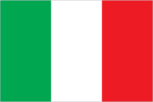
Description: three equal vertical bands of green (left side), white, and red meaning: colors are those of Milan (red and white) combined with the green uniform color of the Milanese civic guard history: design inspired by the French flag that Napoleon brought to Italy in 1797
Five-pointed white star (Stella d'Italia)
Red, white, green
This coat of arms has been a symbol of the Italian Republic since May 5, 1948, when Paolo Paschetto’s design won a two-year public competition; the olive branch symbolizes national and global peace; the oak branch stands for the strength and the dignity of the Italian people, and the steel cog-wheel for their hard work; the single star represents Italy’s solidarity
"Il Canto degli Italiani" (The Song of the Italians)
Goffredo MAMELI/Michele NOVARO
Adopted 2005; the anthem, originally written in 1847, is also known as "L'Inno di Mameli" (Mameli's Hymn), and "Fratelli d'Italia" (Brothers of Italy)
61 (55 cultural, 6 natural)
Historic Center of Rome (c); Archaeological Areas of Pompeii, Herculaneum, and Torre Annunziata (c); Venice and its Lagoon (c); Historic Center of Florence (c); Piazza del Duomo, Pisa (c); Historic Centre of Naples (c); Portovenere, Cinque Terre, and the Islands (Palmaria, Tino and Tinetto)(c); Mount Etna (n); Cultural landscape of the Benedictine settlements in medieval Italy (c); Church and Dominican Convent of Santa Maria delle Grazie with “The Last Supper” by Leonardo da Vinci (c); City of Vicenza and the Palladian Villas of the Veneto (c); Crespi d'Adda (c); Early Christian Monuments of Ravenna (c); Historic Centre of the City of Pienza (c); Cathedral, Torre Civica and Piazza Grande, Modena (c); Costiera Amalfitana (c); Villa Romana del Casale (c); Archaeological Area and the Patriarchal Basilica of Aquileia (c); Cilento and Vallo di Diano National Park with the Archeological Sites of Paestum and Velia, and the Certosa di Padula (c); Historic Centre of Urbino (c); Villa Adriana (Tivoli) (c); Assisi, the Basilica of San Francesco and Other Franciscan Sites (c); City of Verona (c); Isole Eolie (Aeolian Islands) (n); Etruscan Necropolises of Cerveteri and Tarquinia (c); Val d'Orcia (c); Mantua and Sabbioneta (c); The Dolomites (n); Prehistoric Pile Dwellings around the Alps (c); Medici Villas and Gardens in Tuscany (c); Venetian Works of Defence between the 16th and 17th Centuries: Stato da Terra – Western Stato da Mar (c); Padua’s fourteenth-century fresco cycles (c); The Porticoes of Bologna (c); Evaporitic Karst and Caves of Northern Apennines (n); Via Appia: Regina Viarum (c); Funerary Tradition in the Prehistory of Sardinia – The domus de janas (c)
💹 Economy⬆️ Top
High-income, core EU economy; strong services, manufacturing, and tourism sectors; modest growth supported by net exports, low inflation, and public investments via EU funds; tight labor market with aging workforce and shortages in specialized skills; high public debt levels
$3.133 trillion (2024 est.)
$3.11 trillion (2023 est.)
$3.088 trillion (2022 est.)
0.7% (2024 est.)
0.7% (2023 est.)
4.8% (2022 est.)
$53,100 (2024 est.)
$52,700 (2023 est.)
$52,300 (2022 est.)
$2.373 trillion (2024 est.)
1% (2024 est.)
5.6% (2023 est.)
8.2% (2022 est.)
2% (2024 est.)
21.7% (2024 est.)
65.6% (2024 est.)
58.3% (2023 est.)
17.8% (2023 est.)
22.5% (2023 est.)
0.4% (2023 est.)
33.5% (2023 est.)
-32.1% (2023 est.)
Milk, wheat, grapes, tomatoes, maize, olives, apples, oranges, sugar beets, rice (2023)
Tourism, machinery, iron and steel, chemicals, food processing, textiles, motor vehicles, clothing, footwear, ceramics
0.2% (2024 est.)
25.828 million (2024 est.)
6.8% (2024 est.)
7.7% (2023 est.)
8.1% (2022 est.)
21.8% (2024 est.)
19.9% (2024 est.)
24.8% (2024 est.)
20.1% (2021 est.)
33.7 (2022 est.)
14.7% of household expenditures (2023 est.)
3.8% of household expenditures (2023 est.)
2.5% (2022 est.)
25.3% (2022 est.)
0.5% of GDP (2024 est.)
0.5% of GDP (2023 est.)
0.5% of GDP (2022 est.)
$935.038 billion (2023 est.)
$1.104 trillion (2023 est.)
131.8% of GDP (2017 est.)
24.8% (of GDP) (2023 est.)
$26.76 billion (2024 est.)
$3.261 billion (2023 est.)
-$36.325 billion (2022 est.)
$778.898 billion (2024 est.)
$774.311 billion (2023 est.)
$737.083 billion (2022 est.)
Germany 11%, USA 11%, France 10%, Spain 5%, UK 5% (2023)
Packaged medicine, garments, cars, refined petroleum, vehicle parts/accessories (2023)
$717.278 billion (2024 est.)
$739.646 billion (2023 est.)
$775.518 billion (2022 est.)
Germany 15%, France 9%, China 8%, Netherlands 6%, Spain 5% (2023)
Natural gas, crude petroleum, cars, packaged medicine, garments (2023)
$290.547 billion (2024 est.)
$247.396 billion (2023 est.)
$224.581 billion (2022 est.)
Euros (EUR) per US dollar -
0.924 (2024 est.)
0.925 (2023 est.)
0.95 (2022 est.)
0.845 (2021 est.)
0.876 (2020 est.)
⚡ Energy⬆️ Top
100% (2022 est.)
128.692 million kW (2023 est.)
290.664 billion kWh (2023 est.)
3.32 billion kWh (2023 est.)
54.572 billion kWh (2023 est.)
17.62 billion kWh (2023 est.)
56% of total installed capacity (2023 est.)
12% of total installed capacity (2023 est.)
9.1% of total installed capacity (2023 est.)
14.7% of total installed capacity (2023 est.)
2.1% of total installed capacity (2023 est.)
6.2% of total installed capacity (2023 est.)
4 (2025)
1.572 million metric tons (2023 est.)
12.424 million metric tons (2023 est.)
304,000 metric tons (2023 est.)
12.069 million metric tons (2023 est.)
609.999 million metric tons (2023 est.)
111,000 bbl/day (2023 est.)
1.245 million bbl/day (2024 est.)
497.934 million barrels (2021 est.)
2.778 billion cubic meters (2023 est.)
61.906 billion cubic meters (2023 est.)
2.609 billion cubic meters (2023 est.)
61.851 billion cubic meters (2023 est.)
45.76 billion cubic meters (2021 est.)
96.797 million Btu/person (2023 est.)
📡 Communications⬆️ Top
20.107 million (2023 est.)
34 (2023 est.)
78.7 million (2024 est.)
133 (2024 est.)
Two Italian media giants dominate, with 3 national terrestrial stations; privately owned companies have 3 national terrestrial stations; a large number of private stations, a satellite TV network; 3 AM/FM nationwide radio stations; about 1,300 commercial radio stations
.it
87% (2023 est.)
20.1 million (2023 est.)
34 (2023 est.)
🚚 Transportation⬆️ Top
I
655 (2025)
163 (2025)
18,475 km (2020) 12,936 km electrified
1,276 (2023)
Bulk carrier 17, container ship 6, general cargo 109, oil tanker 95, other 1,049
123 (2024)
12
11
71
28
1
33
Brindisi, Civitavecchia, Genova, Gioia Tauro, La Spezia, Livorno, Messina, Napoli, Porto di Lido-Venezia, Siracusa, Taranto, Trieste
🛡️ Military and Security⬆️ Top
Italian Armed Forces (Forze Armate Italiane): Army (Esercito Italiano, EI), Navy (Marina Militare Italiana, MMI; includes aviation, marines), Italian Air Force (Aeronautica Militare Italiana, AMI); Carabinieri Corps (Arma dei Carabinieri, CC) (2025)
2% of GDP (2025 est.)
1.5% of GDP (2024 est.)
1.5% of GDP (2023 est.)
1.5% of GDP (2022 est.)
1.5% of GDP (2021 est.)
Approximately 170,000 active-duty military personnel; approximately 105,000 Carabinieri (2025)
The military's inventory includes a mix of domestically manufactured, imported, and jointly produced weapons systems; imports come mostly from Europe and the US; the Italian defense industry is capable of producing equipment across all the military domains with particular strengths in aircraft, armored vehicles, and naval vessels; it also participates in joint development and production of advanced weapons systems with other European countries and the US (2025)
17 or 18 years of age for voluntary military service for men and women ; voluntary service is a minimum of 12 months with the option to extend in the Armed Forces or compete for positions in other government security organizations; conscription abolished 2004 (2025)
Italy has on average about 8,000 military personnel deployed in support of NATO, UN, and other foreign missions; significant ground troop deployments include Bulgaria (750), Hungary (250), Kosovo (870), Latvia (300), and Lebanon (875); in addition, air and naval units are deployed in support of NATO missions (2025)
The Italian military is responsible for Italy’s national defense and security and fulfilling the country’s commitments to the EU, NATO, the UN, and other multinational military, security, and humanitarian operations; it also has some domestic security duties; key areas of emphasis for Italy’s security policy and multinational cooperation are Europe’s eastern and southern flanks, including the Mediterranean Sea, East and North Africa, and the Middle East and its adjacent waters Italy has been an active member of NATO since its founding in 1948, and the Alliance is a cornerstone of Rome’s national security strategy; it is one of NATO’s leading contributors of military forces and participates in such Alliance missions as Air Policing in the Baltics, the Enhanced Forward Presence in Eastern Europe, and maritime patrols in the Mediterranean and beyond; it hosts NATO’s Joint Force Command in Naples and a NATO Rapid Deployable Corps headquarters in Milan Italy is also active in European/EU defense cooperation and integration, including hosting the headquarters for the EU’s Mediterranean naval operations force in Rome; in addition, Italy has close defense ties with the US and hosts several US military air, army, and naval bases and facilities (2025)
🛰️ Space⬆️ Top
Italian Space Agency (L’Agenzia Spaziale Italiana or ASI; established 1988) (2025)
The Broglio (aka San Marco, Malindi) Space Center, located near Malindi, Kenya, served from 1967 to 1988 as an Italian and international satellite launch facility; in 2020, Italy concluded a deal with Kenya to conduct rocket launches from the site again in the future; the Italian Space Agency has utilized the site as a satellite ground station since 2004 the Italian Government has designated the Taranto-Grottaglie Airport as a future spaceport and signed framework agreements with commercial space companies that could lead to suborbital and orbital launches from what would be called the Grottaglie Spaceport (2025)
One of the top contributors to the ESA; designs, builds, launches, and operates communications, remote sensing (RS), and scientific satellites; designs and manufactures probes, rockets, and orbital satellite launch vehicles (SLVs); researches, develops, and builds a range of other space-related technologies and participates in a wide array of international programs; hosts the ESA Center for Earth Observation; has astronaut cadre in the ESA astronaut corps; has cooperated with a variety of foreign space agencies and industries, including those of Argentina, Brazil, Canada, China, Israel, Japan, Kenya, Mexico, Russia, South Korea, Thailand, the UAE, and the US; participates in international projects such as the International Space Station; has considerable commercial space industries encompassing a wide range of capabilities (2025)
1964 - first domestically manufactured science satellite (San Marco-1) launched by the US 1977 - first domestically built telecommunications/research satellite (Sirio) launched by the US 1990s-2011 - participated in US Space Shuttle program, resulting in first Italian astronaut in space (1992) 1998-present - participated in International Space Station, including the first European astronaut on the station (2001), first Italian to command it (2019-2020), and first woman to command the station (2022) 2012 - first launch of Italian-designed VEGA 3-stage satellite launch vehicle (SLV) for ESA 2020 - signed US-led Artemis Accords for space and lunar exploration 2023 - first Italian all-electric satellite (MicroHETSat) built for the ESA and launched by the US; began developing a habitat for the US-led Artemis Lunar Gateway project 2025 - passed a national space law to govern Italian space operations
🚨 Terrorism⬆️ Top
Islamic State of Iraq and ash-Sham (ISIS)
🌐 Transnational Issues⬆️ Top
520,127 (2024 est.)
3,000 (2024 est.)
Source: Factbook JSON archive.