Budapest
 Hungary
Key facts and a structured country profile. 🧾 Change log 📐 True Size
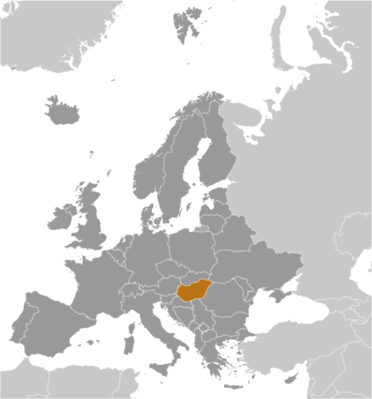
Locator 🗺️ Map
9,855,745 (2024 est.)
93,028 sq km
Central Europe, northwest of Romania
🧭 Background
Hungary became a Christian kingdom in A.D. 1000 and for many centuries served as a bulwark against Ottoman Turkish expansion in Europe. The kingdom eventually became part of the Austro-Hungarian Empire, which collapsed during World War I. The country fell under communist rule after World War II. In 1956, Moscow responded to a Hungarian revolt and announcement of its withdrawal from the Warsaw Pact with a massive military intervention. Under the leadership of Janos KADAR in 1968, Hungary began liberalizing its economy, introducing so-called "Goulash Communism." Hungary held its first multiparty elections in 1990 and initiated a free market economy. It joined NATO in 1999 and the EU five years later.
🗺️ Geography
Central Europe, northwest of Romania
47 00 N, 20 00 E
Europe
93,028 sq km
89,608 sq km
3,420 sq km
Slightly smaller than Virginia; about the same size as Indiana
2,106 km
Austria 321 km; Croatia 348 km; Romania 424 km; Serbia 164 km; Slovakia 627 km; Slovenia 94 km; Ukraine 128 km
0 km (landlocked)
None (landlocked)
Temperate; cold, cloudy, humid winters; warm summers
Mostly flat to rolling plains; hills and low mountains on the Slovakian border
Kekes 1,014 m
Tisza River 78 m
143 m
Bauxite, coal, natural gas, fertile soils, arable land
55.7% (2023 est.)
Arable land: 45.4% (2023 est.)
Permanent crops: 1.6% (2023 est.)
Permanent pasture: 8.6% (2023 est.)
22.7% (2023 est.)
20.9% (2023 est.)
1,331 sq km (2022)
Lake Balaton - 590 sq km
Duna (Danube) (shared with Germany [s], Austria, Slovakia, Croatia, Serbia, Bulgaria, Ukraine, Moldova, and Romania [m]) - 2,888 km note: [s] after country name indicates river source; [m] after country name indicates river mouth
(Black Sea) Danube (795,656 sq km)
A fairly even distribution throughout most of the country, with urban areas attracting larger and denser populations
Landlocked; strategic location on main land routes between Western Europe and Balkan Peninsula, as well as between Ukraine and the Mediterranean basin; the Duna (Danube) and Tisza Rivers divide the country into three large regions
👥 People and Society⬆️ Top
9,855,745 (2024 est.)
4,812,668
5,043,077
Hungarian(s)
Hungarian
Hungarian 84.3%, Romani 2.1%, German 1%, other 1.2%, unspecified 13.7% (2022 est.)
Hungarian (official) 98.8%, English 25.3%, German 12.6%, Russian 2.1%, French 1.5%, Romanian 1.4%, other 5.1% (2022 est.)
A World Factbook nélkülözhetetlen forrása az alapvető információnak. (Hungarian) The World Factbook, the indispensable source for basic information.
Catholic 30.1% (Roman Catholic 27.5%, Greek Catholic 1.7%, other Catholic 0.9%), Calvinist 9.8%, Lutheran 1.8%, other Christian (includes Orthodox) 1.6%, other 0.4%, none 16.1%, no answer 40.1% (2022 est.)
14.6% (male 753,955/female 683,943)
63.9% (male 3,195,761/female 3,104,750)
21.5% (2024 est.) (male 862,952/female 1,254,384)
56.4 (2024 est.)
22.8 (2024 est.)
33.6 (2024 est.)
3 (2024 est.)
45.1 years (2025 est.)
42.8 years
46.7 years
-0.29% (2025 est.)
9.03 births/1,000 population (2025 est.)
14.41 deaths/1,000 population (2025 est.)
2.45 migrant(s)/1,000 population (2025 est.)
A fairly even distribution throughout most of the country, with urban areas attracting larger and denser populations
72.9% of total population (2023)
0.05% annual rate of change (2020-25 est.)
1.778 million BUDAPEST (capital) (2023)
1.06 male(s)/female
1.1 male(s)/female
1.03 male(s)/female
0.69 male(s)/female
0.95 male(s)/female (2024 est.)
28.4 years (2020 est.)
12 deaths/100,000 live births (2023 est.)
4.6 deaths/1,000 live births (2025 est.)
5 deaths/1,000 live births
4.3 deaths/1,000 live births
76 years (2024 est.)
72.9 years
79.3 years
1.6 children born/woman (2025 est.)
0.78 (2025 est.)
Urban: 100% of population (2022 est.)
Rural: 100% of population (2022 est.)
Total: 100% of population (2022 est.)
Urban: 0% of population (2022 est.)
Rural: 0% of population (2022 est.)
Total: 0% of population (2022 est.)
7.4% of GDP (2021)
9.9% of national budget (2022 est.)
3.46 physicians/1,000 population (2022)
6.8 beds/1,000 population (2021 est.)
Urban: 100% of population (2022 est.)
Rural: 100% of population (2022 est.)
Total: 100% of population (2022 est.)
Urban: 0% of population (2022 est.)
Rural: 0% of population (2022 est.)
Total: 0% of population (2022 est.)
26.4% (2016)
10.79 liters of pure alcohol (2019 est.)
3.96 liters of pure alcohol (2019 est.)
3.33 liters of pure alcohol (2019 est.)
3.5 liters of pure alcohol (2019 est.)
0 liters of pure alcohol (2019 est.)
28.5% (2025 est.)
33.7% (2025 est.)
23.8% (2025 est.)
52.3% (2022 est.)
3.8% of GDP (2022 est.)
7.8% national budget (2022 est.)
16 years (2023 est.)
15 years (2023 est.)
16 years (2023 est.)
🌿 Environment⬆️ Top
Air and soil pollution; water pollution from industry and large-scale agriculture
Air Pollution, Air Pollution-Heavy Metals, Air Pollution-Multi-effect Protocol, Air Pollution-Nitrogen Oxides, Air Pollution-Persistent Organic Pollutants, Air Pollution-Sulphur 85, Air Pollution-Sulphur 94, Air Pollution-Volatile Organic Compounds, Antarctic Treaty, Biodiversity, Climate Change, Climate Change-Kyoto Protocol, Climate Change-Paris Agreement, Comprehensive Nuclear Test Ban, Desertification, Endangered Species, Environmental Modification, Hazardous Wastes, Law of the Sea, Marine Dumping-London Convention, Nuclear Test Ban, Ozone Layer Protection, Ship Pollution, Tropical Timber 2006, Wetlands, Whaling
Antarctic-Environmental Protection
Temperate; cold, cloudy, humid winters; warm summers
55.7% (2023 est.)
Arable land: 45.4% (2023 est.)
Permanent crops: 1.6% (2023 est.)
Permanent pasture: 8.6% (2023 est.)
22.7% (2023 est.)
20.9% (2023 est.)
72.9% of total population (2023)
0.05% annual rate of change (2020-25 est.)
40.161 million metric tonnes of CO2 (2023 est.)
3.373 million metric tonnes of CO2 (2023 est.)
20.887 million metric tonnes of CO2 (2023 est.)
15.901 million metric tonnes of CO2 (2023 est.)
14.2 micrograms per cubic meter (2019 est.)
3.781 million tons (2024 est.)
31% (2022 est.)
660 million cubic meters (2022)
3.758 billion cubic meters (2022)
548.613 million cubic meters (2022)
104 billion cubic meters (2022 est.)
4 (2024)
Bakony-Balaton; Bukk Region; Hungary; Novohrad-Nógrád (includes Slovakia) (2024)
🏛️ Government⬆️ Top
None
Hungary
None
Magyarorszag
Kingdom of Hungary, Hungarian People's Republic, Hungarian Soviet Republic, Hungarian Republic
The Byzantine Greeks referred to the tribes that arrived on the steppes of Eastern Europe in the 9th century as the "Oungroi," a name that later became "Hungari," which originally meant an "[alliance of] ten tribes;" the Hungarian name Magyarorszag means "Country of the Magyars," which may be derived from the name of the most prominent of the Hungarian tribes
Parliamentary republic
Budapest
47 30 N, 19 05 E
UTC+1 (6 hours ahead of Washington, DC, during Standard Time)
+1hr, begins last Sunday in March; ends last Sunday in October
Buda on the western shore of the Danube and Pest on the eastern shore merged in 1873 to form Budapest; Buda's name may derive from the name of its founder or from a local word meaning "water;" Pest derives from a Slavic word meaning "furnace" or "oven"
19 counties (megyek, singular - megye), 25 cities with county rights (megyei jogu varosok, singular - megyei jogu varos), and 1 capital city (fovaros) counties: Bacs-Kiskun, Baranya, Bekes, Borsod-Abauj-Zemplen, Csongrad-Csanad, Fejer, Gyor-Moson-Sopron, Hajdu-Bihar, Heves, Jasz-Nagykun-Szolnok, Komarom-Esztergom, Nograd, Pest, Somogy, Szabolcs-Szatmar-Bereg, Tolna, Vas, Veszprem, Zala cities with county rights: Baja, Bekescsaba, Debrecen, Dunaujvaros, Eger, Erd, Esztergom, Gyor, Hodmezovasarhely, Kaposvar, Kecskemet, Miskolc, Nagykanizsa, Nyiregyhaza, Pecs, Salgotarjan, Sopron, Szeged, Szekesfehervar, Szekszard, Szolnok, Szombathely, Tatabanya, Veszprem, Zalaegerszeg capital city: Budapest
Civil system influenced by the German model
Previous 1949 (heavily amended in 1989 following the collapse of communism); latest approved 18 April 2011, signed 25 April 2011, effective 1 January 2012
Proposed by the president of the republic, by the government, by parliamentary committee, or by Parliament members; passage requires two-thirds majority vote of Parliament members and approval by the president
Accepts compulsory ICJ jurisdiction with reservations; accepts ICC jurisdiction
No
At least one parent must be a citizen of Hungary
Yes
8 years
18 years of age, 16 if married and marriage is registered in Hungary; universal
President Tamas SULYOK (since 5 March 2024)
Prime Minister Viktor ORBAN (since 29 May 2010)
Cabinet of Ministers proposed by the prime minister and appointed by the president
President indirectly elected by the National Assembly with two-thirds majority vote in first round or simple majority vote in second round for a 5-year term (eligible for a second term); prime minister elected by the National Assembly on the recommendation of the president
President: 26 February 2024 prime minister: 3 April 2022
2024: Tamas SULYOK elected president; National Assembly vote - 134 to 5 2022: Katalin NOVAK (Fidesz) elected president; National Assembly vote - 137 to 51
President: spring 2029 prime minister: April or May 2027
National Assembly (Országgyülés)
Unicameral
National Assembly (Orszaggyules)
199 (all directly elected)
Mixed system
Full renewal
4 years
4/3/2022
Hungarian Civic Union-Christian Democratic People's Party (FIDESZ-KDNP) (135); Democratic Coalition (DK) (15); Movement for a Better Hungary (Jobbik) (10); Hungarian Socialist Party (MSZP) (10); Momentum (10); Other (19)
15.6%
April 2026
Curia or Supreme Judicial Court (consists of the president, vice president, department heads, and has a maximum of 113 judges, and is organized into civil, criminal, and administrative-labor departments; Constitutional Court (consists of 15 judges, including the court president and vice president)
Curia president elected by the National Assembly on the recommendation of the president of the republic; other Curia judges appointed by the president on the recommendation of the National Judicial Council, a separate 15-member administrative body; judge tenure based on interim evaluations until normal retirement at age 62; Constitutional Court judges, including the president of the court, elected by the National Assembly; court vice president elected by the court itself; members serve 12-year terms with mandatory retirement at age 62
5 regional courts of appeal; 19 regional or county courts (including Budapest Metropolitan Court); 20 administrative-labor courts; 111 district or local courts
Christian Democratic People's Party or KDNP Democratic Coalition or DK Dialogue for Hungary or Párbeszéd Fidesz-Hungarian Civic Alliance or Fidesz Hungarian Socialist Party or MSZP Jobbik - Conservatives or Jobbik LMP-Hungary's Green Party or LMP Mi Hazank (Our Homeland Movement) or MHM Momentum Movement or Momentum Movement for a Better Hungary or Jobbik National Self-Government of Germans in Hungary or MNOÖ On the People's Side or A Nép Pártján Our Homeland Movement or Mi Hazánk TISZA – Respect and Freedom Party or TISZA
Ambassador Szabolcs Ferenc TAKÁCS (since 23 December 2020)
1500 Rhode Island Avenue, N.W. Washington, D.C. 20005
[1] (202) 362-6730
[1] (202) 966-8135
Info.was@mfa.gov.hu https://washington.mfa.gov.hu/eng
Chicago, Los Angeles, New York
Houston, Miami
Ambassador (vacant); Chargé d’Affaires Caroline SAVAGE (since November 2025)
Szabadsag ter 12, H-1054 Budapest
5270 Budapest Place, US Department of State, Washington, DC 20521-5270
[36] (1) 475-4400
[36] (1) 475-4248
Acs.budapest@state.gov https://hu.usembassy.gov/
Australia Group, BIS, CD, CE, CEI, CERN, EAPC, EBRD, ECB, EIB, ESA (cooperating state), EU, FAO, G-9, IAEA, IBRD, ICAO, ICC (national committees), ICCt, ICRM, IDA, IEA, IFAD, IFC, IFRCS, ILO, IMF, IMO, IMSO, Interpol, IOC, IOM, IPU, ISO, ITSO, ITU, ITUC (NGOs), MIGA, MINURSO, NATO, NEA, NSG, OAS (observer), OECD, OIF (observer), OPCW, OSCE, PCA, Schengen Convention, SELEC, UN, UNCTAD, UNESCO, UNFICYP, UNHCR, UNIDO, UNIFIL, UNOOSA, UNWTO, UPU, Wassenaar Arrangement, WCO, WFTU (NGOs), WHO, WIPO, WMO, WTO, ZC
16 November 1918 (republic proclaimed); notable earlier dates: 25 December 1000 (crowning of King STEPHEN I, traditional founding date); 30 March 1867 (Austro-Hungarian dual monarchy established)
Saint Stephen's Day, 20 August (1083)
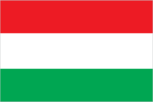
Description: three equal horizontal bands of red (top), white, and green meaning: folklore attributes virtues to the colors: red for strength, white for faithfulness, and green for hope; alternatively, the red can stand for the blood spilled in defense of the land, white for freedom, and green for pasturelands history: the flag dates to the national movement of the 18th and 19th centuries and fuses the medieval colors of the Hungarian coat of arms with the revolutionary tricolor of the French flag
Holy Crown of Hungary (Crown of Saint Stephen)
Red, white, green
"Himnusz" (Hymn)
Ferenc KOLCSEY/Ferenc ERKEL
Adopted 1844
8 (7 cultural, 1 natural)
Budapest, including the Banks of the Danube, the Buda Castle Quarter, and Andrássy Avenue (c); Old Village of Hollókő and its Surroundings (c); Caves of Aggtelek Karst and Slovak Karst (n); Millenary Benedictine Abbey of Pannonhalma and its Natural Environment (c); Hortobágy National Park - the Puszta (c); Early Christian Necropolis of Pécs (Sopianae) (c); Fertö / Neusiedlersee Cultural Landscape (c); Tokaj Wine Region Historic Cultural Landscape (c)
💹 Economy⬆️ Top
High-income EU and OECD economy; modest recovery from 2024 recession driven by private consumption and moderated inflation; challenges include high fiscal deficits, frozen access to EU funds, and risks from export reliance; implementing tax exemptions, price controls, and mortgage interest caps ahead of 2026 elections
$389.207 billion (2024 est.)
$387.223 billion (2023 est.)
$390.513 billion (2022 est.)
0.5% (2024 est.)
-0.8% (2023 est.)
4.3% (2022 est.)
$40,700 (2024 est.)
$40,400 (2023 est.)
$40,700 (2022 est.)
$222.905 billion (2024 est.)
3.7% (2024 est.)
17.1% (2023 est.)
14.6% (2022 est.)
2.4% (2024 est.)
23.9% (2024 est.)
59.7% (2024 est.)
49.1% (2023 est.)
19.9% (2023 est.)
25.6% (2023 est.)
0.3% (2023 est.)
80.8% (2023 est.)
-76.3% (2023 est.)
Maize, wheat, barley, milk, sunflower seeds, sugar beets, rapeseed, apples, pork, grapes (2023)
Mining, metallurgy, construction materials, processed foods, textiles, chemicals (especially pharmaceuticals), motor vehicles
-2.5% (2024 est.)
4.954 million (2024 est.)
4.5% (2024 est.)
4.2% (2023 est.)
3.7% (2022 est.)
14.1% (2024 est.)
14.8% (2024 est.)
13.1% (2024 est.)
12.1% (2021 est.)
30.2 (2022 est.)
16.8% of household expenditures (2023 est.)
7% of household expenditures (2023 est.)
2.8% (2022 est.)
24.4% (2022 est.)
2.3% of GDP (2024 est.)
2.4% of GDP (2023 est.)
2.2% of GDP (2022 est.)
$69.793 billion (2022 est.)
$80.429 billion (2022 est.)
75.3% of GDP (2022 est.)
23.4% (of GDP) (2022 est.)
$5.074 billion (2024 est.)
$751.071 million (2023 est.)
-$14.699 billion (2022 est.)
$166.503 billion (2024 est.)
$173.034 billion (2023 est.)
$158.98 billion (2022 est.)
Germany 25%, Italy 6%, Romania 6%, USA 5%, Slovakia 4% (2023)
Cars, vehicle parts/accessories, electric batteries, packaged medicine, computers (2023)
$154.077 billion (2024 est.)
$163.192 billion (2023 est.)
$167.262 billion (2022 est.)
Germany 23%, China 7%, Austria 6%, Poland 6%, S. Korea 6% (2023)
Vehicle parts/accessories, natural gas, integrated circuits, broadcasting equipment, industrial acids/oils/alcohols (2023)
$46.422 billion (2024 est.)
$45.719 billion (2023 est.)
$41.219 billion (2022 est.)
Forints (HUF) per US dollar -
365.691 (2024 est.)
353.088 (2023 est.)
372.596 (2022 est.)
303.141 (2021 est.)
307.997 (2020 est.)
⚡ Energy⬆️ Top
100% (2022 est.)
14.829 million kW (2023 est.)
42.739 billion kWh (2023 est.)
8.863 billion kWh (2023 est.)
19.963 billion kWh (2023 est.)
2.454 billion kWh (2023 est.)
28.9% of total installed capacity (2023 est.)
44.2% of total installed capacity (2023 est.)
19.4% of total installed capacity (2023 est.)
1.8% of total installed capacity (2023 est.)
0.6% of total installed capacity (2023 est.)
4.9% of total installed capacity (2023 est.)
4 (2025)
1.92GW (2025 est.)
48.8% (2023 est.)
4.293 million metric tons (2023 est.)
4.694 million metric tons (2023 est.)
115,000 metric tons (2023 est.)
452,000 metric tons (2023 est.)
2.633 billion metric tons (2023 est.)
36,000 bbl/day (2023 est.)
179,000 bbl/day (2024 est.)
12.1 million barrels (2021 est.)
1.612 billion cubic meters (2023 est.)
8.293 billion cubic meters (2023 est.)
8.216 billion cubic meters (2023 est.)
3.738 billion cubic meters (2021 est.)
96.152 million Btu/person (2023 est.)
📡 Communications⬆️ Top
2.693 million (2023 est.)
28 (2023 est.)
10.2 million (2023 est.)
104 (2022 est.)
Mixed system of state-supported media and private broadcasters; the 5 publicly owned TV channels and the 2 main privately owned TV stations are the major national broadcasters; large number of special-interest channels; highly developed market for satellite and cable TV with about two-thirds of viewers utilizing the services; 4 state-supported radio networks; large number of local stations, including commercial, public service, nonprofit, and community radio stations; digital transition completed in 2013 (2019)
.hu
92% (2024 est.)
3.56 million (2023 est.)
37 (2023 est.)
🚚 Transportation⬆️ Top
HA
109 (2025)
15 (2025)
7,687 km (2020) 3,111 km electrified
1 (2023)
Other 1
🛡️ Military and Security⬆️ Top
Hungarian Defense Forces (HDF or Magyar Honvédség): the HDF is organized as a joint force under a general staff with commands for land, air, cyber, special operations, territorial defense, and support forces (2025)
2.1% of GDP (2025 est.)
2.1% of GDP (2024 est.)
2.1% of GDP (2023 est.)
1.8% of GDP (2022 est.)
1.7% of GDP (2021 est.)
Approximately 30,000 active-duty military personnel (2025)
The HDF has a mix of Soviet-era and more modern, NATO-compatible arms from such countries as Germany, France, Norway, Sweden, Türkiye, and the US; in 2017, Budapest launched a modernization program aimed at replacing its Soviet-era weaponry with modern systems; Hungary has also placed emphasis on building up its defense industrial capacity (2025)
18 years of age for voluntary military service; no conscription (abolished 2005) (2026)
250 Bosnia-Herzegovina (EUFOR stabilization force); 200 Chad; 470 Kosovo (NATO/KFOR) (2025)
The Hungarian Defense Forces (HDF) are responsible for ensuring the defense of the country’s sovereignty, territorial integrity, and citizens, and fulfilling Hungary’s commitments to the EU and NATO, as well as contributing to other international peacekeeping efforts under the UN; key areas of concern for the HDF the HDF is also responsible for some aspects of domestic security, crisis management, disaster response, and assisting law enforcement forces in border security Hungary has been a member of NATO since 1999 and considers the collective defense ensured within the Alliance as a cornerstone of the country’s security; NATO membership is complemented by Hungary’s ties to the EU under its Common Security and Defense Policy; the HDF has participated in multiple NATO-led security missions, including in Afghanistan, Iraq, and Kosovo, as well as EU-led missions in Bosnia and Herzegovina and Mali; it hosts a NATO battlegroup comprised of troops from Croatia, Hungary, Italy, and the US, and NATO’s Multinational Division Center, a headquarters capable of commanding a division-sized force (typically 15-20,000 troops) in a crisis; both organizations were established as a result of Russian aggression against Ukraine; Hungary is a member of the Visegrad Group, a regional platform that brings together Czechia, Hungary, Poland, and Slovakia to discuss cultural, defense, and political cooperation (2025)
🚨 Terrorism⬆️ Top
Islamic State of Iraq and ash-Sham (ISIS)
🌐 Transnational Issues⬆️ Top
72,359 (2024 est.)
101 (2024 est.)
Source: Factbook JSON archive.