Conakry
 Guinea
Key facts and a structured country profile. 🧾 Change log 📐 True Size
Locator 🗺️ Map
14,374,590 (2025 est.)
245,857 sq km
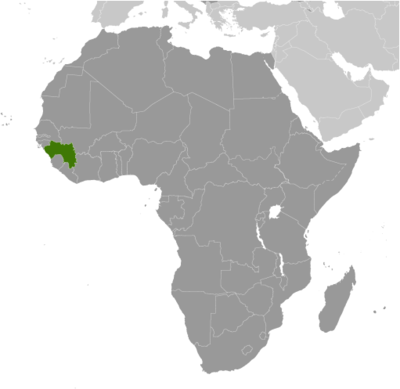
Western Africa, bordering the North Atlantic Ocean, between Guinea-Bissau and Sierra Leone
🧭 Background
Guinea's deep Muslim heritage arrived via the neighboring Almoravid Empire in the 11th century. Following Almoravid decline, Guinea existed on the fringe of several African kingdoms, all competing for regional dominance. In the 13th century, the Mali Empire took control of Guinea and encouraged its already growing Muslim faith. After the fall of the West African empires, various smaller kingdoms controlled Guinea. In the 18th century, Fulani Muslims established an Islamic state in central Guinea that provided one of the earliest examples of a written constitution and alternating leadership. European traders first arrived in the 16th century, and the French secured colonial rule in the 19th century. In 1958, Guinea achieved independence from France. Sekou TOURE became Guinea’s first post-independence president; he established a dictatorial regime and ruled until his death in 1984, after which General Lansana CONTE staged a coup and seized the government. He too established an authoritarian regime and manipulated presidential elections until his death in 2008, when Captain Moussa Dadis CAMARA led a military coup, seized power, and suspended the constitution. In 2009, CAMARA was wounded in an assassination attempt and was exiled to Burkina Faso. In 2010 and 2013 respectively, the country held its first free and fair presidential and legislative elections. Alpha CONDE won the 2010 and 2015 presidential elections, and his first cabinet was the first all-civilian government in Guinean history. CONDE won a third term in 2020 after a constitutional change to term limits. In 2021, Col Mamady DOUMBOUYA led another successful military coup, establishing the National Committee for Reconciliation and Development (CNRD), suspending the constitution, and dissolving the government and the legislature. DOUMBOUYA was sworn in as transition president and appointed Mohamed BEAVOGUI as transition prime minister. The National Transition Council (CNT), which acts as the legislative body for the transition, was formed in 2022 and consists of appointed members representing a broad swath of Guinean society.
🗺️ Geography
Western Africa, bordering the North Atlantic Ocean, between Guinea-Bissau and Sierra Leone
11 00 N, 10 00 W
Africa
245,857 sq km
245,717 sq km
140 sq km
Slightly smaller than Oregon; slightly larger than twice the size of Pennsylvania
4,046 km
Cote d'Ivoire 816 km; Guinea-Bissau 421 km; Liberia 590 km; Mali 1062 km; Senegal 363 km; Sierra Leone 794 km
320 km
12 nm
200 nm
Generally hot and humid; monsoonal-type rainy season (June to November) with southwesterly winds; dry season (December to May) with northeasterly harmattan winds
Generally flat coastal plain, hilly to mountainous interior
Mont Nimba 1,752 m
Atlantic Ocean 0 m
472 m
Bauxite, iron ore, diamonds, gold, uranium, hydropower, fish, salt
73.2% (2023 est.)
Arable land: 24.4% (2023 est.)
Permanent crops: 5.3% (2023 est.)
Permanent pasture: 43.5% (2023 est.)
20.3% (2023 est.)
6.5% (2023 est.)
949 sq km (2017)
Niger river source (shared with Mali, and Nigeria [m]) - 4,200 km; Gambie (Gambia) river source (shared with Senegal and The Gambia [m]) - 1,094 km note: [s] after country name indicates river source; [m] after country name indicates river mouth
Niger (2,261,741 sq km), Senegal (456,397 sq km)
Areas of highest density are in the west and south; interior is sparsely populated, as shown in this population distribution map
Hot, dry, dusty harmattan haze may reduce visibility during dry season
The Niger and its important tributary, the Milo River, have their sources in the Guinean highlands
👥 People and Society⬆️ Top
14,374,590 (2025 est.)
7,179,661
7,194,929
Guinean(s)
Guinean
Fulani (Peuhl) 33.4%, Malinke 29.4%, Susu 21.2%, Guerze 7.8%, Kissi 6.2%, Toma 1.6%, other/foreign 0.4% (2018 est.)
French (official), Pular, Maninka, Susu, other native languages
Muslim 85.2%, Christian 13.4%, animist 0.2%, none 1.2% (2018 est.)
40.9% (male 2,884,146/female 2,835,794)
55.1% (male 3,846,852/female 3,856,366)
4% (2024 est.) (male 254,608/female 308,413)
81.5 (2025 est.)
74.1 (2025 est.)
7.4 (2025 est.)
13.6 (2025 est.)
19.5 years (2025 est.)
19.2 years
19.6 years
2.74% (2025 est.)
35.04 births/1,000 population (2025 est.)
7.69 deaths/1,000 population (2025 est.)
0 migrant(s)/1,000 population (2025 est.)
Areas of highest density are in the west and south; interior is sparsely populated, as shown in this population distribution map
38.1% of total population (2023)
3.64% annual rate of change (2020-25 est.)
2.111 million CONAKRY (capital) (2023)
1.03 male(s)/female
1.02 male(s)/female
1 male(s)/female
0.83 male(s)/female
1 male(s)/female (2024 est.)
19.9 years (2018 est.)
494 deaths/100,000 live births (2023 est.)
45.8 deaths/1,000 live births (2025 est.)
51.6 deaths/1,000 live births
42.3 deaths/1,000 live births
64.6 years (2024 est.)
62.7 years
66.6 years
4.75 children born/woman (2025 est.)
2.34 (2025 est.)
Urban: 92% of population (2022 est.)
Rural: 59% of population (2022 est.)
Total: 71.5% of population (2022 est.)
Urban: 8% of population (2022 est.)
Rural: 41% of population (2022 est.)
Total: 28.5% of population (2022 est.)
3.8% of GDP (2021)
5% of national budget (2022 est.)
0.21 physicians/1,000 population (2022)
Urban: 95.6% of population (2022 est.)
Rural: 39.4% of population (2022 est.)
Total: 60.6% of population (2022 est.)
Urban: 4.4% of population (2022 est.)
Rural: 60.6% of population (2022 est.)
Total: 39.4% of population (2022 est.)
7.7% (2016)
0.33 liters of pure alcohol (2019 est.)
0.29 liters of pure alcohol (2019 est.)
0.01 liters of pure alcohol (2019 est.)
0.03 liters of pure alcohol (2019 est.)
0 liters of pure alcohol (2019 est.)
15% (2022 est.)
70.9% (2018 est.)
17% (2018)
46.5% (2018)
1.9% (2018)
1.7% of GDP (2023 est.)
9.2% national budget (2025 est.)
39.6% (2018 est.)
54.4% (2018 est.)
27.7% (2018 est.)
9 years (2021 est.)
9 years (2021 est.)
8 years (2021 est.)
🌿 Environment⬆️ Top
Deforestation; inadequate potable water; desertification; soil contamination and erosion; overfishing, overpopulation in forest region; poor mining practices; water pollution; improper waste disposal
Biodiversity, Climate Change, Climate Change-Kyoto Protocol, Climate Change-Paris Agreement, Comprehensive Nuclear Test Ban, Desertification, Endangered Species, Hazardous Wastes, Law of the Sea, Ozone Layer Protection, Ship Pollution, Wetlands, Whaling
None of the selected agreements
Generally hot and humid; monsoonal-type rainy season (June to November) with southwesterly winds; dry season (December to May) with northeasterly harmattan winds
73.2% (2023 est.)
Arable land: 24.4% (2023 est.)
Permanent crops: 5.3% (2023 est.)
Permanent pasture: 43.5% (2023 est.)
20.3% (2023 est.)
6.5% (2023 est.)
38.1% of total population (2023)
3.64% annual rate of change (2020-25 est.)
4.505 million metric tonnes of CO2 (2023 est.)
1,000 metric tonnes of CO2 (2023 est.)
4.504 million metric tonnes of CO2 (2023 est.)
34.2 micrograms per cubic meter (2019 est.)
596,900 tons (2024 est.)
23.9% (2022 est.)
230 million cubic meters (2022 est.)
60 million cubic meters (2022 est.)
600 million cubic meters (2022 est.)
226 billion cubic meters (2022 est.)
🏛️ Government⬆️ Top
Republic of Guinea
Guinea
République de Guinée
Guinée
French Guinea
The country is named after the Guinea region of West Africa that lies along the Gulf of Guinea, but the name itself derives from the Tuareg word aginaw, meaning "black people"
Presidential republic
Conakry
9 30 N, 13 42 W
UTC 0 (5 hours ahead of Washington, DC, during Standard Time)
The name derives from konakri, a Susu word meaning "over the water" and referring to the city's location on a peninsula; it was originally the name of a local village
7 administrative regions (régions administratives, singular - région administrative) and 1 governorate (gouvenorat)*; Boke, Conakry*, Faranah, Kankan, Kindia, Labe, Mamou, N'Zerekore
Civil law system based on the French model
Previous 1958, 1990; 2010 and a referendum in 2020, which was suspended on 5 September 2021 via a coup d'état; on 27 September, the Transitional Charter was released, which supersedes the constitution until a new constitution is promulgated
Accepts compulsory ICJ jurisdiction with reservations; accepts ICCt jurisdiction
No
At least one parent must be a citizen of Guinea
No
Na
18 years of age; universal
President Col. Mamady DOUMBOUYA (since 17 January 2026)
Prime Minister Amadou Oury BAH (since 27 February 2024)
Formerly the Council of Ministers appointed by the president
The president is directly elected by absolute-majority popular vote in 2 rounds, if needed, for a 7-year single term, and the prime minister is appointed by the president
28 December 2025
2025: Mamady DOUMBOUYA elected president in the first round; percent of vote -Mamady DOUMBOUYA (Independent) 86.7%, Abdoulaye Yero BALDE (DFG) 6.5%, other 7% 2020: Alpha CONDE reelected president in the first round; percent of vote - Alpha CONDE (RPG) 59.5%, Cellou Dalein DIALLO (UFDG) 33.5%, other 7%
Transitional National Council (Conseil national de transition)
Unicameral
81 (all appointed)
Mixed system
Full renewal
1/22/2022
29.6%
December 2025
Supreme Court or Cour Suprême (organized into Administrative Chamber and Civil, Penal, and Social Chamber; court consists of the first president, 2 chamber presidents, 10 councilors, the solicitor general, and NA deputies); Constitutional Court - suspended on 5 September 2021
Supreme Court first president appointed by the national president after consultation with the National Assembly; other members appointed by presidential decree; members serve 9-year terms until age 65
Court of Appeal or Cour d'Appel; High Court of Justice or Cour d'Assises; Court of Account (Court of Auditors); Courts of First Instance (Tribunal de Première Instance); labor court; military tribunal; justices of the peace; specialized courts
African Congress for Democracy and Renewal or CADRE Alliance for National Renewal or ARN Alliance for National Renewal or ARENA Bloc Liberal or BL Citizen Generation or GECI Citizen Party for the Defense of Collective Interests or PCDIC Democratic Alliance for Renewal or ADR Democratic National Movement or MND Democratic Union for Renewal and Progress or UDRP Democratic Union of Guinea or UDG Democratic People's Movement of Guinea or MPDG Democratic Workers' Party of Guinea or PDTG Front for the National Alliance or FAN Generation for Reconciliation Union and Prosperity or GRUP Guinea for Democracy and Balance or GDE Guinean Party for Peaceful Coexistence and Development or PGCD Guinean Party for Solidarity and Democracy or PGSD Guinean Union for Democracy and Development or UGDD Guinean Rally for Development or RGD Guinean Rally for Unity and Development or RGUD Guinean Renaissance Party or PGR Modern Guinea Movement for Solidarity and Development or MSD National Committee for Reconciliation and Development National Front for Development or FND National Union for Prosperity or UNP National Party for Hope and Development or PEDN New Democratic Forces or NFD New Generation for the Republic or NGR New Guinea or NG New Political Generation or NGP Party for Progress and Change or PPC Party of Citizen Action through Labor or PACT Party of Democrats for Hope or PADES Party of Freedom and Progress or PLP Party of Hope for National Development or PEDN Rally for Renaissance and Development or RRD Rally for the Guinean People or RPG Rally for the Integrated Development of Guinea or RDIG Rally for the Republic or RPR Union of Democratic Forces of Guinea or UFDG Union for Progress and Renewal or UPR Union for the Defense of Republican Interests or UDIR Union for the Progress of Guinea or UPG Union of Democratic Forces or UFD a or UFDG Union of Democrats for the Renaissance of Guinea or UDRG Union of Republican Forces or UFR Unity and Progress Party or PUP
Ambassador Fatoumata KABA (since 19 April 2023)
2112 Leroy Place NW, Washington, DC 20008
[1] (202) 986-4300
[1] (202) 986-3800
Http://guineaembassyusa.org/en/welcome-to-the-embassy-of-guinea-washington-usa/
Los Angelos
Ambassador (vacant); Chargé d’Affaires Mary E. DASCHBACH (since 15 July 2025)
Transversale No. 2, Centre Administratif de Koloma, Commune de Ratoma, Conakry
2110 Conakry Place, Washington DC 20521-2110
[224] 65-10-40-00
[224] 65-10-42-97
ConakryACS@state.gov https://gn.usembassy.gov/
ACP, AfDB, EITI (compliant country), FAO, G-77, IBRD, ICAO, ICCt, ICRM, IDA, IDB, IFAD, IFC, IFRCS, ILO, IMF, IMO, Interpol, IOC, IOM, IPU, ISO (correspondent), ITSO, ITU, ITUC (NGOs), MIGA, MINURSO, MONUSCO, NAM, OIC, OIF, OPCW, UN, UNCTAD, UNESCO, UNHCR, UNIDO, UNISFA, UNMISS, UNOCI, UNWTO, UPU, WCO, WFTU (NGOs), WHO, WIPO, WMO, WTO
2 October 1958 (from France)
Independence Day, 2 October (1958)
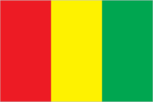
Description: three equal vertical bands of red (left side), yellow, and green meaning: red stands for the people's sacrifice for liberation and work; yellow for the sun, the riches of the earth, and justice; green for the country's vegetation and unity history: uses the colors of the Pan-African movement
Elephant
Red, yellow, green
"Liberté" (Liberty)
Unknown/Fodeba KEITA
Adopted 1958
1 (natural)
Mount Nimba Strict Nature Reserve
💹 Economy⬆️ Top
Growing but primarily agrarian West African economy; major mining sector; improving fiscal and debt balances prior to COVID-19; economy increasingly vulnerable to climate change; slow infrastructure improvements; gender wealth and human capital gaps
$59.439 billion (2024 est.)
$56.251 billion (2023 est.)
$53.297 billion (2022 est.)
5.7% (2024 est.)
5.5% (2023 est.)
4% (2022 est.)
$4,000 (2024 est.)
$3,900 (2023 est.)
$3,800 (2022 est.)
$25.334 billion (2024 est.)
8.1% (2024 est.)
7.8% (2023 est.)
10.5% (2022 est.)
29.6% (2024 est.)
25.3% (2024 est.)
37.5% (2024 est.)
67.4% (2024 est.)
13.4% (2024 est.)
32.1% (2024 est.)
-0.9% (2024 est.)
44% (2024 est.)
-56.1% (2024 est.)
Rice, cassava, maize, groundnuts, oil palm fruit, plantains, potatoes, fonio, yams, sweet potatoes (2023)
Bauxite, gold, diamonds, iron ore; light manufacturing, agricultural processing
7.1% (2024 est.)
4.534 million (2024 est.)
5.3% (2024 est.)
5.3% (2023 est.)
5.3% (2022 est.)
7.1% (2024 est.)
6.2% (2024 est.)
8% (2024 est.)
43.7% (2018 est.)
29.6 (2018 est.)
3.5% (2018 est.)
23.1% (2018 est.)
2.2% of GDP (2023 est.)
2.6% of GDP (2022 est.)
2% of GDP (2021 est.)
$1.949 billion (2019 est.)
$2.014 billion (2019 est.)
41.8% of GDP (2016 est.)
$2.288 billion (2023 est.)
$3.35 billion (2022 est.)
$4.639 billion (2021 est.)
$12.008 billion (2023 est.)
$8.898 billion (2022 est.)
$10.266 billion (2021 est.)
UAE 50%, China 36%, India 8%, Switzerland 1%, Spain 1% (2023)
Gold, aluminum ore, cocoa beans, crude petroleum, coconuts/brazil nuts/cashews (2023)
$8.365 billion (2023 est.)
$5.749 billion (2022 est.)
$5.353 billion (2021 est.)
China 39%, India 9%, Netherlands 7%, Belgium 6%, UAE 4% (2023)
Refined petroleum, rice, garments, construction vehicles, cars (2023)
$1.887 billion (2023 est.)
$2.11 billion (2022 est.)
$2.183 billion (2021 est.)
$3.764 billion (2023 est.)
Guinean francs (GNF) per US dollar -
9,565.082 (2020 est.)
9,183.876 (2019 est.)
9,011.134 (2018 est.)
9,088.319 (2017 est.)
8,967.927 (2016 est.)
⚡ Energy⬆️ Top
47.7% (2022 est.)
91%
21.3%
1.06 million kW (2023 est.)
3.624 billion kWh (2023 est.)
424.356 million kWh (2023 est.)
25.3% of total installed capacity (2023 est.)
0.6% of total installed capacity (2023 est.)
74.1% of total installed capacity (2023 est.)
400 metric tons (2023 est.)
32,000 bbl/day (2023 est.)
5.235 million Btu/person (2023 est.)
📡 Communications⬆️ Top
0 (2022 est.)
(2022 est.) less than 1
15.3 million (2022 est.)
109 (2022 est.)
Government maintains control over broadcast media; single state-run TV station; state-run radio also operates several stations in rural areas; a dozen private TV stations; many privately owned radio stations, nearly all in Conakry, and about a dozen community radio stations; foreign TV programming available via satellite and cable subscription services (2022)
.gn
27% (2023 est.)
1,000 (2022 est.)
(2022 est.) less than 1
🚚 Transportation⬆️ Top
3X
16 (2025)
1 (2025)
1,086 km (2017)
279 km (2017) 1.435-m gauge
807 km (2017) 1.000-m gauge
2 (2023)
Other 2
4 (2024)
0
1
0
3
2
Benti, Conakry, Kamsar, Victoria
🛡️ Military and Security⬆️ Top
Guinean (or National) Armed Forces (Forces Armées Guinéennes): Army, Air Force, Navy, National Gendarmerie Ministry of Security: National Police (2025)
2.1% of GDP (2024 est.)
2.1% of GDP (2023 est.)
1.8% of GDP (2022 est.)
1.5% of GDP (2021 est.)
1.4% of GDP (2020 est.)
Estimated 10-12,000 active Armed Forces (2025)
The Guinean military's inventory consists almost entirely of ageing Soviet-era weapons and equipment along with small amounts of secondhand arms from China, France, Russia, and South Africa (2025)
18 years of age for voluntary and selective conscripted service; 9-12 months of service (2025)
The Guinean military is responsible for territorial defense, but also has some domestic security responsibilities and has historically been involved in suppressing public protests; in 2021 the Army’s special forces led a military overthrow of the government; the military-led government has since been accused of cracking down on dissent, the media, and political opposition; border security is a key focus for the Guinean military, particularly a territorial dispute with Sierra Leone that dates back to 2001 (2025)
🌐 Transnational Issues⬆️ Top
2,343 (2024 est.)
5,160 (2024 est.)
Source: Factbook JSON archive.