George Town (on Grand Cayman)
 Cayman Islands
Key facts and a structured country profile. 🧾 Change log 📐 True Size
Locator 🗺️ Map
66,653 (2024 est.)
264 sq km
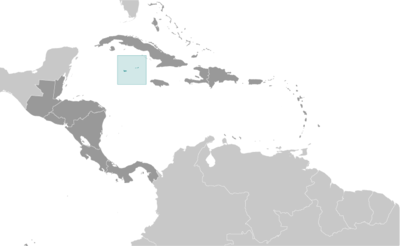
Caribbean, three-island group (Grand Cayman, Cayman Brac, Little Cayman) in Caribbean Sea, 240 km south of Cuba and 268 km northwest of Jamaica
🧭 Background
The British colonized the Cayman Islands during the 18th and 19th centuries, and Jamaica -- also a British colony at the time -- administered the islands after 1863. In 1959, the islands became a territory within the Federation of the West Indies. When the Federation dissolved in 1962, the Cayman Islands chose to remain a British dependency. The territory has transformed itself into a significant offshore financial center.
🗺️ Geography
Caribbean, three-island group (Grand Cayman, Cayman Brac, Little Cayman) in Caribbean Sea, 240 km south of Cuba and 268 km northwest of Jamaica
19 30 N, 80 30 W
Central America and the Caribbean
264 sq km
264 sq km
0 sq km
1.5 times the size of Washington, D.C.
0 km
160 km
12 nm
200 nm
200 nm
Tropical marine; warm, rainy summers (May to October) and cool, relatively dry winters (November to April)
Low-lying limestone base surrounded by coral reefs
1 km SW of The Bluff on Cayman Brac 50 m
Caribbean Sea 0 m
Fish, climate and beaches that foster tourism
11.2% (2023 est.)
Arable land: 0.8% (2023 est.)
Permanent crops: 2.1% (2023 est.)
Permanent pasture: 8.3% (2023 est.)
53% (2023 est.)
35.8% (2023 est.)
NA
Majority of the population resides on Grand Cayman
Hurricanes (July to November)
Important location between Cuba and Central America
👥 People and Society⬆️ Top
66,653 (2024 est.)
32,379
34,274
Caymanian(s)
Caymanian
Cayman Islander 35.4%, Jamaican 24.8%, Filipino 5.5%, British 5.3%, American 5.2%, Honduran 4.2%, Canadian 3.3%, Indian 2.1%, Cuban 1.6%, Nicaraguan 1%, other 11.1%, unspecified 0.5% (2021 est.)
English (official) 88.8%, Spanish 3.9%, Filipino 3.8%, other 2.8%, unspecified 0.7% (2021 est.)
Protestant 60.8% (includes Church of God 19.5%, Seventh Day Adventist 8.7%, non-denominational 8.3%, Baptist 6.9%, Pentecostal 6.8%, Presbyterian/United Church 5.7%, Anglican 2.8%, Wesleyan Holiness 1.5%, Methodist 0.5%), Roman Catholic 13.6%, Hindu 1.7%, Jehovah's Witness 0.9%, other 4.8%, none 16.7%, unspecified 1.4% (2021 est.)
17.4% (male 5,845/female 5,767)
65.9% (male 21,480/female 22,456)
16.7% (2024 est.) (male 5,054/female 6,051)
51.7 (2024 est.)
26.4 (2024 est.)
25.3 (2024 est.)
4 (2024 est.)
41.3 years (2025 est.)
40.3 years
42 years
1.71% (2025 est.)
11.41 births/1,000 population (2025 est.)
6.24 deaths/1,000 population (2025 est.)
11.91 migrant(s)/1,000 population (2025 est.)
Majority of the population resides on Grand Cayman
100% of total population (2023)
1.13% annual rate of change (2020-25 est.)
35,000 GEORGE TOWN (capital) (2018)
1.02 male(s)/female
1.01 male(s)/female
0.96 male(s)/female
0.84 male(s)/female
0.95 male(s)/female (2024 est.)
7.1 deaths/1,000 live births (2025 est.)
8.8 deaths/1,000 live births
5.7 deaths/1,000 live births
82.5 years (2024 est.)
79.8 years
85.2 years
1.81 children born/woman (2025 est.)
0.9 (2025 est.)
Urban: 95.5% of population (2022 est.)
Total: 95.5% of population (2022 est.)
Urban: 4.5% of population (2022 est.)
Total: 4.5% of population (2022 est.)
Urban: 93.5% of population (2022 est.)
Total: 93.5% of population (2022 est.)
Urban: 6.5% of population (2022 est.)
Total: 6.5% of population (2022 est.)
1.6% of GDP (2023 est.)
15% national budget (2019 est.)
🌿 Environment⬆️ Top
No natural freshwater resources; trash washing up or being deposited on beaches; no recycling or waste-treatment facilities; deforestation
Tropical marine; warm, rainy summers (May to October) and cool, relatively dry winters (November to April)
11.2% (2023 est.)
Arable land: 0.8% (2023 est.)
Permanent crops: 2.1% (2023 est.)
Permanent pasture: 8.3% (2023 est.)
53% (2023 est.)
35.8% (2023 est.)
100% of total population (2023)
1.13% annual rate of change (2020-25 est.)
737,000 metric tonnes of CO2 (2023 est.)
737,000 metric tonnes of CO2 (2023 est.)
60,000 tons (2024 est.)
🏛️ Government⬆️ Top
None
Cayman Islands
Spanish explorers named the islands in the early 16th century, using the Carib word for marine crocodiles, caiman
Parliamentary democracy; self-governing overseas territory of the UK
Overseas territory of the UK
George Town (on Grand Cayman)
19 18 N, 81 23 W
UTC-5 (same time as Washington, DC, during Standard Time)
Originally named Hogstyes, the town was renamed in honor of English King GEORGE III (1738-1820) around 1800
6 districts; Bodden Town, Cayman Brac and Little Cayman, East End, George Town, North Side, West Bay
English common law and local statutes
Several previous; latest approved 10 June 2009, entered into force 6 November 2009 (The Cayman Islands Constitution Order 2009)
See United Kingdom
18 years of age; universal
King CHARLES III (since 8 September 2022); represented by Governor Jane OWEN (since 21 April 2023)
Premier André Martin EBANKS (since 6 May 2025)
Cabinet selected from the Parliament and appointed by the governor on the advice of the premier
The monarchy is hereditary; governor appointed by the monarch; following legislative elections, the governor appoints the leader of the majority party or majority coalition as premier
Parliament
Unicameral
21 (directly elected and appointed)
Full renewal
4 years
4/14/2021
Independent (12); PPM (7)
23.8%
2025
Court of Appeal (consists of the court president and at least 2 judges); Grand Court (consists of the court president and at least 2 judges)
Court of Appeal and Grand Court judges appointed by the governor on the advice of the Judicial and Legal Services Commission, an 8-member independent body consisting of governor appointees, Court of Appeal president, and attorneys; Court of Appeal judges' tenure based on their individual instruments of appointment; Grand Court judges normally appointed until retirement at age 65 but can be extended until age 70
Summary Court
Cayman Islands Peoples Party or CIPP People's Progressive Movement or PPM
None (overseas territory of the UK)
None (overseas territory of the UK); consular services provided through the US Embassy in Jamaica
Caricom (associate), CDB, Interpol (subbureau), IOC, UNESCO (associate), UPU
None (overseas territory of the UK)
Constitution Day, the first Monday in July (1959)
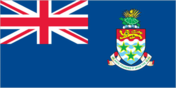
Description: a blue field with the UK flag in the upper-left quadrant and the Caymanian coat of arms centered on the right half of the flag; the coat of arms has a pineapple, a turtle, a shield with a golden lion and three green stars, and a scroll below the shield with the motto HE HATH FOUNDED IT UPON THE SEAS meaning: the pineapple represents ties to Jamaica; the turtle represents the Caymans' seafaring tradition; the lion symbolizes Great Britain; the green stars represent the three islands; the white and blue wavy lines on the coat of arms represent the sea
Green sea turtle
The Queen of England approved the Cayman Islands' coat of arms -- which was designed with input from the public -- in 1958; the shield features the lion of England and three green stars that symbolize the three islands of Grand Cayman, Cayman Brac, and Little Cayman; the green turtle stands for the islands’ seafaring history, the rope under it for the thatch-rope industry, and the pineapple for historical ties with Jamaica; the motto comes from Psalms 24, acknowledging the Caymans’ Christian heritage
"God Save the King"
Unknown
Official anthem, as an overseas UK territory
💹 Economy⬆️ Top
Dominant offshore banking territory; services sector accounts for over 85% of economic activity; recently adopted a fiscal responsibility framework to combat tax evasion and money laundering; large tourism sector; does not have any welfare system; high standard of living
$5.705 billion (2023 est.)
$5.467 billion (2022 est.)
$5.199 billion (2021 est.)
4.4% (2023 est.)
5.2% (2022 est.)
4.9% (2021 est.)
$78,100 (2023 est.)
$76,400 (2022 est.)
$74,200 (2021 est.)
$7.139 billion (2023 est.)
2% (2017 est.)
-0.6% (2016 est.)
-2.3% (2015 est.)
0.5% (2022 est.)
8.2% (2022 est.)
85.4% (2022 est.)
Vegetables, fruit; livestock; turtle farming
Tourism, banking, insurance and finance, construction, construction materials, furniture
3.4% (2022 est.)
0.2% of GDP (2023 est.)
0.2% of GDP (2022 est.)
0.2% of GDP (2021 est.)
$874.5 million (2017 est.)
$766.6 million (2017 est.)
-$712.684 million (2023 est.)
-$749.482 million (2022 est.)
-$794.205 million (2021 est.)
$4.6 billion (2023 est.)
$4.215 billion (2022 est.)
$3.542 billion (2021 est.)
UK 40%, Cyprus 21%, Germany 9%, Grenada 8%, Italy 5% (2023)
Aircraft, ships, refined petroleum, natural gas, broadcasting equipment (2023)
$3.444 billion (2023 est.)
$3.287 billion (2022 est.)
$2.808 billion (2021 est.)
Germany 30%, USA 29%, Italy 20%, Turkey 5%, China 5% (2023)
Ships, refined petroleum, cars, furniture, jewelry (2023)
$234 million (2023 est.)
$225.4 million (2022 est.)
$228.3 million (2021 est.)
Caymanian dollars (KYD) per US dollar -
0.833 (2024 est.)
0.833 (2023 est.)
0.833 (2022 est.)
0.833 (2021 est.)
0.833 (2020 est.)
⚡ Energy⬆️ Top
100% (2022 est.)
176,000 kW (2023 est.)
698.767 million kWh (2023 est.)
2.117 million kWh (2023 est.)
96.7% of total installed capacity (2023 est.)
3.1% of total installed capacity (2023 est.)
0.1% of total installed capacity (2023 est.)
5,000 bbl/day (2023 est.)
143.149 million Btu/person (2023 est.)
📡 Communications⬆️ Top
36,000 (2021 est.)
50 (2022 est.)
99,737 (2022 est.)
139 (2022 est.)
4 TV stations; cable and satellite subscription services offer international programming; government-owned Radio Cayman operates 2 networks broadcasting on 5 stations; 10 privately owned radio stations operate alongside Radio Cayman
.ky
81% (2017 est.)
40,000 (2022 est.)
56 (2022 est.)
🚚 Transportation⬆️ Top
VP-C
3 (2025)
5 (2025)
130 (2023)
Bulk carrier 29, container ship 3, general cargo 1, oil tanker 20, other 77
2 (2024)
0
0
0
2
2
Cayman Brac, Georgetown
🛡️ Military and Security⬆️ Top
No regular military forces; Royal Cayman Islands Police Service
Defense is the responsibility of the UK
🌐 Transnational Issues⬆️ Top
65 (2024 est.)
Source: Factbook JSON archive.