Sofia
 Bulgaria
Key facts and a structured country profile. 🧾 Change log 📐 True Size
Locator 🗺️ Map
6,737,997 (2025 est.)
110,879 sq km
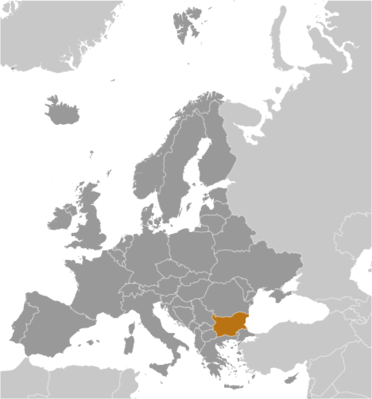
Southeastern Europe, bordering the Black Sea, between Romania and Turkey
🧭 Background
The Bulgars, a Central Asian Turkic tribe, merged with the local Slavic inhabitants in the late 7th century to form the first Bulgarian state. In succeeding centuries, Bulgaria struggled with the Byzantine Empire to assert its place in the Balkans, but by the end of the 14th century, the Ottoman Turks overran the country. Northern Bulgaria attained autonomy in 1878, and all of Bulgaria became independent from the Ottoman Empire in 1908. Having fought on the losing side in both World Wars, Bulgaria fell within the Soviet sphere of influence and became a People's Republic in 1946. Communist domination ended in 1990, when Bulgaria held its first multiparty election since World War II and began the contentious process of moving toward political democracy and a market economy while combating inflation, unemployment, corruption, and crime. The country joined NATO in 2004, the EU in 2007, and the Schengen Area for air and sea travel in 2024.
🗺️ Geography
Southeastern Europe, bordering the Black Sea, between Romania and Turkey
43 00 N, 25 00 E
Europe
110,879 sq km
108,489 sq km
2,390 sq km
Almost identical in size to Virginia; slightly larger than Tennessee
1,806 km
Greece 472 km; Macedonia 162 km; Romania 605 km; Serbia 344 km; Turkey 223 km
354 km
12 nm
24 nm
200 nm
Temperate; cold, damp winters; hot, dry summers
Mostly mountains with lowlands in north and southeast
Musala 2,925 m
Black Sea 0 m
472 m
Bauxite, copper, lead, zinc, coal, timber, arable land
46.1% (2023 est.)
Arable land: 32.1% (2023 est.)
Permanent crops: 1.3% (2023 est.)
Permanent pasture: 12.7% (2023 est.)
36.2% (2023 est.)
17.7% (2023 est.)
929 sq km (2016)
Dunav (Danube) (shared with Germany [s], Austria, Slovakia, Hungary, Croatia, Serbia, Ukraine, Moldova, and Romania [m]) - 2,888 km note: [s] after country name indicates river source; [m] after country name indicates river mouth
(Black Sea) Danube (795,656 sq km)
A fairly even distribution throughout most of the country, with urban areas attracting larger populations
Earthquakes; landslides
Strategic location near Turkish Straits; controls key land routes from Europe to Middle East and Asia
👥 People and Society⬆️ Top
6,737,997 (2025 est.)
3,281,215
3,456,782
Bulgarian(s)
Bulgarian
Bulgarian 78.5%, Turkish 7.8%, Roma 4.1%, other 1.2%, unspecified 9.4% (2021 est.)
Bulgarian (official) 77.3%, Turkish 7.9%, Romani 3.5%, other 1%, unspecified 10.4% (2021 est.)
Светoвен Алманах, незаменимият източник за основна информация. (Bulgarian) The World Factbook, the indispensable source for basic information.
Christian 64.7%, Muslim 9.8%, other 0.1%, none 4.7%, unspecified 20.7% (2021 est.)
13.8% (male 479,586/female 453,423)
65.2% (male 2,250,962/female 2,171,279)
21% (2024 est.) (male 572,943/female 854,466)
53.3 (2025 est.)
20.7 (2025 est.)
32.7 (2025 est.)
3.1 (2025 est.)
45.5 years (2025 est.)
43.3 years
47 years
-0.66% (2025 est.)
7.88 births/1,000 population (2025 est.)
14.18 deaths/1,000 population (2025 est.)
-0.3 migrant(s)/1,000 population (2025 est.)
A fairly even distribution throughout most of the country, with urban areas attracting larger populations
76.7% of total population (2023)
-0.28% annual rate of change (2020-25 est.)
1.288 million SOFIA (capital) (2023)
1.06 male(s)/female
1.06 male(s)/female
1.04 male(s)/female
0.67 male(s)/female
0.95 male(s)/female (2024 est.)
26.4 years (2020 est.)
6 deaths/100,000 live births (2023 est.)
7.5 deaths/1,000 live births (2025 est.)
8.7 deaths/1,000 live births
6.6 deaths/1,000 live births
76.1 years (2024 est.)
72.9 years
79.4 years
1.52 children born/woman (2025 est.)
0.74 (2025 est.)
Urban: 99.6% of population (2022 est.)
Rural: 97.3% of population (2022 est.)
Total: 99.1% of population (2022 est.)
Urban: 0.4% of population (2022 est.)
Rural: 2.7% of population (2022 est.)
Total: 0.9% of population (2022 est.)
8.6% of GDP (2021)
11.6% of national budget (2022 est.)
4.33 physicians/1,000 population (2022)
7.8 beds/1,000 population (2020 est.)
Urban: 100% of population (2022 est.)
Rural: 100% of population (2022 est.)
Total: 100% of population (2022 est.)
Urban: 0% of population (2022 est.)
Rural: 0% of population (2022 est.)
Total: 0% of population (2022 est.)
25% (2016)
11.18 liters of pure alcohol (2019 est.)
4.44 liters of pure alcohol (2019 est.)
1.72 liters of pure alcohol (2019 est.)
4.96 liters of pure alcohol (2019 est.)
0.06 liters of pure alcohol (2019 est.)
33.1% (2025 est.)
36.2% (2025 est.)
30.3% (2025 est.)
1.6% (2014)
56.6% (2023 est.)
4.5% of GDP (2022 est.)
12% national budget (2022 est.)
15 years (2023 est.)
15 years (2023 est.)
16 years (2023 est.)
🌿 Environment⬆️ Top
Air pollution from industrial emissions; rivers polluted from raw sewage, heavy metals, detergents; deforestation; forest damage from air pollution and acid rain; soil contamination from heavy metals from metallurgical plants and industrial wastes
Air Pollution, Air Pollution-Heavy Metals, Air Pollution-Multi-effect Protocol, Air Pollution-Nitrogen Oxides, Air Pollution-Persistent Organic Pollutants, Air Pollution-Sulphur 85, Air Pollution-Sulphur 94, Air Pollution-Volatile Organic Compounds, Antarctic-Environmental Protection, Antarctic-Marine Living Resources, Antarctic Treaty, Biodiversity, Climate Change, Climate Change-Kyoto Protocol, Climate Change-Paris Agreement, Comprehensive Nuclear Test Ban, Desertification, Endangered Species, Environmental Modification, Hazardous Wastes, Law of the Sea, Marine Dumping-London Convention, Marine Dumping-London Protocol, Nuclear Test Ban, Ozone Layer Protection, Ship Pollution, Tropical Timber 2006, Wetlands, Whaling
None of the selected agreements
Temperate; cold, damp winters; hot, dry summers
46.1% (2023 est.)
Arable land: 32.1% (2023 est.)
Permanent crops: 1.3% (2023 est.)
Permanent pasture: 12.7% (2023 est.)
36.2% (2023 est.)
17.7% (2023 est.)
76.7% of total population (2023)
-0.28% annual rate of change (2020-25 est.)
33.465 million metric tonnes of CO2 (2023 est.)
14.486 million metric tonnes of CO2 (2023 est.)
13.958 million metric tonnes of CO2 (2023 est.)
5.021 million metric tonnes of CO2 (2023 est.)
18.6 micrograms per cubic meter (2019 est.)
2.859 million tons (2024 est.)
29.8% (2022 est.)
838 million cubic meters (2022)
3.879 billion cubic meters (2022)
726.434 million cubic meters (2022)
21.3 billion cubic meters (2022 est.)
🏛️ Government⬆️ Top
Republic of Bulgaria
Bulgaria
Republika Bulgaria
Bulgaria
Kingdom of Bulgaria, People's Republic of Bulgaria
Named after the Bulgar tribes who settled the lower Balkan region in the 7th century A.D.; the tribal name may come from the Turkic word bulga, or "mixed," referring to the blend of Turkic and Slavic ethnicities in the tribes
Parliamentary republic
Sofia
42 41 N, 23 19 E
UTC+2 (7 hours ahead of Washington, DC, during Standard Time)
+1hr, begins last Sunday in March; ends last Sunday in October
Named after the Church of Saint Sofia in the city, parts of which may date to the 4th century
28 provinces (oblasti, singular - oblast); Blagoevgrad, Burgas, Dobrich, Gabrovo, Haskovo, Kardzhali, Kyustendil, Lovech, Montana, Pazardzhik, Pernik, Pleven, Plovdiv, Razgrad, Ruse, Shumen, Silistra, Sliven, Smolyan, Sofia, Sofia-Grad (Sofia City), Stara Zagora, Targovishte, Varna, Veliko Tarnovo, Vidin, Vratsa, Yambol
Civil law
Several previous; latest drafted between late 1990 and early 1991, adopted 13 July 1991
Proposed by the National Assembly or by the president of the republic; passage requires three-fourths majority vote of National Assembly members in three ballots; signed by the National Assembly chairperson; note - under special circumstances, a "Grand National Assembly" is elected with the authority to write a new constitution and amend certain articles of the constitution, including those affecting basic civil rights and national sovereignty; passage requires at least two-thirds majority vote in each of several readings
Accepts compulsory ICJ jurisdiction with reservations; accepts ICCt jurisdiction
No
At least one parent must be a citizen of Bulgaria
Yes
5 years
18 years of age; universal
President Rumen RADEV (since 22 January 2017)
Prime Minister Rosen ZHELYAZKOV (since 16 January 2025)
Council of Ministers nominated by the prime minister, elected by the National Assembly
President and vice president elected on the same ballot by absolute-majority popular vote in 2 rounds, if needed, for a 5-year term (eligible for a second term); chairman of the Council of Ministers (prime minister) elected by the National Assembly; deputy prime ministers nominated by the prime minister, elected by the National Assembly
14 and 21 November 2021
2021: Rumen RADEV reelected president in second round; percent of vote in the first round - Rumen RADEV (independent) 49.4%, Anastas GERDZHIKOV (independent) 22.8%, Mustafa KARADAYI (DPS) 11.6%, Kostadin KOSTADINOV (Revival) 3.9%, Lozan PANOV (independent) 3.7%, other 8.6%; percent of vote in the second round - Rumen RADEV 66.7%, Anastas GERDZHIKOV 31.8%, neither 1.5% 2016: Rumen RADEV elected president in second round; percent of vote - Rumen RADEV (independent, supported by Bulgarian Socialist Party) 59.4%, Tsetska TSACHEVA (GERB) 36.2%, neither 4.5%
Fall 2026
National Assembly (Narodno sabranie)
Unicameral
240 (all directly elected)
Proportional representation
Full renewal
4 years
10/27/2024
Citizens for European Development of Bulgaria Party (GERB) - Union of Democratic Forces (UDF) (66); We Continue the Change - Democratic Bulgaria (36); Revival (Vuzrazhdane) (33); Movement for Rights and Freedoms (DPS) - New Beginning (29); Bulgarian Socialist Party (BSP) - United Left (19); Alliance for Rights and Freedoms (APS) (19); There is Such a People (PP-ITN) (17); Other (21)
25%
October 2028
Supreme Court of Cassation consists of a chairman and approximately 72 judges organized into penal, civil, and commercial colleges; Supreme Administrative Court is organized into 2 colleges with various panels of 5 judges each; Constitutional Court consists of 12 justices) and resides outside the judiciary
Supreme Court of Cassation and Supreme Administrative judges elected by the Supreme Judicial Council or SJC (consists of 25 members with extensive legal experience) and appointed by the president; judges can serve until mandatory retirement at age 65; Constitutional Court justices elected by the National Assembly and appointed by the president and the SJC; justices appointed for 9-year terms with renewal of 4 justices every 3 years
Appeals courts; regional and district courts; administrative courts; courts martial
BSP for Bulgaria (electoral alliance of BSP, PKT, Ecoglasnost) Bulgarian Rise or BV Bulgarian Socialist Party or BSP Citizens for the European Development of Bulgaria or GERB (alliance with SDS) Democratic Bulgaria or DB (electoral alliance of Yes! Bulgaria, DSB, and The Greens) Democrats for a Strong Bulgaria or DSB Ecoglasnost Green Movement or The Greens Movement for Rights and Freedoms or DPS Political Club Thrace or PKT Revival Stand Up.BG or IS.BG There is Such a People or ITN Union of Democratic Forces or SDS (alliance with GERB) Yes! Bulgaria We Continue the Change or PP We Continue the Change and Democratic Bulgaria or PP-DB (electoral alliance of PP, DB, Yes! Bulgaria)
Ambassador (vacant); Chargé d’Affaires Stefka YOVCHEVA (since 7 May 2025)
1621 22nd Street NW, Washington, DC 20008
[1] (202) 387 5770
[1] (202) 234-7973
Office@bulgaria-embassy.org https://www.bulgaria-embassy.org/en/homepage/
Chicago, Los Angeles, New York
Ambassador (vacant); Chargé d'Affaires H. Martin McDOWELL (since May 2025)
16, Kozyak Street, Sofia 1408
5740 Sofia Place, Washington, DC 20521-5740
[359] (2) 937-5100
[359] (2) 937-5209
Acs_sofia@state.gov https://bg.usembassy.gov/
Australia Group, BIS, BSEC, CD, CE, CEI, CERN, EAPC, EBRD, ECB, EIB, EU, FAO, G- 9, IAEA, IBRD, ICAO, ICC (national committees), ICCt, ICRM, IDA, IFC, IFRCS, IHO (pending member), ILO, IMF, IMO, IMSO, Interpol, IOC, IOM, IPU, ISO, ITU, ITUC (NGOs), MIGA, NATO, NSG, OAS (observer), OIF, OPCW, OSCE, PCA, SELEC, UN, UNCTAD, UNESCO, UNHCR, UNHRC, UNIDO, UNMIL, UNOOSA, UNWTO, UPU, Wassenaar Arrangement, WCO, WFTU (NGOs), WHO, WIPO, WMO, WTO, ZC
3 March 1878 (as an autonomous principality within the Ottoman Empire); 22 September 1908 (complete independence from the Ottoman Empire)
Liberation Day, 3 March (1878)
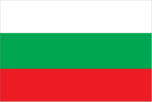
Description: three equal horizontal bands of white (top), green, and red meaning: white stands for peace, love, and freedom; green for the country's agricultural wealth; red for the independence struggle and military courage history: originally adopted in 1879 as a modified version of the Russian tricolor flag, using green instead of blue; the communist coat of arms was added to the flag in various forms between 1948 and 1990, when it was removed after the communist government collapsed
Lion
White, green, red
Bulgaria’s coat of arms in the national colors of white, green, and red was adopted in 1997; the three lions are a national symbol for strength, courage, and leadership that was used during the country’s liberation movement in the 1870s and the kingdom period in the early 20th century; above the shield is the crown of Bulgaria (originally the crown of the medieval Bulgarian tsars) with a gold cross on top; a white scroll over the oak branches bears the Bulgarian national motto, “United we stand strong”
“Mila Rodino” (Dear Homeland)
Tsvetan RADOSLAVOV
Adopted 1964; composed in 1885 by a student en route to fight in the Serbo-Bulgarian War
10 (7 cultural, 3 natural)
Boyana Church (c); Madara Rider (c); Thracian Tomb of Kazanlak (c); Rock-Hewn Churches of Ivanovo (c); Rila Monastery (c); Ancient City of Nessebar (c); Thracian Tomb of Sveshtari (c); Srebarna Nature Reserve (n); Pirin National Park (n); Primeval Beech Forests of the Carpathians (n)
💹 Economy⬆️ Top
Upper-middle-income EU economy; currency pegged to the euro, with eurozone accession pending; declining energy prices helping lower inflation rate; EU structural funds contributing to investment recovery; skilled labor shortage driven by emigration and aging population
$219.645 billion (2024 est.)
$213.64 billion (2023 est.)
$209.683 billion (2022 est.)
2.8% (2024 est.)
1.9% (2023 est.)
4% (2022 est.)
$34,100 (2024 est.)
$33,100 (2023 est.)
$32,400 (2022 est.)
$112.212 billion (2024 est.)
2.4% (2024 est.)
9.4% (2023 est.)
15.3% (2022 est.)
2.1% (2024 est.)
22.5% (2024 est.)
62.6% (2024 est.)
57.6% (2024 est.)
19.7% (2024 est.)
17.9% (2024 est.)
2.5% (2024 est.)
55.8% (2024 est.)
-53.5% (2024 est.)
Wheat, maize, sunflower seeds, barley, milk, rapeseed, grapes, potatoes, triticale, tomatoes (2023)
Electricity, gas, water; food, beverages, tobacco; machinery and equipment, automotive parts, base metals, chemical products, coke, refined petroleum, nuclear fuel; outsourcing centers
1.9% (2024 est.)
3.124 million (2024 est.)
4.2% (2024 est.)
4.4% (2023 est.)
4.3% (2022 est.)
12.1% (2024 est.)
12.4% (2024 est.)
11.8% (2024 est.)
20.6% (2022 est.)
38.2 (2022 est.)
20.7% of household expenditures (2023 est.)
4.8% of household expenditures (2023 est.)
2.1% (2022 est.)
30.1% (2022 est.)
2.4% of GDP (2024 est.)
2.2% of GDP (2023 est.)
2.3% of GDP (2022 est.)
$35.615 billion (2023 est.)
$37.546 billion (2023 est.)
30.1% of GDP (2023 est.)
20.5% (of GDP) (2023 est.)
-$2.014 billion (2024 est.)
-$894.86 million (2023 est.)
-$2.43 billion (2022 est.)
$62.661 billion (2024 est.)
$63.415 billion (2023 est.)
$63.246 billion (2022 est.)
Germany 14%, Romania 11%, Italy 8%, Greece 6%, Turkey 5% (2023)
Refined petroleum, garments, refined copper, wheat, natural gas (2023)
$60.029 billion (2024 est.)
$59.158 billion (2023 est.)
$62.261 billion (2022 est.)
Germany 12%, Turkey 8%, Romania 8%, Russia 7%, Italy 6% (2023)
Crude petroleum, copper ore, cars, packaged medicine, electricity (2023)
$43.698 billion (2024 est.)
$46.334 billion (2023 est.)
$40.989 billion (2022 est.)
$14.277 billion (2022 est.)
Leva (BGN) per US dollar -
1.808 (2024 est.)
1.809 (2023 est.)
1.86 (2022 est.)
1.654 (2021 est.)
1.716 (2020 est.)
⚡ Energy⬆️ Top
100% (2022 est.)
100%
99.6%
12.939 million kW (2023 est.)
34.221 billion kWh (2023 est.)
7.748 billion kWh (2023 est.)
4.415 billion kWh (2023 est.)
1.972 billion kWh (2023 est.)
35.2% of total installed capacity (2023 est.)
40.9% of total installed capacity (2023 est.)
8.2% of total installed capacity (2023 est.)
4% of total installed capacity (2023 est.)
7.5% of total installed capacity (2023 est.)
4.1% of total installed capacity (2023 est.)
2 (2025)
2.01GW (2025 est.)
40.3% (2023 est.)
4 (2025)
20.97 million metric tons (2023 est.)
20.557 million metric tons (2023 est.)
1.091 million metric tons (2023 est.)
753,000 metric tons (2023 est.)
2.174 billion metric tons (2023 est.)
4,000 bbl/day (2023 est.)
101,000 bbl/day (2023 est.)
15 million barrels (2021 est.)
10.444 million cubic meters (2023 est.)
2.607 billion cubic meters (2023 est.)
2.75 million cubic meters (2020 est.)
2.544 billion cubic meters (2023 est.)
5.663 billion cubic meters (2021 est.)
102.171 million Btu/person (2023 est.)
📡 Communications⬆️ Top
552,000 (2024 est.)
8 (2024 est.)
7.98 million (2024 est.)
118 (2024 est.)
4 national terrestrial TV stations with 1 state-owned and 3 privately owned; a vast array of TV stations are available from cable and satellite TV providers; state-owned national radio broadcasts over 3 networks; large number of private radio stations, especially in urban areas
.bg
80% (2023 est.)
2.45 million (2023 est.)
36 (2023 est.)
🚚 Transportation⬆️ Top
LZ
107 (2025)
8 (2025)
4,029 km (2020) 2,871 km electrified
78 (2023)
Bulk carrier 2, general cargo 13, oil tanker 8, other 55
2 (2024)
1
0
1
0
2
Burgas, Varna
🛡️ Military and Security⬆️ Top
Bulgarian Armed Forces (aka Bulgarian Army): Land Forces, Air Force, Navy Ministry of Interior: General Directorate National Police (GDNP), General Directorate Border Police (GDBP), Special Unit for Combating Terrorism (SOBT) (2025)
2.1% of GDP (2025 est.)
2% of GDP (2024 est.)
1.9% of GDP (2023 est.)
1.6% of GDP (2022 est.)
1.6% of GDP (2021 est.)
Approximately 28,000 active duty Armed Forces (2025)
The military's inventory consists largely of Soviet-era armaments, although in recent years Bulgaria has procured some more modern Western weapons systems in an effort to modernize and achieve NATO interoperability (2025)
18 years of age for voluntary service for men and women (2025)
160 Kosovo (NATO/KFOR) (2025)
The Bulgarian military is responsible for guaranteeing Bulgaria’s independence, sovereignty, and territorial integrity, providing support to international peace and security missions, and contributing to national security in peacetime, including such missions as responding to disasters or assisting with border security; the military trains regularly including in multinational exercises with regional partners and with NATO since Bulgaria joined the organization in 2004; it also participates in overseas peacekeeping and other security missions under the EU, NATO, and the UN; in 2022, Bulgaria established and began leading a NATO multinational battlegroup as part of an effort to boost NATO defenses in Eastern Europe following Russia’s invasion of Ukraine; in 2021, Bulgaria approved a 10-year defense development program, which included calls for equipment upgrades and procurements, boosts in manpower, organizational reforms, and greater focus on such areas as cyber defense, communications, logistics support, and research and development the Bulgarian military has participated in several significant conflicts since its establishment in 1878, including the Serbo-Bulgarian War (1885), the First Balkan War (1912-13), the Second Balkan War (1913), World War I (1915-1918), and World War II (1941-45); during the Cold War it was one of the Warsaw Pact’s largest militaries with over 150,000 personnel and more than 200 Soviet-made combat aircraft (2025)
🛰️ Space⬆️ Top
Space Research and Technology Institute - Bulgarian Academy of Sciences (SRTI-BAS; formed in 1987 but originated from the Central Laboratory for Space Research and the Bulgarian Aerospace Agency, which was established in 1969) (2025)
Has a long history of space-related activities going back to the 1960s; develops, produces, and operates satellites; researches, develops, and produces other space technologies, including those related to astrophysics, remote sensing, data exploitation, optics, and electronics; has specialized in producing scientific instruments for space research; has more than 20 research institutes; Cooperating State of the ESA since 2015; works with a variety of foreign space agencies and commercial entities, including those of the ESA, EU, individual ESA and EU member states, India, Japan, Russia, and the US (2025)
1960s-1990s - participated in the Soviet Interkosmos program, which included the first Bulgarian in space (1979), first domestically produced scientific satellite launched on a Soviet rocket (1981), and participation in the Soviet VEGA project (1985) 2017 - first communications satellite (BulgariaSat-1) built and launched by US 2019 - first domestically built data/educational cube satellite (EnduroSat-1) launched by US 2023 - signed the US-led Artemis Accords outlining principles for cooperation in space exploration 2025 - domestically produced, multispectral remote sensing satellite (Balkan-1) launched by US as part of EU's Copernicus Earth observation program
🚨 Terrorism⬆️ Top
Islamic State of Iraq and ash-Sham (ISIS); Islamic Revolutionary Guard Corps/Qods Force
🌐 Transnational Issues⬆️ Top
114,728 (2024 est.)
862 (2024 est.)
Source: Factbook JSON archive.