Belmopan
 Belize
Key facts and a structured country profile. 🧾 Change log 📐 True Size
Locator 🗺️ Map
421,960 (2025 est.)
22,966 sq km
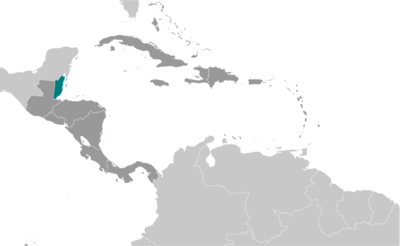
Central America, bordering the Caribbean Sea, between Guatemala and Mexico
🧭 Background
Belize was the site of several Mayan city states until their decline at the end of the first millennium A.D. The British and Spanish disputed the region in the 17th and 18th centuries; it formally became the colony of British Honduras in 1862. Territorial disputes between the UK and Guatemala delayed the independence of Belize until 1981. Guatemala refused to recognize the new nation until 1992, and the two countries are still involved in an ongoing border dispute. Tourism has become the mainstay of the economy. Current concerns include the country's heavy foreign debt burden, high crime rates, high unemployment combined with a majority youth population, growing involvement in the Mexican and South American drug trade, and one of the highest HIV/AIDS prevalence rates in Central America.
🗺️ Geography
Central America, bordering the Caribbean Sea, between Guatemala and Mexico
17 15 N, 88 45 W
Central America and the Caribbean
22,966 sq km
22,806 sq km
160 sq km
Slightly smaller than Massachusetts
542 km
Guatemala 266 km; Mexico 276 km
386 km
12 nm in the north, 3 nm in the south
200 nm
Tropical; very hot and humid; rainy season (May to November); dry season (February to May)
Flat, swampy coastal plain; low mountains in south
Doyle's Delight 1,124 m
Caribbean Sea 0 m
173 m
Arable land potential, timber, fish, hydropower
8% (2023 est.)
Arable land: 4.4% (2023 est.)
Permanent crops: 1.4% (2023 est.)
Permanent pasture: 2.2% (2023 est.)
58.3% (2023 est.)
33.7% (2023 est.)
35 sq km (2012)
Approximately 25% to 30% of the population lives in the former capital, Belize City; over half of the overall population is rural; population density is slightly higher in the north and east
Frequent, devastating hurricanes (June to November) and coastal flooding (especially in south)
Only country in Central America without a coastline on the North Pacific Ocean
👥 People and Society⬆️ Top
421,960 (2025 est.)
208,844
213,116
Belizean(s)
Belizean
Mestizo 52.9%, Creole 25.9%, Maya 11.3%, Garifuna 6.1%, East Indian 3.9%, Mennonite 3.6%, White 1.2%, Asian 1%, other 1.2%, unknown 0.3% (2010 est.)
English 62.9% (official), Spanish 56.6%, Creole 44.6%, Maya 10.5%, German 3.2%, Garifuna 2.9%, other 1.8%, unknown 0.5% (2010 est.)
The World Factbook, the indispensable source for basic information. (English) La Libreta Informativa del Mundo, la fuente indispensable de información básica. (Spanish)
Roman Catholic 40.1%, Protestant 31.5% (includes Pentecostal 8.4%, Seventh Day Adventist 5.4%, Anglican 4.7%, Mennonite 3.7%, Baptist 3.6%, Methodist 2.9%, Nazarene 2.8%), Jehovah's Witness 1.7%, other 10.5% (includes Baha'i, Buddhist, Hindu, Church of Jesus Christ, Muslim, Rastafarian, Salvation Army), unspecified 0.6%, none 15.5% (2010 est.)
27.7% (male 58,529/female 56,811)
66.7% (male 135,903/female 141,503)
5.5% (2024 est.) (male 11,463/female 11,580)
49.4 (2025 est.)
40.8 (2025 est.)
8.6 (2025 est.)
11.6 (2025 est.)
27.2 years (2025 est.)
26.4 years
27.2 years
1.47% (2025 est.)
17.44 births/1,000 population (2025 est.)
4.87 deaths/1,000 population (2025 est.)
2.17 migrant(s)/1,000 population (2025 est.)
Approximately 25% to 30% of the population lives in the former capital, Belize City; over half of the overall population is rural; population density is slightly higher in the north and east
46.6% of total population (2023)
2.3% annual rate of change (2020-25 est.)
23,000 BELMOPAN (capital) (2018)
1.05 male(s)/female
1.03 male(s)/female
0.96 male(s)/female
0.99 male(s)/female
0.98 male(s)/female (2024 est.)
67 deaths/100,000 live births (2023 est.)
11.3 deaths/1,000 live births (2025 est.)
12.4 deaths/1,000 live births
10.1 deaths/1,000 live births
74.3 years (2024 est.)
72.6 years
76.1 years
2.02 children born/woman (2025 est.)
0.99 (2025 est.)
Urban: 98.9% of population (2022 est.)
Rural: 98% of population (2022 est.)
Total: 98.4% of population (2022 est.)
Urban: 1.1% of population (2022 est.)
Rural: 2% of population (2022 est.)
Total: 1.6% of population (2022 est.)
5% of GDP (2021)
11.5% of national budget (2022 est.)
1.09 physicians/1,000 population (2018)
1 beds/1,000 population (2018 est.)
Urban: 99.1% of population (2022 est.)
Rural: 95.7% of population (2022 est.)
Total: 97.3% of population (2022 est.)
Urban: 0.9% of population (2022 est.)
Rural: 4.3% of population (2022 est.)
Total: 2.7% of population (2022 est.)
24.1% (2016)
5.93 liters of pure alcohol (2019 est.)
3.88 liters of pure alcohol (2019 est.)
0.68 liters of pure alcohol (2019 est.)
1.19 liters of pure alcohol (2019 est.)
0.17 liters of pure alcohol (2019 est.)
8.3% (2025 est.)
14.8% (2025 est.)
1.8% (2025 est.)
4.6% (2015/16)
6.3% (2016)
33.5% (2016)
22.2% (2016)
4.6% of GDP (2024 est.)
18.9% national budget (2024 est.)
87.9% (2022 est.)
87.9% (2022 est.)
87.9% (2022 est.)
12 years (2023 est.)
12 years (2023 est.)
12 years (2023 est.)
🌿 Environment⬆️ Top
Deforestation; water pollution from sewage, industrial effluents, agricultural runoff; inability to properly dispose of solid waste
Biodiversity, Climate Change, Climate Change-Kyoto Protocol, Climate Change-Paris Agreement, Comprehensive Nuclear Test Ban, Desertification, Endangered Species, Hazardous Wastes, Law of the Sea, Ozone Layer Protection, Ship Pollution, Wetlands, Whaling
None of the selected agreements
Tropical; very hot and humid; rainy season (May to November); dry season (February to May)
8% (2023 est.)
Arable land: 4.4% (2023 est.)
Permanent crops: 1.4% (2023 est.)
Permanent pasture: 2.2% (2023 est.)
58.3% (2023 est.)
33.7% (2023 est.)
46.6% of total population (2023)
2.3% annual rate of change (2020-25 est.)
662,000 metric tonnes of CO2 (2023 est.)
3 metric tonnes of CO2 (2023 est.)
662,000 metric tonnes of CO2 (2023 est.)
10.5 micrograms per cubic meter (2019 est.)
101,400 tons (2024 est.)
10.4% (2022 est.)
11.4 million cubic meters (2022 est.)
21.2 million cubic meters (2022 est.)
68.4 million cubic meters (2022 est.)
21.734 billion cubic meters (2022 est.)
🏛️ Government⬆️ Top
None
Belize
British Honduras
Traditionally believed to be derived from the Spanish pronunciation of the last name of Scottish explorer Peter Wallace, who settled in the area in 1638; alternatively, may be named for the Belize River, whose name possibly derives from the Maya word "belix," meaning "muddy-watered"
Parliamentary democracy (National Assembly) under a constitutional monarchy; a Commonwealth realm
Belmopan
17 15 N, 88 46 W
UTC-6 (1 hour behind Washington, DC, during Standard Time)
The name is formed from two words: "Belize," the name of the longest river in the country, and "Mopan," one of the rivers in the area that empties into the Belize River
6 districts; Belize, Cayo, Corozal, Orange Walk, Stann Creek, Toledo
English common law
Previous 1954, 1963 (pre-independence); latest signed and entered into force 21 September 1981
Proposed and adopted by two-thirds majority vote of the National Assembly House of Representatives except for amendments relating to rights and freedoms, changes to the Assembly, and to elections and judiciary matters, which require at least three-quarters majority vote of the House; both types of amendments require assent of the governor general
Has not submitted an ICJ jurisdiction declaration; accepts ICCt jurisdiction
Yes
Yes
Yes
5 years
18 years of age; universal
King CHARLES III (since 8 September 2022); represented by Governor-General Froyla TZALAM (since 27 May 2021)
Prime Minister John BRICEÑO (since 12 November 2020)
Governor general appoints Cabinet from among members of the National Assembly, on the advice of the prime minister
The monarchy is hereditary; governor-general appointed by the monarch; following legislative elections, the leader of the majority party or majority coalition usually appointed prime minister by the governor-general; prime minister recommends the deputy prime minister
National Assembly
Bicameral
House of Representatives
32 (all directly elected)
Plurality/majority
Full renewal
5 years
3/12/2025
People's United Party (PUP) (26); United Democratic Party (UDP) (5)
12.5%
March 2030
Senate
13 (all appointed)
Full renewal
5 years
5/9/2025
35.7%
May 2030
Supreme Court of Judicature (consists of the Court of Appeal with the court president and 3 justices, and the Supreme Court with the chief justice and 10 justices); the Caribbean Court of Justice is the final court of appeal
Court of Appeal president and justices appointed by the governor-general upon advice of the prime minister after consultation with the National Assembly opposition leader; justices' tenures vary by terms of appointment; Supreme Court chief justice appointed by the governor-general upon the advice of the prime minister and the National Assembly opposition leader; other judges appointed by the governor-general upon the advice of the Judicial and Legal Services Section of the Public Services Commission and with the concurrence of the prime minister after consultation with the National Assembly opposition leader; judges can be appointed beyond age 65 but must retire by age 75
Magistrates' Courts; Family Court
Belize People’s Front or BPF Belize Progressive Party or BPP (formed in 2015 from a merger of the People's National Party, elements of the Vision Inspired by the People, and other smaller political groups) People's United Party or PUP United Democratic Party or UDP Vision Inspired by the People or VIP
Ambassador Lynn Raymond YOUNG (since 7 July 2021)
2535 Massachusetts Avenue NW, Washington, DC 20008-2826
[1] (202) 332-9636
[1] (202) 332-6888
Reception.usa@mfa.gov.bz https://www.belizeembassyusa.mfa.gov.bz/
Chicago, Los Angeles, Miami, New York
Ambassador (vacant); Chargé d'Affaires Katharine BEAMER (since 23 August 2025)
4 Floral Park Road, Belmopan, Cayo
3050 Belmopan Place, Washington DC 20521-3050
(501) 822-4011
(501) 822-4012
ACSBelize@state.gov https://bz.usembassy.gov/
ACP, ACS, AOSIS, C, Caricom, CD, CDB, CELAC, FAO, G-77, IADB, IAEA, IBRD, ICAO, ICC (NGOs), ICRM, IDA, IFAD, IFC, IFRCS, ILO, IMF, IMO, Interpol, IOC, IOM, ITU, LAES, MIGA, NAM, OAS, OPANAL, OPCW, PCA, Petrocaribe, SICA, UN, UNCTAD, UNESCO, UNIDO, UPU, WCO, WHO, WIPO, WMO, WTO
21 September 1981 (from the UK)
Battle of St. George's Caye Day (National Day), 10 September (1798); Independence Day, 21 September (1981)
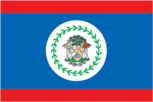
Description: royal blue with a narrow red stripe along the top and the bottom edges; the coat of arms is on a large white disk at the center and shows a shield flanked by two workers in front of a mahogany tree, with the motto SUB UMBRA FLOREO (I Flourish in the Shade) on a scroll at the bottom; a green garland of 50 mahogany leaves rings the coat of arms meaning: the figures, the mahogany tree, and the garland refer to the logging industry that led the British to settle Belize; blue and red are the colors of the two main political parties
Baird's tapir (a large forest-dwelling mammal), keel-billed toucan, black orchid
Red, blue
"God Save the King"
Unknown
Royal anthem, as a Commonwealth country
1 (natural)
Belize Barrier Reef Reserve System
💹 Economy⬆️ Top
Tourism- and agriculture-driven economy; strong post-pandemic rebound; innovative and ecological bond restructuring that significantly lowered public debt and expanded marine protections; central bank offering USD-denominated treasury notes; high mobility across borders
$5.538 billion (2024 est.)
$5.12 billion (2023 est.)
$5.062 billion (2022 est.)
8.2% (2024 est.)
1.1% (2023 est.)
9.7% (2022 est.)
$13,300 (2024 est.)
$12,500 (2023 est.)
$12,600 (2022 est.)
$3.516 billion (2024 est.)
3.3% (2024 est.)
4.4% (2023 est.)
6.3% (2022 est.)
8.1% (2023 est.)
14.3% (2023 est.)
62.4% (2023 est.)
62.9% (2023 est.)
15.7% (2023 est.)
20.6% (2023 est.)
-2.3% (2023 est.)
55.3% (2023 est.)
-51.2% (2023 est.)
Sugarcane, maize, bananas, sorghum, soybeans, chicken, rice, oranges, fruits, plantains (2023)
Garment production, food processing, tourism, construction, oil
4.8% (2024 est.)
190,000 (2024 est.)
7% (2024 est.)
8.3% (2023 est.)
8.8% (2022 est.)
16.3% (2024 est.)
10.6% (2024 est.)
25.6% (2024 est.)
39.9 (2018 est.)
2.2% (2018 est.)
30% (2018 est.)
4.4% of GDP (2024 est.)
4.9% of GDP (2023 est.)
5% of GDP (2022 est.)
$554.405 million (2017 est.)
$506.316 million (2017 est.)
99% of GDP (2017 est.)
21.3% (of GDP) (2017 est.)
-$51.762 million (2024 est.)
-$19.761 million (2023 est.)
-$235.566 million (2022 est.)
$1.64 billion (2024 est.)
$1.536 billion (2023 est.)
$1.369 billion (2022 est.)
USA 22%, UK 14%, Spain 9%, Guatemala 7%, Portugal 5% (2023)
Raw sugar, bananas, fish, shellfish, refined petroleum (2023)
$1.724 billion (2024 est.)
$1.573 billion (2023 est.)
$1.574 billion (2022 est.)
USA 37%, China 17%, Guatemala 10%, Mexico 8%, Costa Rica 6% (2023)
Refined petroleum, orthopedic appliances, ships, garments, tobacco (2023)
$498.087 million (2024 est.)
$473.729 million (2023 est.)
$482.146 million (2022 est.)
$1.235 billion (2023 est.)
Belizean dollars (BZD) per US dollar -
2 (2024 est.)
2 (2023 est.)
2 (2022 est.)
2 (2021 est.)
2 (2020 est.)
⚡ Energy⬆️ Top
98.6% (2022 est.)
98.4%
97.1%
220,000 kW (2023 est.)
595.389 million kWh (2023 est.)
283.8 million kWh (2023 est.)
140.519 million kWh (2023 est.)
12% of total installed capacity (2023 est.)
2.4% of total installed capacity (2023 est.)
52.9% of total installed capacity (2023 est.)
32.7% of total installed capacity (2023 est.)
32 metric tons (2023 est.)
800 bbl/day (2023 est.)
5,000 bbl/day (2023 est.)
6.7 million barrels (2021 est.)
30.752 million Btu/person (2023 est.)
📡 Communications⬆️ Top
17,800 (2022 est.)
4 (2022 est.)
271,000 (2022 est.)
67 (2022 est.)
8 privately owned TV stations; multi-channel cable TV provides access to foreign stations; about 25 radio stations broadcasting on roughly 50 different frequencies; state-run radio was privatized in 1998 (2019)
.bz
72% (2023 est.)
39,000 (2022 est.)
10 (2022 est.)
🚚 Transportation⬆️ Top
V3
27 (2025)
5 (2025)
774 (2023)
Bulk carrier 49, general cargo 410, oil tanker 64, other 251
2 (2024)
0
0
1
0
1
1
Belize City, Big Creek
🛡️ Military and Security⬆️ Top
Belize Defense Force (BDF): Army, Air Wing; Belize Coast Guard (BCG) (2025)
1% of GDP (2024 est.)
0.9% of GDP (2023 est.)
1.1% of GDP (2022 est.)
1.3% of GDP (2021 est.)
1.5% of GDP (2020 est.)
Approximately 1,500 BDF personnel (2025)
The military has a small inventory consisting mostly of UK- and US-origin equipment (2025)
18-23 years of age for voluntary military service; laws allow for conscription only if volunteers are insufficient, but conscription has never been implemented; initial service obligation is 12 years (2025)
The Belize Defense Force (BDF) is responsible for external security but also provides some support to civilian authorities; it has limited powers of arrest within land and shoreline areas, while the Coast Guard has arrest powers and jurisdiction within coastal and maritime areas; the BDF traces its history back to the Prince Regent Royal Honduras Militia, a volunteer force established in 1817; the BDF was established in 1978 from the disbanded Police Special Force and the Belize Volunteer Guard to assist the resident British forces with the defense of Belize against Guatemala the British Army has maintained a presence in Belize since its independence; the presence consists of a small training support unit that provides jungle training to troops from the UK and international partners (2025)
🌐 Transnational Issues⬆️ Top
2,287 (2024 est.)
8 (2024 est.)
Major illicit drug-producing and/or drug-transit country (2025)
Source: Factbook JSON archive.